• Pancakes_1

    It's been a week since I left Los Angeles and I still wish I was there. Oh sure, it's been nice to be home with Ben and we did have a great weekend at a wedding in Maine (where I also discovered that there is such a thing as eating Too Much Lobster, but that's a story for another time). But something about L.A. sunk its claws into me and I can't wait to go back.

    I had flown over for a whirlwind weekend with friends to swim for hours in a backyard pool, wander among downtown streets to see the faded glory of Gotham-style buildings layered with a thick veneer of commercial grit, and noodle along on the boulevards that led from Hollywood to Silverlake to Los Feliz, the hot and dry sun beating down on us.

    It was meant to be a few days with friends, not a culinary pilgrimage, so I've got ample reason to return (Lucques! La Brea Bakery! In N Out Burger! Shall I go on?). And still, we ate well (have I mentioned that I may have finally found a reason to love Mexican food?). But one of the best meals I had was a plate of pancakes made after an unfortunate hypoglycemic episode and a subsequent migraine medicated by Excedrin, which left me pain-free, but completely wracked with caffeine jitters.

    Sitting on the sun-warmed living room floor with my friends as we ate our homemade pancakes covered in syrup and rolled into nibbleable cylinders while the hummingbirds buzzed outside and an old movie played along on the television and my circulation slowly returned to a manageable state, I would have been content to remain right there for quite a long time to come.

    In homage to those life-sustaining pancakes, I made a batch of malted corn pancakes that Barbara Hansen wrote about in an article about the various incarnations of corn pancakes in Los Angeles. The recipe comes from Frank Waldman's Doughboys. The pancakes are crammed with cornmeal and corn kernels (I used frozen) and cook up quite quickly (in fact, a few of mine burned) on the griddle.

    Instead of serving them with the prescribed blueberry-orange syrup, Ben and I ate them for sustenance on the bus up north this weekend. They're corny and tender and somewhat forgettable. A generous ladle of fruit-spiked syrup could have helped to perk them up. To me, the malt flavor was unrecognizable, so you could easily substitute golden syrup or even honey (so you, unlike me, are spared from having an enormous jar of malt syrup to figure out how to use up).

    But it doesn't really matter. I've got my Bisquick memories and an ever-growing list of things to do and eat on my next trip to Southern California. I can't wait to go back.

    Malted Cornmeal Pancakes
    Makes 18 4 1/2 inch pancakes

    1 1/3 cups yellow cornmeal
    1 cup pastry flour (or mix 1/3 cup all-purpose flour with 2/3 cup cake flour)
    1 tablespoon sugar
    2 teaspoons baking powder
    1 teaspoon baking soda
    1 teaspoon salt
    1 cup fresh or frozen corn kernels
    4 tablespoons melted butter, divided
    2 eggs, beaten
    2 cups buttermilk
    2 tablespoons malt syrup
    1 tablespoon oil

    1. Combine the cornmeal, flour, sugar, baking powder, baking soda and salt and stir to mix. Add the corn to dry ingredients, and mix.

    2. Combine 3 tablespoons melted butter, the eggs, buttermilk and malt syrup. Stir into the corn mixture.

    3. Heat the griddle. Combine the remaining tablespoon of butter with the oil and brush lightly over the griddle. Pour on about 1/4 cup batter for each pancake. Cook each pancake 1 to 2 minutes, until the bottom turns golden brown, then flip, cook the other side, about 3 minutes total. Serve hot with Orange-Blueberry Syrup.

    Orange-Blueberry Syrup

    Peel of 2 to 3 oranges
    2 cups sugar
    1 cup orange juice
    2 cups blueberries

    1. Peel the oranges with a vegetable peeler, eliminating any white pith. Combine the peel and sugar in a food processor and process 2 to 3 minutes.

    2. Pour the juice into a non-aluminum saucepan. Add the peel-sugar mixture and bring just to a boil, skimming off any foam. Simmer 3 to 4 minutes to reduce slightly. Mix in blueberries and cook 1 minute. Serve warm.

  • 219494186_106376cb77

    Melissa at The Traveler’s Lunchbox came up with the brilliant idea of listing her Top Five Favorite Things to Eat in the World after being prompted by a puzzling list at the BBC, and then figured others should join in the fun as well. Not only does this give you a whole new list of fresh food obsessions to cultivate, but isn’t it fun finding out what people love to eat and why? It’s like standing in the line at the grocery store and peeking surreptitiously into other people’s baskets, except that in this case you’re less likely to find Stouffer’s frozen meals and more likely to find things that make you go "oooh, I’d like to try that!".

    So, without further ado, my list:

    1. Sun-warmed Tomatoes, Sliced, Sprinkled with Flaky Salt and Drizzled with Olive Oil
    Best of all is if you can find those blood-red Italian tomatoes that are hunch-backed and homely and ridged all throughout, but when you slice them open, the scent of warm earth and sun and fresh juices waft upward like manna. You have to use Maldon salt, because I’m obsessed with the way it makes tomatoes taste and because it crunches so pleasingly under your teeth. I could list this for all five of my entires, but that’d be boring, at least for you.

    2. 5 for $1 Pork-and-Chive Dumplings at Dumpling House on Eldridge Street
    It was a bit of a struggle to decide between these pan-fried, golden-brown delicacies at a hole-in-the-wall space in Chinatown, and doughy, steamy char siu bao (roast-pork buns) that you can gently tear apart with your hands to reveal the saucy, salty, delectable pork nestled between the fluffy white bun. But walking through Chinatown (my favorite part of town) to Dumpling House and settling in on the uncomfortable metal bar to wait for your meal that comes served with a pungent, vinegary soy sauce and watching all the other dumpling pilgrims tuck in quietly and happily just makes eating these a totally great New York experience.

    3. Batter-fried Zucchini Flowers Stuffed with Anchovies and Mozzarella
    This is going to be annoying, but I have to specify that they have to be made by my Sicilian uncle, who has somehow become the world’s preeminent master on how to deep-fry in such a manner that the objects plunked into the boiling oil emerge lighter and more delicate than before (you should try his artichokes). Also, he uses this special mozzarella that’s a bit dried out and meant for pizzas (not like the creamy, delicate mozzarella di bufala that you’re really only supposed to eat raw) and salted anchovies instead of oil-packed ones that, for all I know, he salt-packs himself, and to make matters worse I have a feeling these things are only to be found in Sicily, but, really, if you manage to try these you can die happy.

    4. Basler Leckerli
    These are Christmas cookies baked in squares, flavored with cinnamon and spice, studded with candied citron and peeled almonds, leavened with Hirschhornsalz, and thinly covered with an ascetic lemon glaze. Kept out on Advent plates all throughout the month of December, they tend to harden as Christmas draws near, but if you keep them in a box with a wedge of apple, they stay pliant and chewy. Leckerli are best eaten with German Christmas songs on the radio, lights out and candles lit, and a mug of milky Lapsang Souchong to dunk them in. It doesn’t hurt if the woman who taught you how to make these and a dozen (or a hundred) other cookies sits next to you and rubs your back while you chew contentedly.

    5. Pizza al Taglio
    In Italy, keep your eyes peeled for little doorways in piazzas that have a sign above them that reads "Pizza al Taglio". You’ll probably smell one before you see one: an alluring scent of yeast and dough will waft across your path and you’ll wander, as if bewitched, straight through the door anyway. Sheets of flat, square pizzas will be in front of you and you will point at the one you want and say how much you want (in grams) and the pizzaiolo will – perhaps using scissors – cut off a piece and fold it in half for you to eat right then and there, wrapped in brown paper. As far as I’m concerned, there can be no better pizza than the plain, red one that’s covered with a thin smear of herbed tomato sauce that’s blistered a bit in the oven. No cheese, no nothing. The yeasty, crispy, sweet, air-pocketed dough below the sauce will give gently beneath your teeth and as you stand outside in the piazza munching on your paper-wrapped treasure you will have an idea of just what pure pleasure is.

  • Fritters

    I'm feeling triumphant today. Because for the first time in a while, I can present to you yet another recipe to be printed and laminated and stuck on your fridge! Yes, indeedy, we've got ourselves another keeper. Fast! Delicious! Unique! Nutritious! Versatile! I love love love this recipe and I'm not a little bit miffed at Ben for finishing every single last one of these suckers last night so that I have absolutely no leftovers, the greedy pig. (I kid! The poor man is about 100 pounds short of being a greedy pig. And I did kind of politely urge him to finish them off. So if I'm miffed at anyone it's at myself for not being greedier. Or for not making more. Or at Betty Baboujon for not providing a recipe that doubles the quantities! That's it! I'm angry at the LA Times. For not keeping me supplied with fresh corn fritters in perpetuity. Jerks.)

    There's really nothing like success in the kitchen. Don't you think? Even when you find yourself boiling jalapeno bits in sugar and vinegar, puzzled as to why you would be attempting to blanch the flavor out of the spicy little things, and juicy corn kernels keep spurting about your kitchen as you attempt to denude a few cobs, while you cross your fingers that defiling the cobs in this way instead of just sticking to the tried-and-true boil-and-eat-preferably-coated-with-lime-juice-and-cayenne-pepper method will pay off at dinnertime. And then dinner turns out to be totally spectacularly delicious and you shake your head at your silly, doubting self.

    In an article on the benefits of using rice flour in the LA Times, Betty explained that subsituting rice flour for some of the regular flour in this recipe from Bill Granger, a chef (the Australian version of Jamie Oliver?) in Sydney, would result in lighter, crisper fritters. I would have happily obliged Betty's instructions, if only I hadn't been too lazy to make my way through the rush-hour crowds at Whole Foods and therefore went to three (3!) other grocery stores in search of rice flour, all to no avail. So, yeah, if you're looking for rice flour in New York, don't even bother with Garden of Eden, Balducci's or D'Agostino's. I know, I would have been surprised to find it at D'Ags, but GoE? Balducci's? Come on, these places are supposed to carry marveled-at, yet untrafficked and barely-touched goods. Possibly marked up at a high price point, too.

    In any case, I made the fritters with regular flour, and since I seemed to have misplaced my cumin (no crying shame), I substituted that with a quarter-teaspoon of curry powder, and of course, used parsley instead of cilantro, and a green jalapeno in the dipping sauce instead of a red. Despite all of these changes, these fritters were fantastic. Now, that's a good recipe. Bursting with fresh corn crunch and sweetness, touched with delectable Southeast Asian heat, and the pungent, syrupy dipping sauce adding another layer of sweet-sour flavor, these fritters made up our entire dinner (along with a salad of soft lettuces and summer tomatoes). I will be making these again. And again. And again.

    In other news? I'm completely and utterly bowled over by the comments left on the occasion of my blogiversary. They're to blame for the besottedly happy grin that's been plastered on my face for the past 48 hours. Thank you all so much!

    Corn Fritters with Sweet Chile Sauce
    Makes 12 fritters

    Sauce
    1 red jalapeño, finely chopped
    1/2 cup rice vinegar
    1 teaspoon salt
    1/3 cup sugar
    1 small clove garlic, minced

    1. In a small saucepan, combine the jalapeño, vinegar, salt, sugar and garlic. Stir over low heat until the sugar dissolves, about 2 minutes.

    2. Bring to a boil over medium-high heat and cook for 5 minutes, or until the mixture thickens to a slightly syrupy consistency. Remove from heat and set aside to cool while making the fritters. (The sauce continues to thicken as it cools; it can be made a day ahead.)

    Fritters
    1/2 cup rice flour
    1/2 cup flour
    1/4 teaspoon baking powder
    1/2 teaspoon salt
    1 teaspoon ground coriander
    1/2 teaspoon ground cumin (I used 1/4 teaspoon curry powder)
    1 egg, lightly beaten
    1 teaspoon lemon juice
    1/2 cup water
    2 cups corn kernels, cut from 3 large cobs
    4 spring onions, finely sliced
    3 tablespoons chopped cilantro (or chopped parsley)
    Oil

    1. In a bowl, sift together the rice flour, flour, baking powder, salt, coriander and cumin. Add the egg, lemon juice and water. Beat until smooth.

    2. Add the corn, spring onions and cilantro, stirring until just combined.

    3. In a large frying pan, pour in enough oil to generously cover the bottom. When the oil is hot but not smoking, spoon 2 tablespoons of batter for each fritter into the pan, about half an inch apart, immediately flattening each fritter slightly. Cook over medium-high heat for 2 to 3 minutes, until golden brown underneath, then turn and cook the other side for about 2 minutes. Use a splatter screen to cover the pan. Transfer to a platter lined with paper towels. Repeat with the remaining batter, adding more oil if necessary.

    4. Serve immediately with the sweet chile sauce.

  • P1040794

    A year ago today, I took my heart in my hands and wrote the first post of this little blog of mine. While the idea of you going back and reading my first posts kind of makes me wants to stick small pins in my eye, it’s pretty thrilling to still be here one year and 177 posts later.

    Not only have I stumbled upon a little universe for myself where I’ve found countless other kindred spirits, discovered more new blogs and writers and cooks than I thought possible, and become penpals with some of my newspaper food world idols, but I’ve made some true friends for life, too. Pretty amazing when a year ago, I was hoping that my father wouldn’t be the ONLY one reading every day (but thanks, Pops!).

    So, with a virtual glass raised, here’s to taking risks and jumping out into the big ship of Doing What You Want To. How will I be celebrating today? Well, I’m hoping you might help me with that. I have a small circle of loyal commenters, but I know that there are so many more readers out there and I’m dying to know a little bit about you. So, while it may not be National Delurking Day, I urge you to leave a comment: tell me about yourselves, where you live, what you do, how long you’ve been reading, what you like to cook, or even just say hi.

    Hi!

    I won’t bite, I promise. Thanks for reading, everyone.

    Lots of love, Luisa

  • Soup_12

    For some reason, lately, I've been toying with the idea of a fast. Toying is the operative word here, because I'm hypoglycemic and I know intuitively that depriving myself of solid food for 24 or 36 or even 48 hours is a disaster in the making, especially if I'm at all interested in keeping my boyfriend and my girlfriends as slight social acquaintances.

    And how does one even go about surviving a day (or two) of fasting? I imagine myself lying prone on my bed, raising my head limply every 15 minutes to drink a slug of some bitter-tasting brewed tea that's steeped with roots and herbs to provide "Vitality!" and "Energy!" and "Rejuvenation!". The room spins and I mostly just want to rip the heads off of the human beings closest to me and eat them for lunch.

    That's usually when my fantasy shrivels up and dies, and I go placidly back to chewing on my afternoon cookie, because I (and others) have learned the hard way that not giving myself an afternoon snack is Bad News For Everyone.

    What does all this have to do with what I had for dinner last night? Well, I set out to make a simple pureed soup of potatoes boiled in chicken stock with 10 ounces of baby arugula wilted therein, and ended up with something that looked and tasted akin to what I imagine a day of fasting would taste like.

    I was expecting something lusher and more deeply flavored, but I got a very thin, watery broth that, except for the droplets of peppery oil on top and the nice, vaguely bitter flavor of the arugula beneath it, didn't taste of much at all. I do have to note that in the midst of immersion blending, my magic wand gave up entirely and spit the blade into the pot, so I was forced to use the food processor, which I'm convinced isn't the right tool for smooth soups. It leaves those disagreeble specks of unprocessed cellulose in whatever you're attempting to blitz into nothingness.

    I suppose if you constructed the soup differently, perhaps starting with a leek sauteed in oil, adding the potatoes in chunks – more than 9 ounces, though – to take on some crusty, well-browned flavor, adding the arugula to cook for a while in the chicken broth, and then whizzing the whole thing in a proper blender, you might get a different result.

    I paired my bowl of soup with two Wasa crispbreads and a small pile of pickled herring, which I suppose is as close to a fasting regime as I'm going to get these days. Fine with me.

    Arugula and Potato Soup
    Serves 4

    1 carton (1 quart) chicken broth
    2 medium Yukon Gold potatoes (about 9 ounces), peeled and sliced
    2 (5-ounce) cartons or bags baby arugula
    1/8 teaspoon ground white pepper
    2 tablespoons olive oil (or creme fraiche)

    1. Pour the chicken broth into a large saucepan and bring it to a simmer. Add the potatoes and cook, covered, until they are very tender, 20 to 25 minutes.

    2. Wash and drain the arugula. Add it to the saucepan. Stir to combine and simmer until the arugula is completely wilted, 1 to 2 minutes.

    3. Puree with an immersion blender or in a food processor in one or two batches, transferring each batch to a clean saucepan or warm tureen. Stir in the pepper and swirl in the olive oil or creme fraiche.

  • Noodles_2

    I'm back from a week in the mountains – communing with nature, sleeping under the stars – and have concluded that the Rockies are indeed breathtaking (literally, in some cases). Some of the Wild West lived up to my expectations, some of it still surprised me (the lack of black people, for one). We had a great time visiting friends and discovering spectacular vistas. From lakes mirroring the Continental Divide to dusty, abandoned mining towns to fields of wildflowers framed by snowcapped mountains, I saw a whole new part of the United States. But one of the best sights I had was flying parallel to the island of Manhattan at midnight on our way home, lights a-glitter. There's no place like home…

    Before we left, I scrambled together a quick meal to tide us over. As much as I adore all Asian food (I have Fuchsia Dunlop's book practically committed to memory), I rarely make it at home – figuring I'm not nearly well-versed enough in the art of combining all those sauces and powders and finely chopped vegetables and meats into something worth eating. In New York City, isn't it easier just going out for dinner? (No place like home!) But the New York Times profiled Charles Phan of San Francisco's Slanted Door a few years ago, and the two recipes excerpted seemed so easy, so perfect for the home cook that I could not resist.

    I chose to make a dish of sauteed chicken with rice noodles, and Ben helped me in prepping the ingredients (I'm still working on being a better co-chef, rather than barking at him to chop faster – can't he see that the oil is practically smoking?). He diced the chicken into beautiful little dice, far prettier than what I would have done. I sauteed the chicken briefly, then added sliced vegetables and an amalgamation of sauces and wine. After that, I added an egg to the pan to scramble, a pile of soaked rice noodles and the reserved chicken and vegetables. Then I tossed this all together like a woman possessed.

    The resulting tangle was highly flavored…almost too much so. The dish tasted very gamey. I couldn't eat more than a bowl of it, and Ben conceded that the fish sauce overpowered it for him (this is a man who thinks anchovies are the incarnation of the anti-Christ). I love love love fish sauce, but perhaps it was the combination with the chicken here that turned this dish into something I was looking forward to eating into something I'm not sure I'll make again.

    But that's okay – after a week of mountain food (Denver scrambles, peanut butter and jelly sandwiches, and more granola bars than you can shake a stick at), I'm perfectly content to let the experts at my favorite Asian places feed me. Thank goodness for them all. There's no place like home.

    Rice Noodles with Chicken
    Serves 2 (amply) or 4 (less so)

    1/3 pound rice noodles
    1/4 cup canola or corn oil
    1/3 pound boneless chicken, shredded or diced small
    1/2 to 1 cup bean sprouts
    1/2 cup snow peas, slivered
    1/2 cup shiitake mushroom caps, sliced
    2 tablespoons fish sauce
    2 tablespoons soy sauce
    2 tablespoons rice wine or white wine
    1 egg, lightly beaten
    3 or 4 scallions, trimmed and slivered, for garnish

    1. Cover noodles in hot water while preparing the other ingredients. Heat a pot of water until steam rises.

    2. Put all but a tablespoon of the oil in a wok or large skillet, and turn heat to high. When it smokes, add the chicken, and stir until it loses its color; it doesn't cook through. Remove with slotted spoon.

    3. Add bean sprouts, peas and shiitakes. Sitr until wilted and beginning to brown. Add sauces and wine. Remove from the pan.

    4. Drain noodles and dip them in the boiling water with tongs or in a strainer for about 5 seconds. Drain. Add remaining oil and the egg to pan, still over high heat. Stir to scramble. Add drained noodles and cooked ingredients, and toss, lifting (scrape, if necessary) repeatedly, until all are mixed together and hot. Garnish with scallions and serve.

  • Soda_1

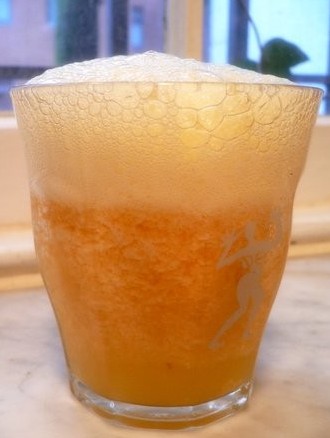
    The heat wave has broken, but my appetite is still on the lam. What can I do? I've been eating PB&J's at my desk in an attempt to ward off starvation by heat. But drinking all that plain water was getting a bit old. In an attempt to brighten up my pitcher, I whizzed together a peach drink recipe that Russ Parsons included in an article on Wednesday about the Masumotos, a family of peach farmers in California. I've been imagining their farmhouse surrounded by orchards for the past few days. How nice would it be to walk between the peach trees at dusk, sipping on this thirst-quencher, ice clinking in the glass? Pretty nice, I imagine.

    While it pains my health-loving heart to purchase and ingest anything with high-fructose corn syrup, I did as I was told, and bought frozen lemonade concentrate. This morning, I peeled and pitted three peaches and blitzed them with some pineapple juice and the concentrate in my food processor. Because I don't own a blender. If you do own a blender, by all means, make this drink in your blender. In my Robot Coupe, the peaches didn't entirely liquefy and I was left with a drink with bits floating about in it. Not entirely bad, but not entirely good either.

    With club soda to thin out the puree and add a refreshing sparkle, the drink is a welcome change from all those bottles of chilled water I've been drinking. It's fruity and not too sweet, and you can control the amount of flavor with a splash or more of soda. Sitting in front of my air conditioner this morning while I sipped on my peach quencher, I could almost imagine myself on cooler shores.

    Which is where I'll actually be! Well, not on cooler shores, exactly, but rather mountaintops. Tomorrow we're going to Colorado for a week of hiking and camping and total immersion in wildflower and grand vista photography. I can't wait. I'm not sure we'll have much of a chance to concentrate on quality eating between our athletic exertions (it might be GORP all the way) but if you have suggestions about where we could get a meal in the Boulder/Denver/Rocky Mountain National Park area, do let me know!

    Peach Quencher
    Serves 4

    3 peaches, peeled, pitted and sliced
    3 ounces pineapple juice
    1/4 cup frozen lemonade concentrate
    Ice
    1 cup club soda

    1. Blend the peaches, pineapple juice and lemonade concentrate. Pour the mixture into four (14-ounce) glasses and fill the glasses with ice. Top with club soda (about one-quarter cup per glass).

  • Gelatop1040204

    It's been quiet around here, I know. It's not that I haven't been blogging, it's that I haven't been eating. People, it's too damn hot. All I can stand to do, besides drinking so much water it's coming out of my ears, is eat a yogurt every now and then, or maybe a graham cracker or two, and even that might be pushing it. Leafing through my recipes while I wilted in the heat brought me absolutely no satisfaction and the most appetizing thing I could think to do was to go sit in an air-conditioned movie theater (watching this, which you must must must go see) and drink yet another bottle of water.

    But then I realized that the latest Sugar High Friday was going to feature frozen desserts and when I stumbled across this simple three-ingredient recipe which transforms frozen sugar-sweetened peaches and a dollop of yogurt into gelato without an ice cream machine, I figured I had to try it out. The recipe comes from Russ Parsons (who else?) who learned the technique from a Sicilian chef named Ciccio Sultano (I have a distant cousin named Ciccio in southern Italy, so this endeared the recipe to me from the get-go) who was named by Gambero Rosso to be one of the great young chefs cooking in Italy a few years ago.

    But let's be honest, the most appealing thing about the recipe was the short ingredient list and the simplicity. Peeling three pounds of peaches sounds annoying, but it took me less than 15 minutes. I chopped the peeled peaches into small dice, then froze them in a single layer. I went out for a drink to celebrate the last day of Ben's job (Ben got a new job! Cause for much rejoicing around these parts) and came back to whizz the frozen peaches in the food processor with a bit of sugar and a few spoonfuls of yogurt.

    After a minute of processing, a creamy, pink mass came together in the bowl. I tried a spoonful – it was delicious. I put the bowl into the freezer to firm up for another 20 minutes and then had myself of bowlful of the light, refreshing gelato. Not too sweet or slickly fat, the peach flavor was gorgeous and the consistency was satisfyingly creamy. I froze the rest of the gelato overnight and it crystallized and became much harder – all you have to do to remedy this is pulse it in the food processor again (my camera pooped out last night, so what you're seeing up there is the crystallized, more frozen version from this morning).

    But you really should eat this the same night you make it – it's just better and fresher that way. Besides, what else are you eating in this heat that you can't have gelato for dinner?

    Peach Gelato
    Makes 6 to 8 servings

    3 pounds peaches, peeled and pitted
    1/4 cup sugar, or more to taste
    1/2 cup mascarpone, creme fraiche or yogurt

    1. Cut the peaches into very small pieces. The smaller you cut them, the faster they will freeze and the finer the final texture will be. Arrange the peach pieces in a single layer on a rimmed cookie sheet and freeze solid, about 2 hours.

    2. Put the frozen peach pieces in a food processor with the sugar and grind briefly. Add the mascarpone and pulse until the mixture is smooth.

    3. Empty the food processor into a small container and freeze again, 20 to 30 minutes, before serving. If the ice cream freezes solid, simply process it again briefly before serving.

  • Rice_2

    I have to be honest – my heart wasn't really in my last post. Could you tell? I felt like choosing that recipe was a bit like grasping at straws – I didn't really want to be making it, and once I made it I didn't really want to eat it. Luckily, I was able to fob the rest of the cake off on my office mates (who polished it off in no time) and decide that life is too short to make recipes I don't want to make. Least of all eat, or write about. So that's that.

    In other news, however, I had a great time making this rice last night. It was going to be a quiet night alone at home, and I figured it was one of those evenings where I could get away with making a pot of vegetable-filled rice for dinner and nothing else. Not that that meant the recipe was easy or quick. In fact, this is one of more complicated preparations I've ever done for a rice dish. But? It was totally worth it.

    The recipe comes from two American women (chef transplants from California) who live in Catalonia (yet another part of the world I am just itching to see – preferably on a Vespa as I noodle around the winding roads and villages in between staggeringly beautiful countryside and delicious, rustic meals – nice vision I've got for myself, no?) and run an inn called Las Nenas. A writer for the LA Times, Betty Hallock, stumbled upon the place before a pilgrimage to that other Catalan temple of food, El Bulli.

    Betty and her traveling companion cooked a meal with the owners of Las Nenas and then shared the recipes with the LA Times. While the grilled rabbit, lamb and chorizo with romesco seemed far too complicated to recreate at home alone, the vegetable rice was another story. It featured the Catalan version of soffritto, long-cooked onions and garlic, plus three tomatoes grated maddeningly on the side of a box grater.

    That tomato-grating business was the worst part of the whole endeavor. Why, I grumbled to myself, as seeds spurted every which way and the tomato meat Would. Not. Detach. Itself from the skin, can't I just use a can of peeled tomatoes, crushed? But then it was over, and the house smelled divine, like onions and tomatoes and saffron and coziness, and I had already moved on to the next part of the recipe.

    I substituted canned lima beans (you might think I'm nuts, but this is a new discovery of mine, and I think I'm in love) for the fava beans, because – gasp – I think fava beans might be overrated and in any case I can barely afford them and after grating all those tomatoes, the last thing I wanted to do was to parboil and peel and boil again a bunch of darned beans. And I used frozen baby peas instead of the English peas called for, but we all know that that is fine and no crime against gourmandiserie in any case.

    After I stewed the onions and garlic for a while and then added in all that tomato slop and two healthy pinches of saffron and the rice (I used Carnaroli instead of Bomba) and wine and stock and all those beans and peas and asparagus lengths and salt (salt!), the casserole was stuck in the oven where over the next 20 minutes, it turned into a gorgeous, golden, fragrant pot of the most wonderfully flavored rice and vegetables. I cut up strips of piquillo peppers to decorate the top , as instructed, but I'd advise against that if I were you. It's fussy and unnecessary and the rice tastes more delicious without those little red interlopers.

    But do not forget about the lemon wedges. The freshly squeezed citrus brightens everything up and makes this risotto-like dish sparkle. I had two helpings for dinner and then more for lunch today (because, by the way, this recipe is really not meant for the single girl – thanks be that I have friends coming over to help polish this off), and am so relieved to have found a recipe that I am thrilled to have made and can't wait to make again.

    Vegetable Rice
    Serves 6

    2 medium onions, chopped
    2 cloves garlic, minced
    1/2 cup olive oil (I used far less – about 4 tablespoons)
    3 tomatoes (about 1 1/4 pounds)
    2 large pinches of saffron
    2 cups short grain rice, ideally Bomba
    1/2 cup dry white wine
    3 cups chicken or vegetable stock
    1/2 cup favas (about 1 pound), out of pods and peeled
    1/2 cup fresh English peas (about 8 ounces), shelled
    1 cup asparagus (about 10 spears), cut into about 2-inch pieces
    3/4 teaspoon salt
    3 piquillo peppers for garnish, thinly sliced
    Lemon wedges

    1. In a large, heavy, ovenproof casserole, make a sofregit by cooking the onions and garlic in the olive oil very slowly over low heat until tender and golden but not browned, about 40 minutes to an hour.

    2. Cut the tomatoes in half and grate them by pressing the fleshy side against the medium holes of a box grater. Discard the skins. After the onions are tender, add the grated tomato and saffron and cook slowly for 10 minutes. Heat the oven to 375 degrees.

    3. Add the rice and stir to coat the grains in the sofregit. Add the white wine, stock, favas, peas, asparagus and salt.

    4. Bring the rice mixture to a simmer over medium heat. Remove from the stove top and bake, uncovered, until stock is absorbed and rice is cooked, about 20 minutes.

    5. Remove from the oven and cool for 5 to 10 minutes. Decorate with the piquillo pepper slices and serve with lemon wedges.

  • Baked_10

    Though I consider myself more of a spartan breakfaster (no more than a bowl of unsweetened cereal with berries and skim milk, or jam-spread toast with yogurt on most days), when Jonathan Reynolds wrote about spider cake in the New York Times Magazine a few years ago, I found myself intrigued by the thought of a pan of Northern cornbread with a cup of cream poured into the middle so that little rivulets ran through the bread like spider legs, enriching and flavoring it.

    Nutritionally-speaking, having a slice of this creation is probably not even that much different than smearing a tablespoon or two of butter on toast in the morning. But the recipe confuses me a bit. You make a plain old cornbread batter (well, with sugar, so for the Southerners out there reacting in outrage to me calling this plain and old, I'm sorry), pour it into a butter-coated skillet and then pour a cup of cream into the middle.

    Since I used a 10-inch skillet and not a 12-inch as directed, the baking time took longer (about an hour instead of 45 minutes). The cornbread rose a little and turned a gorgeous golden-brown. The apartment filled with a corny, buttery-sweet smell. I pulled the skillet out of the oven (carefully) and let it cool for a bit before slicing in. The center was firm but tender, and the crusty edges had caramelized – and let me tell you, caramel-flavored cornbread is a very nice way to start your day.

    But on the bottom of the pan, around the edges, there a milky-looking residue that looked like raw batter. I stuck my finger into the white sludge and tasted it – it wasn't raw batter, but rather hot cream. Instead of running little rivers through the cornbread after I poured it in the middle, the cream had somehow worked its way to the bottom of the pan and then slid down to the edges. When I cut out a slice, it collapsed a bit at the end.

    The flavor of the breakfast cake was quite nice, but I have to be honest, a regular corn muffin would be just as good (and I kind of like the dry muffin – it lends itself better to milky tea-dunking). I didn't need to waste a cup of cream to moisten this already perfectly acceptable corn bread, and all that cream is certainly not worth the calories. How spartanly New England of me.

    New England Spider Cake
    Makes 8 servings

    2 cups milk
    4 teaspoons white vinegar
    1 cup all-purpose flour
    3/4 cup yellow cornmeal
    3/4 cup sugar
    1/2 teaspoon baking soda
    1/2 teaspoon salt
    2 eggs
    2 tablespoons butter
    1 cup heavy cream

    1. Preheat oven to 350 degrees. Combine milk and vinegar in a bowl and set
    aside to sour. In another bowl, combine flour, cornmeal, sugar, baking soda and
    salt. Whisk eggs into the soured milk. Stir into dry ingredients and set
    batter aside.

    2. Melt butter in a 12-inch cast-iron skillet. Pour in the batter. Pour cream
    into the center, slide skillet into the oven and bake until golden brown on
    top, about 45 minutes. Slice into wedges and serve warm.