• Dsc_5248

    I cannot, for the life of me, stand the sight of turkey any more. We were meant to take a Tupperware packed with shreds of it home with us when we left Beacon yesterday, but forgot it in the fridge. Honestly, it was a relief. I think I’ve come quite far in battling my aversion to leftovers, but progress has its limits. Four meals in a row is plenty, wouldn’t you say?

    But in case you aren’t entirely over turkey yourself yet, or if you’d like to know the best way I transformed leftovers into a new meal, this post is for you. It was my turn at lunchtime on Saturday to make a meal for the assembled members of Ben’s family gathered upstate to celebrate Thanksgiving. I’d had this recipe from Amy knocking around in my files for years, faithfully toting it with me each year to Thanksgiving, but never actually using it. Finally, this year, the recipe had its star turn.

    Well, a version of it anyway. If Amy calls this Quick Cassoulet, then I’ll call what I did on Saturday Speediest Cassoulet. Or Cassoulet Vite Vite, perhaps. Any suggestions? Instead of starting with dried beans, I bought canned beans (pinto, because I love them, but Amy says you should use cannellini or Great Northern). Instead of uncooked sausage, I used cooked chicken sausage, because it’s all we had in the fridge. I used more tomatoes and less chicken stock than she did and I cut a bit off the time here and there.

    What resulted was lovely: a garlicky, juicy stew that filled the house with Mediterranean fragrances, most welcome after a few days of Puritan cooking. The velvety beans, bright tomatoes, and aromatic herbs livened up the turkey and the crunchy bread crumb crust was delicious. It is one of my personal kitchen goals to make a real cassoulet one day, complete with Tarbais beans and Toulouse sausage and seven hours in the oven, or whatever it takes, but I’m quite pleased with my first foray into cassoulet cooking.

    And it got rid of at least two whole cups of leftover turkey meat, which was truly great.

    Quick Cassoulet
    Serves 8

    1 pound dried white beans (such as cannellini, Great Northern or Tarbais) or 2 14-oz cans of cannellini or pinto beans
    3 tablespoons olive oil, divided
    1 pound uncooked sausage, in individual links (use garlic, Toulouse sausage or mild Italian)
    1 large onion, diced
    1 carrot, diced
    7 garlic cloves, minced, divided
    1 bouquet garni (1 bay leaf, 2 sprigs thyme, 1 stem parsley, 2 whole sprigs fresh sage)
    1 can (28 oz) diced tomatoes, including juice
    1 cup chicken stock
    1/2 teaspoon kosher salt
    1/2 teaspoon freshly ground black pepper
    2 cups stale white bread, cut into cubes
    1 tablespoon fresh parsley, minced
    2 cups roast turkey, preferably dark meat, skin removed

    1. Place the dried beans, if using, in a large pot with enough water to cover by about 2
    inches. Bring the beans to a boil, take them off the heat and let sit
    for an hour. Drain and set aside. Heat the oven to 350 degrees.

    2. In a large braising pot with a lid, heat 2 tablespoons olive oil and
    then add the sausage, browning it on all sides over medium-high heat,
    about 10 minutes. Remove the sausage from the pot and set aside. Into
    the same pot with the fat remaining from the sausages, add the onions
    and carrots. Cook them until soft, scraping the browned bits from the
    bottom of the pan, about 4 to 5 minutes.

    3. Add 6 cloves minced garlic, the bouquet garni, tomatoes with juice,
    drained beans (dried or canned), chicken stock, salt and pepper. Stir to combine. Lay the
    sausages on the top, cover with the lid and cook in the oven for 1 1/2
    hours (just 45 minutes to an hour if your beans are canned).

    4. In a food processor, pulse the stale bread until you have fine
    crumbs; add the remaining minced garlic, the parsley and 1 tablespoon
    olive oil and pulse until combined. Set aside.

    5. Remove the cassoulet from the oven and arrange the turkey alongside
    the sausages, pressing in slightly with a spoon. Add a little stock to
    cover the beans, if needed. Spread the bread crumb mixture on top. Cook
    uncovered for 30 minutes; the crust should be golden and bubbly.

  • Dsc_5106

    Why, why on earth would I be telling you folks something about coleslaw right now? I mean, it's the day before Thanksgiving, it's cold outside, we're all running around like chickens with our heads cut off, in disbelief that we actually need to buy 4 more sticks of butter, another pound of potatoes and 2 last cans of pureed pumpkin, and besides, what in God's name do I have to say about coleslaw when I'm, like, the president and secretary-treasurer of the Mayonnaise Hater's Alliance?

    Here's the thing: as much as I dislike mayo, I love, luuuurve, coleslaw. I guess I should say that I love cabbage. Like a good little German girl, really. Punctual, orderly, and a cabbage fiend, yes, that sounds about right. Stuffed, braised, shredded, pickled, sauteed, spicy – I'm quickly realizing that cabbage may be the world's most perfect vegetable. It's crisp and refreshing in summer, warm and hearty in winter. It's easy enough to be a 15-minute dinner along with some bread and cheese and fancy enough to be a reliable star on holiday tables. I mean, seriously, cabbage! You need a crown and a scepter – I'm crowning you the Queen of Vegetables.

    But wasn't I talking about something else? Oh right, coleslaw. Tasty, but preferably without the goop and slime of mayo. Since I adore cabbage and I also love applesauce and mustard seeds, my ears pricked up right quick when I saw Jeremy Fox's contribution to the article Kim Severson wrote last week about Thanksgiving sides. His slaw recipe has you slice up some cabbage, shred some radishes and a Granny Smith or two, then toss all that with an apple-cider vinaigrette that's spiked with mustard and applesauce. To gild the lily, Jeremy throws in a few mustard seeds and some toasted walnuts.

    Dsc_5085

    I am a bit of a scatterbrain, so I forgot about the mustard seeds and the walnuts (even though they were right there in my kitchen – is this Thanksgiving brain?) and still, this was delicious. Cool and crisp and tangy and sort of sweetish, but not too sweet (I used less apples than called for): suddenly it dawned on me. This salad was coleslaw without the mayonnaise! Holy Grail, found.

    It kept relatively well in the fridge overnight, requiring just another quick glug of olive oil to perk it up again the next day, when I also threw in the mustard seeds. Better late than never. They were lovely, of course, because cabbage and mustard seeds are soul mates and meant to be together, like Romeo and Juliet, Beatrice and Benedict, peas and pods, oh, stop me right now.

    I think you need hot vegetables on the Thanksgiving table, but cold ones are perfect for the many turkey-related meals that follow. Turkey salad on sandwiches, turkey pot-pie, turkey quesadillas, whatever, however, this slaw will keep the leftovers in very good company indeed.

    And with that, I'm off. To make more cabbage, of course! Happy Thanksgiving, everyone.

    Savoy Cabbage Slaw with Applesauce Vinaigrette and Mustard Seeds
    Serves 6

    FOR THE VINAIGRETTE:

    1 teaspoon Dijon mustard
    1/2 teaspoon salt
    2 tablespoons apple cider vinegar
    1 tablespoon applesauce
    1/3 cup olive oil

    FOR THE SALAD:

    4 cups savoy cabbage, sliced as thinly as possible
    1 large bunch red radishes
    1 Granny  Smith apple
    1/2 lemon, juiced
    1 teaspoon mustard seeds
    1/2 cup walnuts, toasted and chopped
    Salt and black pepper to taste

    1.
    Make vinaigrette: In a bowl, mix together mustard, salt, vinegar and applesauce. Slowly whisk in olive oil a little at a time until dressing emulsifies. Set aside.

    2. Make salad: Put cabbage in a large bowl. Using the shredding blade of a food processor or a box grater, shred radishes until you have 1 cup. Add to bowl.

    3. Core apples and shred in food processor or with box grater until you have 2 cups. Put shredded apple into a bowl filled with lemon juice and 2 cups water, to prevent apple from browning.

    4. When ready to serve, gently squeeze water from apple, add to cabbage and toss slaw with vinaigrette. Add mustard seeds and toss again. Sprinkle walnuts on top of slaw. Season with salt and pepper.

  • Dsc_5108

    Okay! It’s a big week. Is everyone ready? I’m in charge of a vegetable, cranberry sauce, mashed potatoes and a pie this year and I’m just itching to get started. It’s going to be a delicate dance: there’s only one oven at Ben’s mother’s house and the turkey obviously gets precedence, so I’m going to try and do as much as I can in advance. Thank goodness for half days, is all I have to say: my kitchen on Wednesday afternoon is going to be a slightly manic place. Is anyone else doing the bulk of their cooking that afternoon? Maybe we should set up some kind of cheerleading group conference call, with hands-free sets, of course. Isn’t there comfort in numbers?

    But what’s that? You were wondering about this other thing, this
    towering concoction of tender cake layers and great swoops of
    marshmallowy frosting? Oh right. I thought you’d never ask.

    Dsc_5116

    I threw this together last night in about 15 minutes (weeeell, you know): the simplest one-bowl chocolate cake (not the best cake every, but certainly one of the easiest) divided into two pans and then – oh, then –  a bowlful of billowy frosting that emerged after egg whites, sugar and corn syrup warmed together in a double boiler and were beaten to within an inch of their floppy little lives. Is there anything better than watching Seven-Minute Frosting come together under your beaters? Watching frothy egg whites morph into stiff, glossy, swoopy peaks that just beg for an index finger to be swept through them?

    Dsc_5117

    No, simply, no. Now go forth and cook!

  • Dsc_5096

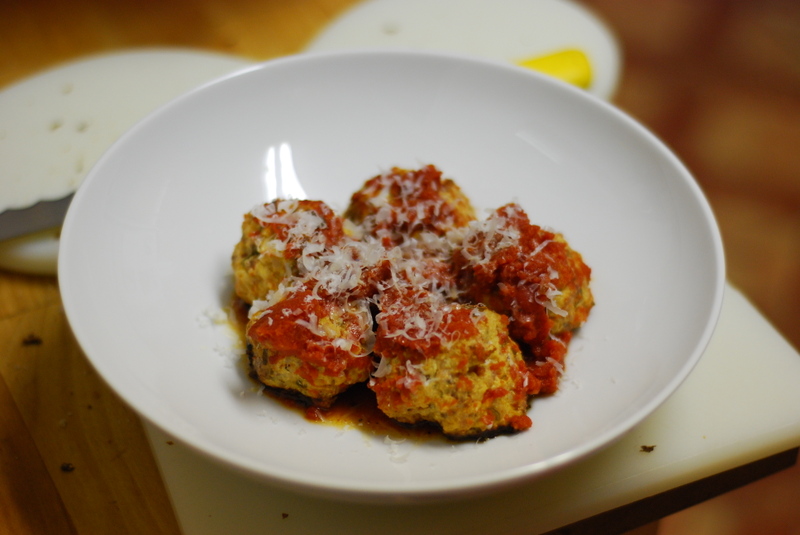
    Remember when I went to San Francisco back in September? I had this great lunch at A16 whilst there and I realized I never told you about it. Seriously wonderful. My lunch companion and I shared a plate of burrata dabbed with this amazing chili oil – the recipe is in the cookbook – and then a plate of meatballs that quite literally were the greatest meatballs I’ve ever eaten. Swear to God. Pillowy and incredibly tender, perfectly seasoned, napped in tomato sauce so good that should be bottled and sold, and all I wanted to eat for the rest of that trip.

    Besides the flavor, the consistency is what really drove me nuts. How were they able to hold their shape and still be so soft at the same time?

    Divine providence, then, when I realized that a recipe for these very same meatballs was published in the LA Times not a few days before I went to the West Coast. I’m surprised that it took me two whole months to get around to making these – every time I thought about those darn meatballs, my stomach started rumbling. I’m such a dainty girl, aren’t I?

    Right off the bat, I made a few small changes: first of all, my store had no pork shoulder, so I was forced to buy ground pork loin. Second of all, I left out the pork fat because, well, just because. I didn’t know where to buy it and since I had more than 2 ounces of prosciutto at home, I thought I’d sub the prosciutto for the pork fat. Okay? Oh, and instead of whole milk, I used 1%. Alright, that’s out of the way. The raw mixture was gorgeous – sort of wobbly and very moist. The fact that the recipe doesn’t tell you what to do with the bread is a little maddening, but I improvised: cut off the crusts and cubed the bread rather roughly.
    Dsc_5075

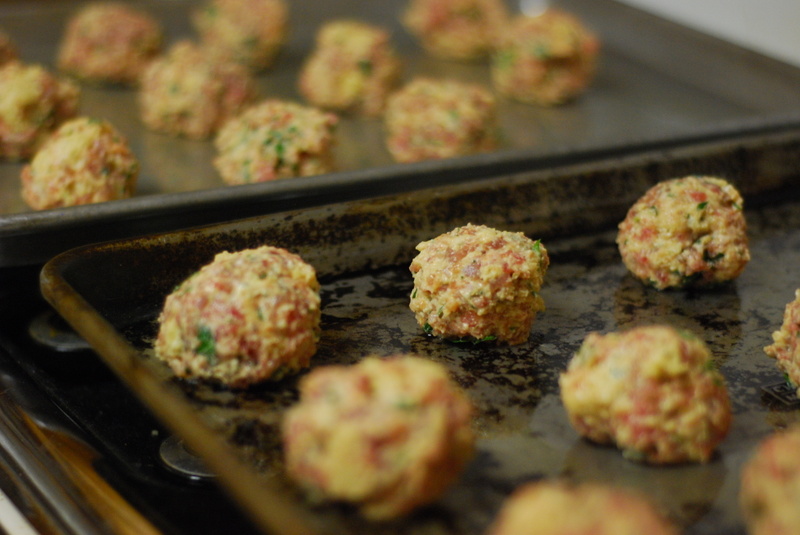
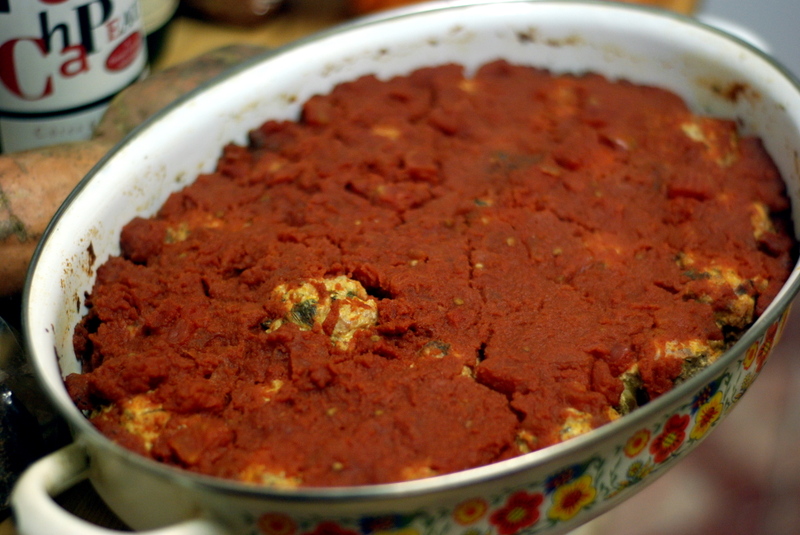
    The technique is simply genius. Instead of frying meatballs in a pan and getting spattered oil simply everywhere, you just lay the meatballs on oiled baking sheets and stick them in the oven for half an hour. (Of course, if your oven is in dire need of a cleaning, be prepared for some smoking, but that’s neither here nor there, Miss Filth.) Then you take the meatballs, paleish but firmed up, and pack them into a baking dish, drowning them in pureed tomatoes. That dish gets covered tightly with aluminum foil and back into the oven it goes. Meatballs braised in tomato sauce! Are you hungry yet? I just had breakfast and I think I am.

    After an hour and a quarter, the sauce looked darkly rusty and set and the meatballs were cooked through. We set the table, put out the grana and a grater and some sliced bread, and got to work.

    Well. Hrm. Okay.

    The meatballs were fine, a little over-salted (actually, more than a little, even though I used less salt than called for because Ben thinks he’s pre-hypertensive and I’d rather not argue about it), but fine. Average. They were not the gloriously puffy, tender specimens I ate in San Francisco, nor was there really enough sauce – the liquid had mostly evaporated (even though I added 1/4 cup of water to the pan, right before putting the pan in the oven, because the tomatoes looked a little dry) and the tomatoes were sort of thick and sticky on top of the meatballs. I wouldn’t write home about these meatballs and sort of couldn’t wait to move on to salad (more on that tomorrow). I thought about freezing the rest for those emergency nights when you have to eat something but find the idea of cooking painful on the level of sticking a fork in your eye. That kind of fine, if you know what I mean.
    Dsc_5086

    Was it my fault? Because I bought ground loin instead of shoulder? Because of the pork fat? Because of the 1% milk? It didn’t seem entirely likely, but who knows. I was going to just write here that the chefs probably had some secret restaurant trick that they didn’t want to divulge in the cookbook and that the meatballs are one of those things that you simply have to go to San Francisco to try yourself and leave it at that.

    Except as I was preparing to write this entry, I noodled around online a bit to see what anyone else had to say and I came across a Food & Wine article about the restaurant from a year and a half ago. Lo and behold, the article also included a recipe for the famous meatballs and it was totally, substantially different from the one I tried. First of all, no beef at all! Just pork, and lean ground at that. Second of all, no pork fat or prosciutto! Just pancetta. Third of all, more bread and with actual directions – namely that it’s not meant to be cubed at all! But blitzed into crumbs. Fourth, yes, fourth of all, two whole cans of tomatoes, double the amount of tomatoes I used. And fifth (I kid you not), the meatballs are supposed to braise for Two. Whole. Hours. Not an hour to an hour and a half.

    What gives, people? Why is that recipe so different from the one in the cookbook? If I had followed the Food & Wine one, would I be blessed with the gorgeous texture and sauce I so craved? I don’t know, nor can I really face the idea of making another 30 meatballs before Thanksgiving. If any of you try the Food & Wine recipe, do let me know, would you?

    In the meantime, file this one in the Frustrating Kitchen Experience folder.

    Next day update: I went to the bookstore and checked out this recipe in the actual cookbook: the LA Times didn’t transcribe the instructions of grinding up the bread, but the instructions are there in the book, so there’s that. Also, the meatballs, after a night in the fridge and then heated up in their sauce, (with an extra splash of water or two) are pretty good: the texture is fluffier and I found them quite tasty. The porkiness was much more pronounced, if you’re into that sort of thing. We ate them with spaghetti on this second go-around and it was a pretty nice lunch. So maybe not such an entirely frustrating experience after all, but still, I’m going back to the drawing board at some point.

    Monday Meatballs
    Makes 28 to 30

    10 ounces boneless pork shoulder, about 1 1/3 cups ground
    10 ounces beef chuck, about 1 1/3 cups ground
    6 ounces day-old country bread
    2 ounces pork fat, finely chopped
    2 ounces prosciutto (4 to 5 slices), chilled in the freezer for 15 minutes and then finely chopped
    1 cup loosely packed, fresh flat-leaf parsley leaves, coarsely chopped
    1 tablespoon kosher salt, divided
    2 teaspoons dried oregano
    1 1/2 teaspoons fennel seeds
    1 teaspoon dried chile flakes
    2/3 cup fresh ricotta, drained if necessary (if sitting in whey, drain overnight in cheesecloth)
    3 eggs, lightly beaten
    1/4 cup whole milk
    1 (28-ounce) can San Marzano tomatoes with juice
    Handful of fresh basil leaves
    Block of grana for grating
    Best-quality olive oil for finishing

    1. Heat the oven to 400 degrees. Coat 2 rimmed baking
    sheets with olive oil. In a large bowl, combine the pork, beef, bread,
    pork fat, prosciutto, parsley, 2 teaspoons salt, oregano, fennel seeds
    and chile flakes and mix with your hands just until the ingredients are
    evenly distributed. Set aside.

    2. In a separate bowl, whisk together the ricotta, eggs and
    milk just enough to break up any large curds of ricotta. Add the
    ricotta mixture to the ground meat mixture and mix lightly with your
    hands just until incorporated. The mixture should feel wet and tacky.
    Pinch off a small piece, flatten it into a disk, and cook it in a small
    sauté pan. Taste and adjust the mixture’s seasoning with salt, if
    needed.

    3. Form the mixture into 1 1/2 -inch balls, each weighing
    about 2 ounces, and place on the prepared baking sheets. You should
    have about 30 meatballs.

    4. Bake, rotating the sheets once from front to back,
    for 20 to 25 minutes, or until the meatballs are lightly browned.
    Remove from the oven and reduce the temperature to 300 degrees.

    5. Sprinkle the tomatoes with the remaining salt, and then
    pass the tomatoes and their juices through a food mill fitted with the
    medium plate. Alternatively, put the entire can of tomatoes and salt in
    a large bowl, don an apron and squeeze the tomatoes into small pieces
    with your hands.

    6. Pack the meatballs into 1 large roasting pan or 2 smaller
    roasting pans. Pour the tomato sauce over the meatballs, cover tightly
    with aluminum foil, and braise for 1 to 1 1/2 hours, or until the
    meatballs are tender and have absorbed some of the tomato sauce.

    7. Remove the pans from the oven and uncover. Distribute the basil leaves throughout the sauce.

    8. For each serving, ladle the meatballs with some of the
    sauce into a warmed bowl. Grate the grana over the top, drizzle with
    olive oil to finish and serve immediately.

  • Dsc_4993

    I came into an inordinate amount of ricotta last week. Tubs worth, really. Some from Di Palo, some of this stuff. How on earth do I work my way through it all?* Short of making ricotta cheesecake (because I just don't feel like cheesecake in November, do you?), I've been throwing spoons of ricotta in with our weekly pasta, mixing it up for a creamy, rich sauce. This works well if the pasta is dressed with a very simple tomato sauce (seriously simple: a clove of garlic, some canned tomatoes, a bit of salt, a line of olive oil and maybe some basil, if you've got it, if not, none).

    Dsc_4966

    The other night, though, we were out of canned tomatoes and a pathetic pile of kale sat in the fridge, staring up at me balefully every time I opened the door. Okay, I thought. I might as well do some clean-up cooking. That kale isn't going to eat itself.

    So I braised the kale (using this technique, sans vinegar, or you could use this one) and boiled some tagliatelle (penne, too, would be nice here). I spooned some of the thick and fluffy ricotta curds into a bowl and then stirred in the hot kale. The starchy pasta water worked as a thinner – you want the ricotta and kale to be saucy without being soupy. You know?

    Dsc_5000

    What's important here is the seasoning: if you don't salt properly, the pasta water and the kale, I mean, you risk ending up with a dish that's quite bland and forgettable.  You need the salt for this to work, and then the ricotta smooths out all the rough edges of the gently sulfurous kale and slicks the chewy pasta with a nice, creamy finish.

    We ate this right up, no leftovers, and Ben kept doing that thing where he nods and murmurs with his mouth full and points at his plate with his fork repeatedly, brow furrowed in delight, looking mightily approving.

    * Seriously, I've still got more ricotta in the fridge than I know what to do with. What's your favorite way of using up ricotta? Other than in lasagna.

    Tagliatelle with Braised Kale and Ricotta
    Serves 2 to 4

    1 bunch of kale (curly, Tuscan, what have you)
    2 tablespoons olive oil
    1 clove garlic, minced
    Salt and red pepper flakes
    2/3 cup fresh ricotta
    Enough pasta for two people (I used about 8 ounces of dried tagliatelle)
    Parmigiano-Reggiano

    1. Wash the kale, strip the leaves off the ribs, chop the kale into ribbons and put them in a pot with olive oil and garlic, some salt and a few grinds of red pepper flakes. Cook over low heat, uncovered, for 10 minutes, until the kale is good and wilted.

    2. Add a cup of water, partially cover the pot and let it cook for another half hour. In the meantime, put the ricotta in a serving dish. Boil water, well-salted, for the pasta. When the kale is cooked, add it to the ricotta and mix well.

    3. Dump the pasta into the boiling water and cook until al dente. Use some of the starchy pasta water to thin the kale and ricotta mixture, if needed. Drain the pasta and toss with the kale and ricotta. Grate a very generous amount of Parmigiano over the pasta and toss well before serving and eating immediately.

  • Dsc_4830

    I am simply pathetic. NaBloPoMoWha? Sorry, folks, the ball has been royally dropped. I’d tell you all my very good excuses for why, but who really cares? I’m just going to pick up and keep going as if nothing happened. Won’t you play along?

    After all, I have to tell you about how I’ve managed to make tilapia tasty – a feat many of you, no doubt, will be perched on the edge of your seats to hear about. Oh, ha ha. I was not, I know, alone in my initial dislike of tilapia, Ben’s favorite fish, when I first met the man and started cooking for him. Dislike’s a bit strong of a word, but I guess I just found it so boring – mild, white and cheap. Snooze. Wouldn’t you rather be eating cardboard?

    But Ben gently rebuffed my attempts to serve something other than tilapia and then I read Bottomfeeder and realized that my choice of fish to eat (if I didn’t want to go broke) was basically reduced to canned sardines, farmed oysters and American tilapia. Who knew Ben’s favorite fish would turn out to be sustainable and responsible eating? I decided to find a way to like it.

    Before I came along, Ben would bread his fish and pan-fry it, so I followed suit for a while, adding cayenne and salt to the breadcrumbs, but almost fell asleep at dinner. Give me a bowl of cereal instead!, I’d beg. I ate a gorgeous piece of broiled tilapia at a Greek restaurant, flecked with oregano and brightened with lemon, so I turned to my broiler at home for a while before losing interest in that, too. Then two weeks ago, in a fit of genius, I figured out the preparation I’d been looking for and man, is it good, if I do say so myself.

    Okay, so here’s how it happens, if you’re cooking for two people: Buy two fillets of tilapia, a very big leek, or two small ones, a bunch of cherry tomatoes (you’ll use cup or two), and a bottle of dry white wine (I like Muscadet – it’s bone-dry, which is how I like my white wine – but I’m sure you have your own favorite). Go home, slice your leek in half lengthwise and rinse out the dirt as best you can. Then cut the leek halves into thin half-moons, not just the white part of the leek, but the pale green, too. Discard the tough, dark parts.

    Heat a spoonful or two of olive oil in a 10-inch saute pan over medium heat and throw in the leeks. Cook, stirring, for about 7 minutes or until the leeks have softened. Don’t let them brown. Add a sprinkle of salt and some pepper and stir well. In the meantime, wash and half the cherry tomatoes. Add the tomatoes to the leeks and stir to combine. Cook for a few minutes, then add a good glug of white wine. Cover the pan and turn the heat down somewhat, then let the leeks and tomatoes cook for about 10 minutes. Check the pan and stir every once in a while to make sure that the vegetables aren’t burning or sticking to the pan. The tomatoes should soften and collapse. Slip the fish fillets into the pan, making room among the vegetables. Spoon some of the tomatoes and leeks over the fish, cover again and cook for about 7 minutes, until the tilapia is flaky and white but still moist.

    Serve this with a glass of that nice Muscadet and plain boiled rice to soak up the leeky-sweet sauce. You will find yourself simply gobbling it up. Wouldn’t you know that I actually look forward to tilapia now? Insane, what love will have you do.

  • Dsc_4803

    I've been doing this thing lately where I try to spend less than five dollars on lunch during the week. It's more difficult than you'd think, though perhaps not to those of you who work in Manhattan. A slice place opened up near me recently advertising one-dollar slices of pizza, which worked once or twice, but there's only so many times you can eat pizza for lunch before you start to feel a bit sick to your stomach. Then there are a few Middle Eastern places that sell sandwiches for three or four dollars at lunchtime, but I find myself burning out on those relatively quickly. Tahini just doesn't work every single day. And then there's the option of simply opening a can of soup or baked beans at the office, but that just gets depressing.

    Of course, what would make this five-dollar challenge a lot easier would be to simply cook more at home and bring that food to work with me. So I've started cooking big yield recipes on Sunday afternoons, when I have time to sit around and watch pots boil. In the spring, Amy Scattergood wrote an article on the felicitous pairing of beans and greens, spurring me to finally place an order with Rancho Gordo. We gobbled up our two kinds of lima beans (Christmas and Large White) and our Ojo de Cabras right away, but the Good Mother Stallards languished in the cupboard for eight long months. Who knows what I was waiting for?

    Well, actually, I do know.

    Dsc_4808

    This soup: A thick, flavorful, nutritious and simply gorgeous mixture of dark green kale, pale and chewy orecchiette, red and creamy beans, and an ochre purée of paprika-scented beans and herbs that gets stirred in at serving time, adding smoke and spice. Ooh yes! It was just as good as it sounds.

    The topping of bean purée is really inspired: without it, the soup is simply a very nice vegetarian soup that is hearty and rib-sticking and good for boxed lunches. But that purée (beans, pot liquor, sage, parsley, two kinds of paprika and lemon juice) elevates this soup into the sublime. I took the photo before stirring the puree into the soup – it thickens the broth and spreads the bright and smoky flavor throughout. Delicious.

    Now my only problem is that Ben took all the leftovers for lunch.

    Cranberry Bean, Lacinato Kale and Pasta Soup
    Makes 8 to 10 servings
    Print this recipe!

    1/4 cup olive oil plus 2 1/2 tablespoons, divided
    2 leeks, white part only, cleaned and sliced, about 2 cups
    2 medium carrots, finely chopped, about 1 cup
    1 onion, finely chopped, about 1 cup
    3 cups dried cranberry beans or Good Mother Stallard beans
    Kosher salt
    2 bunches lacinato kale, cleaned, stemmed and coarsely chopped, about 10 cups
    3 cups dried orecchiette pasta (about 9 ounces)
    1 tablespoon fresh minced sage
    1/2 cup fresh chopped parsley
    1 1/2 tablespoons smoked paprika
    1 1/2 teaspoons Hungarian paprika
    1/8 teaspoon fresh lemon juice
    Grated Parmesan cheese, for garnish

    1. In a 4-quart soup pot or cast iron casserole (with a lid that fits), heat 1/4 cup of olive oil and cook the leeks, carrots and onions over medium-low heat until just softened, 8 to 10 minutes.

    2. Add the dried beans and 12 cups of water. Bring to a simmer over high heat, then reduce the heat to low and cover the pot with the lid, stirring occasionally. After about 45 minutes, add 1 tablespoon of kosher salt. Continue to cook, covered, and again stirring occasionally, just until the beans are soft, 45 minutes to 1 hour or more (this may vary according to the beans you use).

    3. With a slotted spoon, remove 1 cup of the beans and, separately, 2 tablespoons of bean liquor and set both aside. Add the kale to the soup, stirring in a few cups at a time as the greens wilt. Cover, and continue to cook for 8 to 10 minutes more until the greens are tender, then remove from the heat.

    4. Meanwhile, bring a pot of salted water to a rolling boil and cook the pasta until al dente. Drain and reserve.

    5. In a food processor, combine the reserved beans and bean liquor, sage, parsley, both paprikas and lemon juice, the remaining 2 1/2 tablespoons olive oil and a pinch of salt. Blend until smooth, then check for seasoning, adding more salt if desired, or bean liquor to aid in blending.

    6. Just before serving, stir the cooked pasta into the soup. Ladle the soup into bowls and top each with about 2 tablespoons of spiced bean purée. Grate Parmesan over the top of each bowl to taste and serve immediately.

  • Dsc_4820

    Fine, you got me. I skipped a day, yesterday to be exact. I'm sorry. It's just that Sunday was such a nice day, so pretty outside and so full of other things to do besides cook and write, like walking in the Gardens and talking about our wedding and sitting around being indolent. Oh, and eating chocolate chip cookies with buckwheat groats. Of course. What were you doing?

    Now I know that some of you pricked up your ears at chocolate chips, some others at cookies and then the rest at buckwheat groats. Otherwise known as kasha. What? In cookies? I know.

    It's like this: a few months ago, in July, to be exact, we took a day trip to Fire Island with some friends. While waiting for one of the trains (we took two trains, a minibus and a ferry to get there) just before lunchtime, my friend Sara pulled out a Ziploc bag filled with cookies and offered me one. I don't usually eat dessert before lunch, but it was one of the those summer days where rules like that don't matter, where you happily drink beer at two in the afternoon and eat cookies before lunch and spend the day dreaming about moving to a beach community.

    Anyway, the cookie. This was no ordinary chocolate-chip cookie. It had serious crunch to it, but also good chew, and then there was the taste: mysteriously minerally and roasty-toasty, in addition to the more familiar flavors of caramel and butter and bittersweet chocolate. "What's in this thing?", I wondered. Sara promised me the recipe. She got it from a friend, who got it from another friend, who got it from, well, I don't know.

    It turns out that the cookie is made with whole-wheat pastry flour (though it's pretty resilient: this latest batch I made half with regular whole-wheat flour and half with white pastry flour) and buckwheat groats – which give the cookies that gorgeous crunch (the groats retain their integrity throughout the baking process). Don't mistake the groats and the whole-wheat necessarily for virtue: there's still a stick of butter in the recipe and a whole cup of sugar. But you can count on a bit more fiber and some blood-sugar regulation, apparently.

    But all of that mumbo-jumbo aside, the real point is that these cookies taste delicious. I absolutely adore them. When they first come out of the oven, their centers are soft, with little crystals of crunch, and their edges are caramelized and the chocolate is oozy in the center. With a glass of milk, you're all set for nirvana. The next day, the cookies are a little harder perhaps, but no less brilliant. They keep well and make for excellent afternoon snacks.

    Shall I go ahead and do it? It's been a while. Okay, here goes. They're lamination-worthy! Yes, indeed.

    Chocolate Chip Cookies with Buckwheat Groats
    Makes 20

    1/2 cup unsalted butter, softened
    1 cup brown sugar, lightly packed
    1 egg
    2 teaspoons vanilla extract
    1/4 teaspoon almond extract
    1 cup plus 2 tablespoons whole wheat pastry flour
    1/2 teaspoon baking soda
    1/4 teaspoon salt
    1/2 cup buckwheat groats (kasha)
    6 oz semisweet chocolate, chopped into chip-sized chunks

    1. Preheat the oven to 375 degrees.

    2. In a mixer or bowl, cream the butter and brown sugar together until light and fluffy. Beat in the egg and two extracts until well-combined.

    3. In a small bowl, mix the flour, baking soda, salt and buckwheat, and add to the butter mixture, beating to incorporate. When combined, add the chocolate and stir to combine.

    4. Drop 2 tablespoon-sized balls of dough onto ungreased cookie sheets, 3 inches apart. Bake for 6 minutes, then reverse the sheet pan in the oven and bake for an additional 6 minutes. The cookies should be still slightly pale in the center and golden brown on the edges.

    5. Cool the cookie sheet on a rack for 5 minutes, then transfer to the rack directly with a spatula.

  • Dsc_4788

    Creamed tomatoes on toast – it just sounds too dreamy, doesn't it? I have visions of sitting in a nursery and tucking into this and a mug of tea while a stern but loving governess speaks nasally about my table manners and tut tuts periodically.

    And while it really does seem promising, from Simon Hopkinson via Edouard de Pomiane, with tomatoes baked in the oven in a garlic-scented, mint-flecked cream bath, I am rather sad to admit that nursery food can sometimes be just that: fit for babies.

    I think I prefer my tomatoes loud and zesty, screaming with flavor, not baked into muted submission, which is kind of what happens here. Cream takes the edge of the tomatoes, but that edge is precisely what makes tomatoes so great. Right?

    Dsc_4758

    I didn't use plum tomatoes, it's true, because they looked simply ghastly at the store and the lovely little Campari tomatoes were perfect. I tasted one before cooking it and it was delicious, so it's not that the tomatoes were bland, but of course Campari tomatoes are juicy as all get-out and plums are dry and meant for oven-baking. So that's one thing. Another is that I used half the amount of cream called for and I'd suggest you do the same unless you'd like to swill cream directly from the baking dish. You might! If I had a hardier constitution I would.

    Dsc_4767

    The third thing is that no matter how hungry you are, if you do decide that this sounds like the kind of meal you'd like for lunch, please do a wait a bit before attacking your plate or else you will spend the rest of the afternoon with a dull, raised palate – hot tomatoes can be vicious.

    Just think of me as your governess.

    Creamed Tomatoes on Toast
    Serves 2

    8 ounces heavy cream (the original recipe calls for 1 1/2 cups)
    2 garlic cloves, peeled and crushed
    6 ripe plum tomatoes, cut in half lengthwise and cored
    Salt and pepper
    12 basil or mint leaves, torn into pieces
    4 slices of French country bread, grilled or toasted and brushed with a little olive oil

    1. Preheat the oven to 375 degrees. Simmer the cream with the garlic and reduce by one-third. Put the tomatoes, cut-side uppermost, in an ovenproof dish and season them with salt and pepper. Strain the cream into a bowl and stir in the basil or mint. Lightly season and pour over the tomatoes.

    2. Bake in the oven for 20 to 25 minutes or until the cream is reduced and is thick and the tops of the tomatoes are slightly blistered. Meanwhile, have ready the toast on 2 plates and spoon a few tomatoes onto each slice. Spoon some residual cream over the top.

  • Dsc_4433

    With 3 minutes remaining in this day, this one must be short and sweet. Perhaps I'll even attempt a poem. I warn you, it's going to get ugly.

    Sweet potato, cubed
    star anise and onions, sweating
    magic wand liquidizes
    turns to orange velvet
    what was once hard as stone

    Dsc_4430

    Never mind, that's bad. The soup, though, very nice. Especially the mint and yogurt on top. Makes the whole thing sing.

    One minute left! Done.

    Sweet Potato and Red Lentil Soup with Mint
    Makes 4 to 6 servings

    2 tablespoons olive oil
    1 onion, chopped
    3 cloves garlic, chopped
    1 1/4 lbs sweet potato, peeled and cut into chunks
    1 1/2-inch piece fresh ginger, peeled and chopped
    1 whole star anise
    1 tablespoon tomato paste
    1/2 teaspoon ground cinnamon
    2/3 cup red lentils
    2 3/4 pints water or vegetable stock
    Juice of 2 limes
    Salt and pepper
    Greek yogurt or sour cream
    Leaves from 5 sprigs of fresh mint, sliced

    1. Heat the oil in a heavy-bottomed pan, and add the onions, garlic and ginger. Cook, stirring frequently, for about 5 minutes. Do not allow to brown. 

    2. Stir in the sweet potato and star anise, reduce heat to low and cover tightly, leaving to sweat for 10 minutes. Then add the tomato paste, cinnamon, lentils and water or stock. Bring up to the boil, then reduce the heat and simmer until the lentils and sweet potato are very tender, about 30-35 minutes. Season with salt and pepper.

    2. Remove the star anise, then liquidize the soup with an immersion blender. Stir in the lime juice and taste and adjust the seasoning, if necessary. Spoon into bowls, topping each with a spoonful of yogurt or sour cream and some sliced mint leaves.