• P1070032

    After the excesses of the Thanksgiving table, all I wanted was a light, vegetarian end to our weekend, which is why a big plate of stewed vegetables sounded like the perfect Sunday dinner. But I should probably also note that as I'm nearing the end of The Omnivore's Dilemma, I've become frantically wide-eyed and horrified at the thought of most of the food accessible to me (with the exception of the goods on display at the farmer's market), so eating a pile of vegetables whose origin I (mostly) know just seems so much safer.

    For now.

    Maggie Barrett's recipe for ribollita (a twice-boiled bread-and-vegetable soup) is a quicker, breadless version of the classic Tuscan dish. Not only is the ingredient list simple and pure, but the preparation is peaceful and I wanted nothing more than a easy cooking experience after a relaxing day of lunching with friends and reading in bed. Sometimes Sunday cooking is about pulling out all the stops, but sometimes it's just about simplicity.

    You cook most of the vegetables together in oil until they start to caramelize before throwing in water, tomatoes, the beans and the herbs. Although I halved the recipe (and left out the yellow squash, because yuck), I needed to use the same amount of water, so keep that in mind if you make this yourself. I wonder if the full recipe, cooked as Barrett indicated, would turn out too dry? After an hour of simmering, I added frozen leaf spinach instead of the fresh stuff, but I wouldn't do that again – I'd buy chopped frozen spinach. The leaf stuff is too long.

    We drizzled our bowls with olive oil and sprinkled grated Parmigiano on top. We breathed the savory steam in deeply and ate our stew with crusty Portuguese rolls. The long-cooked vegetables were sweet and tender, the beans yielded gently in each mouthful, and the grassy oil complemented the verdant spinach. This isn't the prettiest dish you'll ever make, but it's so satisfying, healthy and warming you'll find yourself making it again and again. It's such good winter food.

    Ribollita di Luana
    Serves 6 to 8

    1/2 cup olive oil
    1/2 yellow onion, finely chopped
    2 cloves garlic, finely chopped
    3 stalks celery, cut intо 1/3 -inch-thick slices
    4 carrots, peeled and sliced intо 1/3 -inch-thick rounds
    2 zucchini, halved lengthwise and cut intо 1/3 -inch-thick slices
    2 yellow squаsh, halved lengthwise and cut intо 1/3 -inch-thick slices
    1/2 fennel bulb, cut intо 1/2 -inch-thick pieces
    1/4 savoy cabbage, roughly chopped
    2 15-ounce cans cannellini bеans, drained and rinsed
    1 14-ounce can peeled whole tоmatоes, drained and divided intо pieces
    1 tablespoon finely chopped rosemary
    1 tablespoon finely chopped sage
    1/2 cup finely chopped flat-leaf parsley
    1 bay leaf
    1 bunch spinach (about 6 cups), rinsed and roughly chopped
    Red-pepper flakes
    Extra-virgin olive oil
    Parmesan cheese, grated
    Crusty bread, optional

    1. Heat a large soup pot over medium-high heat. Add thе oil. When hot, stir in thе onion, garlic, celery, carrots, zucchini, squash, fennel and cabbage. Season with salt. Cook for 15 minutes, stirring occasionally.

    2. Add thе beans, tomatoes, herbs and 2 cups water. Seаson with more salt, thеn gently fold togethеr until combined. Press on thе solids so thеy are submerged in the water. Bring to a boil, then lower thе heat and simmer uncovered for 1 hour. Stir gently only once or twice.

    3. Fold in the spinach and simmer 30 minutes more. Remove thе bay leaf. Stir in more salt and red-pepper flakes tо tаste.

    4. Ladle the soup into individual serving bowls. Drizzle each with olive oil and sprinkle with grated Parmesan. If you choose, serve with bread.

  • Brussels_1

    I'm not going to do five separate posts on Thanksgiving, because I did that last year, and frankly, I found it tiring. And after all, now that Thanksgiving is over, your eyes are probably glazing over at the thought of contemplating someone else's holiday table. But since we did make one real keeper, a classic, something that should grace your table at least once a month (or at least mine) from here on out, I can't help but tell you about it.

    The recipe comes from The Union Square Cafe Cookbook and was excerpted in Julia Moskin's side dish article from a few weeks ago. Molly blogged about a version with poppyseeds last year. And luckily, Ben's mother – the hostess of our Thanksgiving feast this year – was as enthusiastic about serving it as I was.

    It's an easy thing, since you can prepare the washed and sliced sprouts earlier in the day, dress them with lemon juice and let them sit in the fridge while your turkey roasts and you begin to freak out about whether or not that damn temperature thingy will ever pop and if your gravy will ever measure up to your stepmother's and why-oh-why most kitchens don't come equipped with at least three ovens, because life could be so much easier that way, don't you agree?

    Then, just before serving, you heat some oil in a pan and saute the lemony sprouts along with some fragrant mustard seeds and garlic before dousing the pan with white wine. The whole cooking part takes about 5 minutes. Which is perfect, because right before serving is when all hell breaks loose, the kitchen fills with hungry guests, the turkey pops, the gravy comes together, knives are brandished, wine is opened, and you can, at least, breathe easy knowing that your Brussels sprouts will be a revelation.

    A forkful of these combined with a mouthful of mashed potatoes (I made these this year, which were…fine) soused with rich gravy is a pretty great way to start Thanksgiving. And it's a flexible dish, too. Warmed in a pan and eaten two days later, they were still pretty delicious. A tad more sulfury, but tasty nevertheless. Cabbage and mustard are fine bedfellows indeed.

    (We also made Deborah Madison's Swiss Chard with Pickled Red Onions from Moskin's article, and though it was a sparkly little dish – those onions are puckery! – it's better suited for a summer table, alongside a freshly grilled bird or something. At Thanksgiving, it was a little too bright and shiny. Do you know what I mean?)

    Hashed Brussels Sprouts with Lemon Zest
    Makes 10 servings

    2 tablespoons freshly squeezed lemon juice, plus grated zest of 1 lemon
    2 pounds brussels sprouts
    2 tablespoons olive oil
    2 tablespoons butter
    3 garlic cloves, minced
    2 tablespoons black mustard seeds or poppy seeds
    ¼ cup dry white wine or vermouth
    Salt and pepper to taste. 

    1. Place lemon juice in a large bowl. Cut bottoms off sprouts, and discard. Halve sprouts lengthwise, and thinly slice them crosswise. The slices toward the stem end should be thinner, to help pieces cook evenly. As you work, transfer slices into bowl with lemon juice. When all sprouts are sliced toss them in juice and separate leaves. (Recipe can be prepared to this point and refrigerated, covered, for up to 3 hours.)

    2. When ready to serve, heat oil and butter over high heat in a skillet large enough to hold all sprouts. When very hot add sprouts, garlic and seeds, and cook, stirring often, until sprouts are wilted and lightly cooked, but still bright green and crisp, about 4 minutes. Some leaves might brown slightly.

    3. Add wine, and sprinkle with salt and pepper. Cook, stirring, 1 minute more. Turn off heat, add salt and pepper to taste and stir in the lemon zest, reserving a little for top of dish. Transfer to a serving bowl, sprinkle with remaining zest and serve.

  • Unbaked

    It really wouldn't have been fair not to follow up this post with a more detailed one, because despite the shrunken crust, this tart really is one for the recipe files, the lamination, the hall of fame. It comes from Maury Rubin, of City Bakery fame and the author of the fabulous Book of Tarts (which I own, and yet have never baked from, puzzlingly), so of course its pedigree promises great things. And if you'll note in your printout that you must line your unbaked, empty pie shell with aluminum foil and pie weights before blindbaking it, then you'll have spectacular results, I'm sure.

    Oh, and another thing? I think the metal tart pan is key. I forgot mine at home, and had to use a glass pie dish instead, and while I'm not sure what effect that had on the crust, something tells me that Maury calls for a metal tart pan for a reason. But otherwise, the rest of the recipe is so easy. You melt sugar in a nonstick pan until a brown caramel emerges. You add warmed cream and melted butter to the pan and stir this into a luscious sauce, before tossing frozen cranberries and sliced almonds in it and piling it all into the baked pie shell.

    Wait, one more note. Keep an eye on your oven. Ours was a bit hot and the top layer of almonds burned in the second baking. We attempted to pick off the worst offenders, which resulted in a slightly lopsided tart. But covered with a dollop of barely sweetened whipped cream? It didn't matter at all. The faintly bitter caramel, the bright and saucy cranberries, the mellow, crunchy almonds – they all blended into a fantastic, sophisticated dessert that absolutely shone on the holiday table.

    Cranberry, Caramel and Almond Tart
    Serves 10 to 12

    Tart dough
    13 tablespoons unsalted butter, cut into 1-inch pieces
    1/3 cup powdered sugar
    1 egg yolk
    1 1/2 cups unbleached flour
    1 tablespoon heavy cream

    1. Heat the oven to 350 degrees. Let the butter sit at room temperature for 15 minutes, until malleable.

    2. Place the powdered sugar in the bowl of a standing mixer or a large free-standing bowl. Add the pieces of butter and toss to coat. Using a paddle attachment with a standing mixer, combine the sugar and butter at medium speed, until the sugar is no longer visible.

    3. Add the egg yolk and combine until no longer visible.

    4. Scrape down the butter off the sides of the bowl. Add half of the flour, then begin mixing again until the dough is crumbly. Add the remaining flour and then the cream and mix until the dough forms a somewhat sticky mass.

    5. Flatten the dough into a thick pancake, wrap it in plastic and refrigerate at least 2 hours before preparing to roll out the dough.

    7. Lightly butter a 9-inch pastry ring or fluted tart pan and place it on a baking sheet lined with parchment paper or a nonstick Silpat pad.

    8. Once the dough has thoroughly chilled, cut it in half, then cut each piece in half lengthwise. Rotate the dough 90 degrees and repeat, until you have 16 equal pieces. Sprinkle your work surface with a thin layer of flour. Knead the pieces of dough together until it forms one new mass and shape it into a flattened ball. Flour a rolling pin and sprinkle flour again on the work surface underneath the dough. Roll out the dough into a circle one-eighth-inch thick.

    9. Dock the dough with a pastry docker or prick the dough all over with a fork. Transfer the dough into the ring or tart pan by rolling about a third of it around your rolling pin, lifting it and placing it into the ring. Gently pat the dough onto the bottom and up the sides of the ring. Trim the edges so that they are flush with the top. Put the baking sheet with the ring into the freezer for one hour. Bake 15 to 20 minutes or until lightly browned. Remove from the oven and let cool to room temperature before filling.

    Filling and assembly
    1 1/4 cups heavy cream
    1/2 cup (1 stick) unsalted butter, cut into eight pieces
    1 cup granulated sugar
    1 3/4 cup frozen cranberries
    2 cups unblanched sliced almonds

    1. Measure the cream and butter into a saucepan and heat it over low heat. When the butter has melted completely, turn off the heat.

    2. To make the caramel, spread the sugar evenly in a perfectly dry 10-inch deep nonstick skillet and place it over medium-low heat.

    3. The sugar should turn straw-colored, then gold and then a nutty-brown caramel after about 10 minutes. Slowly whisk the cream and butter into the sugar. Be extremely careful about the sugar, which can splatter as the cream is added (long sleeves are a good precaution). Strain the caramel into a bowl and cool it for 30 minutes.

    4. Stir the frozen cranberries and the almonds into the caramel and mix until all the fruit and nuts are coated. Spoon the filling into the partially baked tart dough mounding toward the center.

    5. Bake for 20 to 25 minutes, until juices and the caramel are bubbling slowly around the edges. Remove from the oven and let stand for one hour, then gently lift the tart ring off the pastry.

    6. Let the tart cool for at least 15 minutes before serving. Serve warm or at room temperature.

  • Group_1

    The last few days have been a blur of turkey dinners and hiking excursions and game nights, so I’m just popping in quickly to leave you with a forest portrait after our hike of Breakneck Ridge and an exhortation to visit Homespun Foods on Main Street in Beacon, NY. If you’re ever in town and have an unreasonable hankering for the best bread pudding in the world (mind you, their spicy hot chocolates and quiches and soups aren’t exactly something to sneeze at either), you would be well-served to stop by.

    And now I’m going to go spend the last holiday hours away from the stove and the computer.

  • Did anyone else make Maury Rubin’s Cranberry Caramel Almond Tart yesterday and forget to line the unbaked crust with aluminum foil and pie weights before baking it because it didn’t say to do so in the recipe and although you’ve blindbaked crusts a million times before, without that prompt you completely forgot that step this time around, leaving you with a sadly shrunken crust and an irrational case of Thanksgiving rage directed straight at that lovely man?

    Still, a pretty fantastic tart. Tart, gooey, crunchy, complex. Absolutely delicious (except for that damn crust) and gobbled up entirely last night.

  • Plate_6

    Tap tap tap. Anybody here? No? Brining turkeys and peeling chestnuts and pureeing pumpkins? Very good. So, while most of you are working on your own family's meal and while Ben's family is downstairs starting the day's work (I'm coming!), I'll just quickly tell those of you who couldn't give a hoot about Thanksgiving about the delicious bean casserole I made last weekend that is still sitting in my fridge and speaking of which, if you're not doing anything for Thanksgiving, would you mind coming over and liberating me of some of the four pounds of leftovers I couldn't eat, before it goes bad?

    Thanks.

    Both the New York Times and the Los Angeles Times have writers who cover the greenmarket beat, but I think the LA Times might be winning: how about this article to whet your appetite? I want to make every single thing (except the walnut-cilantro pesto – shudder) Russ writes about. Last weekend, I started with the bean gratin.

    I had almost all the ingredients for his bean-butternut gratin in my kitchen, so after a jaunt to the Greenmarket (though it was less of a cheery jaunt and more of a chilly hustle because apparently it's winter now, thanks a lot, Chris Cimino*), I was ready to get cooking. The first step has you boil beans (I used a mix of dried flageolets and dried Great Northern beans) with aromatics and diced bacon. Of course, boiling bacon now always makes me think of Julie and Julia, so I had to suppress a giggle at the memory of Julie's righteous indignation, but that mirth soon turned into something akin to disgust, because have you ever boiled bacon? It is not a pretty smell. In fact, I'd say it's downright barnyardy.

    But who am I to question Russ Parsons? No one, that's who.

    The beans and bacon boiled away while I did my best to distract myself from the sensation that a pig farm might have cropped up somewhere in the near vicinity of my kitchen (and lest you think I'm exaggerating, I'd like to point out here that I have actually been to a pig farm, in Minnesota no less, and because I became so enamored of a baby piglet that I clutched it to my breast for the duration of our pig-farm excursion, the stench stayed with me for days, so I know what I'm talking about).

    Meanwhile, I peeled and cubed a three-pound butternut squash and steamed it. After I complained a few weeks ago about the texture of sauteed squash, I was apprehensive about the textural component in this recipe, but steaming the squash transforms the little cubes into sweet, smooth, melt-in-your-mouth squares, so I needn't have worried.

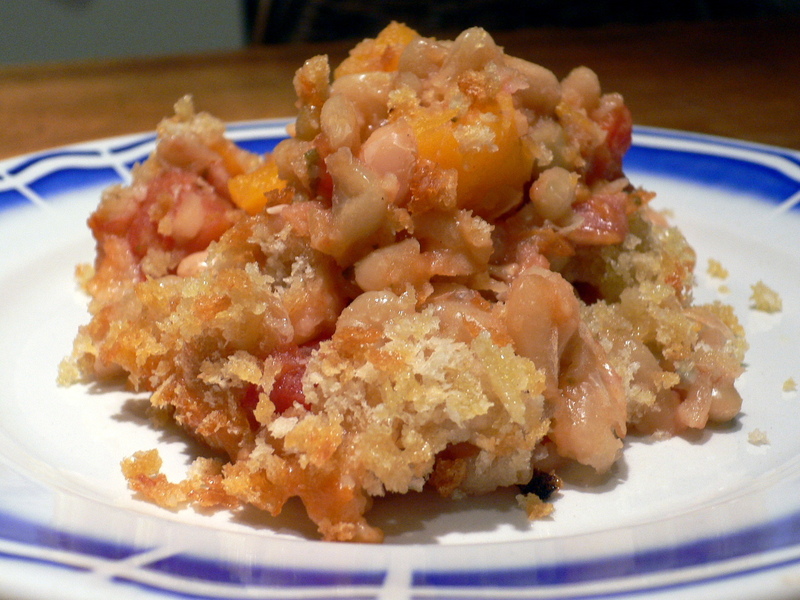
    The rest of the prep was pretty straightforward. I dumped a can of diced tomatoes, sans juice, into the drained, soft beans, crushed the mixture a bit with a wooden spoon, then layered the squash and the beans into a casserole dish before topping them with a "blizzard of garlicky breadcrumbs" (yum). I baked the dish until the apartment filled with the rich scent of meaty beans and the breadcrumbs had crisped to an appetizing golden-brown

    A plateful of this for dinner hit the spot on that cold, blustery night. The beans were tender and melting, the squash was sweet as could be and the tomatoes and bacon added a layer of savory flavor and brightness. The crunchy, garlicky breadcrumbs were evenly distributed with each bite, and I couldn't help but take seconds. And eat more for lunch the next day. And make Ben eat some. And then have more for dinner. After all of this? There was still more than half of the gratin left.

    So take my advice on two counts here: first, only make this if you really have a big party to feed. Second, if you like barnyardy pork flavors, then ignore this second point. But if they kind of gross you out, then don't boil the bacon with the beans, just dice and render it until crisp and add the bits to the gratin before it goes in the oven. There you have it.

    And now I have to go. Three pies, a turkey, five side dishes and I don't even know what else are needing to be made and the clock is ticking. Happy Thanksgiving!

    *Just kidding, Chris. I think you're the bee's knees. Really. So cute! And so accurate. Mostly.

    Bean and Winter Squash Gratin
    Serves 8

    4 slices thick-sliced bacon (about 1/3 pound)
    1 cup minced onion
    2 cloves garlic, crushed, divided
    1 pound pinto or other dried beans
    5 cups water
    1 teaspoon salt
    1 (28-ounce) can tomatoes, drained and chopped
    1 tablespoon chopped sage
    3 pounds butternut or other winter squash
    1/2 stale baguette (to make 2 cups bread crumbs)
    1/4 cup plus 2 teaspoons olive oil, divided

    1. Chop the bacon into rough squares. Combine with the onion, 1 crushed garlic clove, the beans, water and salt in a heavy pan. Bring to a simmer, then cook, tightly covered, over low heat until the beans are tender, 2 to 2 1/2 hours. Check occasionally; if the beans begin to go dry, add a little more water.

    2. When the beans are quite tender, remove from the heat, add the tomatoes and sage and stir very roughly to crush some of the beans (their starch will thicken the liquid).

    3. While the beans are cooking, peel the squash, cut it in half and scoop out the seeds. Cut the flesh into one-half-inch dice. Steam the squash over rapidly boiling water until tender, about 7 to 10 minutes. Remove from the steamer and cool slightly before stirring (so cubes retain their shape).

    4. Remove the crust from the baguette and coarsely chop the bread. Place it in a blender or food processor with the remaining garlic clove and grind to coarse crumbs.

    5. Heat the oven to 400 degrees. Generously brush a 3- to 3 1/2 -quart gratin dish with 2 teaspoons olive oil. Spoon the squash cubes into the dish, being careful not to crush them. Using a slotted spoon, ladle the cooked beans over the top. Add just enough of the bean liquid to cover the bottom of the dish. Stir lightly to combine.

    6. Spoon the garlicky bread crumbs over the top, covering the dish in a thick mound. Drizzle with olive oil. Bake until the bread crumbs are deep brown (you will notice the fragrance turning from overtly garlicky to something more complex and beany), about 40 minutes. Remove the pan from the oven and let stand 5 minutes before serving.

  • Shrimp

    Indulge me a little, will you? I'm feeling spent. I've been blogging for 22 straight days and I kind of want to poke myself in the eye or cut off a few fingertips or something. I'm not sure that I have anything left to say. I might be all written out! I used to find it amusing that the two most important men in my life both objected to the gun seal taunting me in the upper left-hand corner. It was ironic! Aggressive, but ironic! Now I feel a whimper coming on whenever I see it. Aut blog aut mori! Well, mori is looking kind of nice today…

    I know I took this upon myself, but self-pity can feel so gooood. And because my brain seems to have melted overnight, I'm keeping the rest of this short and sweet. Okay? Here goes.

    A few weeks ago, I made Vietnamese shrimp for dinner. It wasn't very good. I made a deep, dark caramel sauce, then threw most of it away. The rest went into a pan with shrimp and fish sauce, and was brought to a boil before I added a sliced onion. Although the pan was almost completely dry, the shrimp and the onion dumped a lot of liquid so the dish ended up syrupy. We ate our shrimp with plain white rice and lots of lime juice squeezed over it all. After the long cooking time, the shrimp were kind of rubbery. They tasted peppery and a little bitter and like not much else. I wish I'd chosen a different recipe to try. I won't be making this again.

    And with that, I'm off for Thanksgiving. Of course, it doesn't mean I'll be very far from all of you because, gulp, I'll be back here tomorrow. Hopefully writing in something other than monosyllables. In case you come to your senses and stop checking to see what new depths I've sunk to over the long weekend, have a restful holiday. And for those of you who continue to read, your silent (and not so) cheerleading is keeping me going. So, thank you!

    Tom Kho (Shrimp and Onion Simmered in Caramel Sauce)
    Serves 4

    1 cup sugar
    2 pounds medium or large shrimp, peeled and deveined
    Salt
    2 tablespoons fish sauce
    1 yellow onion, thinly sliced
    3/4 teaspoon freshly ground black pepper
    2 tablespoons vegetable oil
    2 scallions, thinly sliced
    Cooked rice, for serving
    1 lime, cut into wedges, for serving

    1. Make caramel sauce. Choose a small, heavy saucepan and fill sink with enough cold water to come halfway up the sides of pan. Dry pan. Combine 1/4 cup water and the sugar in pan and heat to bubbling over medium-low heat, stirring occasionally with a metal spoon. After 2 minutes, stop stirring and let cook undisturbed. Bubbles will form over surface and mixture will become clear.

    2. After about 15 minutes, mixture will begin to turn golden and then quickly darken; watch closely. When reddish on top and inky dark brown (like black coffee) underneath, quickly stop cooking by placing saucepan in cold water. Return saucepan to medium heat and stir until smooth. Pour into heatproof container such as a glass jar and let cool at least 10 minutes before using.

    3. Place shrimp in colander and toss with 1 tablespoon salt. Rinse immediately with lots of cold water and drain well.

    4. In medium pot, combine shrimp, 1/8 teaspoon salt, fish sauce and 3 tablespoons caramel sauce (remainder can be tightly covered and refrigerated indefinitely) and bring to a simmer over high heat. Add onion and pepper, stir, and boil uncovered 10 to 14 minutes more, until sauce is thick. Shrimp and onions will give off lots of liquid; cook at a strong boil to concentrate flavors (add a little water if sauce seems to thicken too quickly).

    5. Turn off heat, stir in oil, and taste for salt and pepper. Transfer to serving bowl, scatter with scallions, and serve over plain rice, with lime wedges.

  • Pickle_1

    Do you know what that is? That, dear readers, is a pickle plate. A plateful of freshly pickled vegetables (beans! carrots! jicama! watermelon peel! red beets! yellow beets! and two kinds of onions!) that a group of us ordered last night to share at what may very well be my new favorite restaurant in New York: Little Giant. Something about that pickle plate sums up the loveliness of this place: simple but interesting, delicious but unpretentious, well-presented but unfussy.

    A small, warm little storefront on the Lower East Side with just a smattering of tables, the restaurant is cozy and warm (though the staff seemed uniformly glum), not too loud (I’ve grown sensitive in my old age), and not uncomfortably full. Along with our plate of tangy pickles (with varying degrees of spice and sourness) to start, we nibbled on rosemary and orange-scented olives (picholine, I think?) and had sweet little quartinos of wine.

    Our meal was delicious: the plates of arctic char with brussels sprouts and parsnip puree that some girls ordered were licked clean, and the short ribs with bourbon-molasses glaze, wild mushrooms, polenta and arugula were so big and flavorful that I actually took home leftovers for lunch today. A Kansas City native at the table said the short ribs weren’t as moist as they could have been, but being an ignoramus of such details, I thought they were tasty as could be.

    I loved that we could get a reservation without a hassle, that the room was well-lit and didn’t smell unpleasantly of stale food, that the food was well-made with thought and care, that we didn’t have to pay through the nose, that they brought us the bill with tiny rolls of Smarties, and that the attention to detail didn’t overshadow the delicious food.

    Oh, you’ll probably want to know about dessert. We shared chocolate bread pudding with wee little cherries and a dollop of plain whipped cream, but I didn’t need more than a spoonful or two, as the icing on the cake, to be convinced: I love this place and I can’t wait to go back again. Especially since it’ll mean more pickles. And what could be better than that?

  • Cookie_2

    Well, actually, these aren't meant to be made with almonds. They're supposed to be pistachio-cranberry cookies (with vanilla extract instead of almond extract, and salted, chopped pistachios instead of toasted almonds). But yesterday was the kind of dark, cold day that simply begged for a lit oven and a tray or two of baking cookies to perfume the house, and since I had everything I needed except the pistachios and the vanilla extract, I thought it'd be okay to fudge with the recipe a bit.

    And it was! The cookies are soft, tender little things that are filled with nuts and fruit which give the cookies some heft and an agreeable bite. The kosher salt, as always, brings out a tasty sparkle in the dense fug of brown sugar and butter. You can chew on a few of these while hugging your mug of hot tea close to your body under a blanket on the couch and not feel so bad about the Sunday blues after all.

    Otherwise, you can wait until the cookies cool, stack them neatly in a pretty little bag with a tie, and give them to your boyfriend who has had quite a long, tiring weekend, or bring them along to wherever you're having Thanksgiving to be nibbled while the menu is being planned, or, of course, just hoard them happily for your afternoon tea. They're simple, wholesome cookies that bring comfort and warmth to these gray autumn days.

    Almond-Cranberry Cookies
    Makes about 3 dozen cookies

    1 3/4 cups flour
    1 teaspoon baking powder
    3/4 teaspoon baking soda
    1/2 teaspoon kosher salt
    3/4 cup (1 1/2 sticks) unsalted butter, softened
    1 1/4 cups packed light brown sugar
    1 large egg
    1 teaspoon almond extract
    1 cup blanched almonds, toasted and coarsely chopped
    1/2 cup dried cranberries

    1. Stir together the flour, baking powder, baking soda and salt and set aside.

    2. Cream the butter and brown sugar together with a wooden spoon until smooth. Blend in the egg and vanilla. Gradually blend in the dry ingredients until well mixed. Stir in the nuts and cranberries.

    3. Drop the dough by tablespoons onto ungreased baking sheets, leaving about 2 inches between each. Bake the cookies in a 375-degree oven until light golden brown (centers should be soft), about 10 minutes. Remove from oven and let stand 2 minutes, then transfer to a rack to cool completely.

  • Cream_4

    This is possibly the easiest chocolate dessert you'll ever make. That doesn't mean that it's the best dessert or the chocolatiest, because it's not. But it does win the crown of easiest, and when your dinner preparation takes twice as long as you thought it would and you realize that baking dessert was the simplest part of your night and you get to impress such charming guests as these with your baking skills, then ease is what you're going for.

    The recipe comes from The King Arthur Flour Whole Grain Baking book, where those selfless elves at King Arthur Flour aim to make whole-wheat baking a lot more accessible (and tasty) than it's been in the past. It's an admirable attempt, for sure, but I think what I'm realizing is that I like whole grains in my breakfast foods, but not necessarily in my after-dinner desserts.

    You're supposed to want to be wholesome in the morning, after rising and shining. But after dinner, at night, richness and flavor and mouthfeel take precedence over good nutrition. No?

    The pudding cake is one of those miracles of science wherein liquid and solid batters essentially swap places in the oven, creating a cakey top and a pudding-y bottom when you spoon out the cake. We served ours with heavy cream, for pouring, and creme fraiche, for dolloping, and because I tried this cake both ways (I can be such a glutton), I can tell you that the tang of the creme fraiche coaxes out all kind of chocolate-y flavors from the cake and elevates this ho-hum dessert into something a little more special (the heavy cream just sort of moistens it all without adding any real character).

    But you can't really escape the fact that you're eating a whole-wheat dessert – the flour is too assertive. After our bison steak dinner the other night, the pudding cake was a nice enough end, but the leftovers sat untouched in the fridge for three days before I took pity on them and threw them out. I think that's the real judgement here.

    Fudge Pudding Cake
    Yields 12 to 16 servings

    1¼ cups whole wheat flour
    ¾ cup granulated sugar
    ¾ cup unsweetened cocoa powder
    2 teaspoons baking powder
    ½ teaspoon salt
    1 large egg
    ¾ cup milk
    2 teaspoons vanilla extract
    ½ teaspoon instant espresso powder
    4 tablespoons unsalted butter, melted
    ¾ cup, packed, light or dark brown sugar
    1½ cups hot brewed coffee or hot water
    Vanilla or coffee ice cream for serving 

    1. Heat oven to 350 degrees. In a large bowl, whisk together flour, granulated sugar, ½ cup cocoa, baking powder and salt. In another bowl, beat egg into milk and add vanilla, espresso powder and melted butter. Add to dry ingredients. Mix to blend. Spread in a 9-inch square baking pan or a glass or ceramic baking dish.

    2. Whisk remaining cocoa with brown sugar and spread over batter. Slowly pour hot coffee or water on top. Do not mix.

    3. Place pan in oven and bake 35 to 40 minutes, until batter appears set and sauce is bubbling. Remove to a rack and let rest 15 minutes. To serve, scoop portions into goblets or onto plates and top each with ice cream.