• Hugo and the rice cake

    Cultural differences, folks! So colorful, so funny, so endlessly interesting. Unless you're the mother of a hungry baby and you find your head spinning with every different answer you get about what you should feed your child.

    Take, for example, the first solid food a baby should eat.

    (more…)

  • DSC_7397

    The other day, I missed Hugo's dinnertime window by ten minutes. Ten measly minutes! By the time I sat him in his high chair, it was all over. He refused everything – even the yogurt, people, it was dire – so there was nothing left to do but put him to bed and then, do you want to know what I did?

    I ate his baby food for dinner.

    Yes. It was one of my lowest moments as a parent so far.

    DSC_7392

    Now there's no use in trying to make me feel better about this. I didn't feel resourceful or inventive or like a supermultitaskingnumberonemommy. I just felt sort of pathetic. Pureed vegetables are super-sexy in a soup with cream, maybe, but eaten out of your kid's Beatrix Potter bowl, with a smear of yogurt on the side? The culinary equivalent of ratty, gray granny panties and don't try to tell me otherwise.

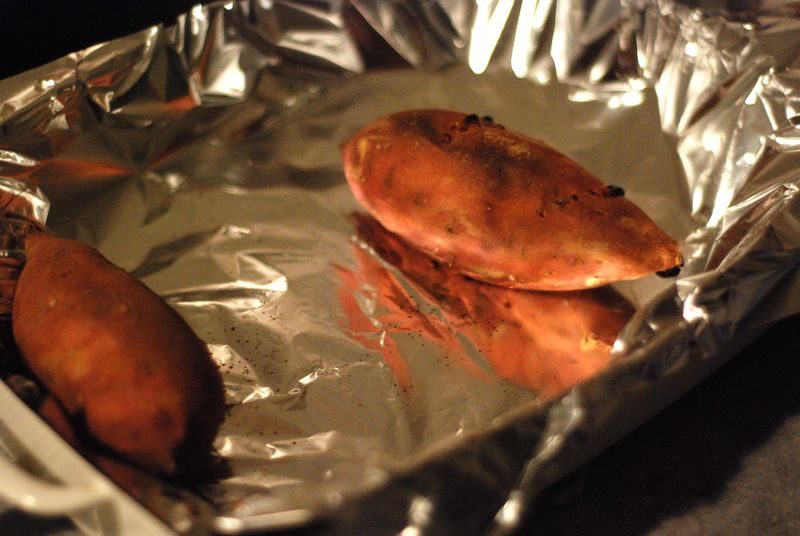
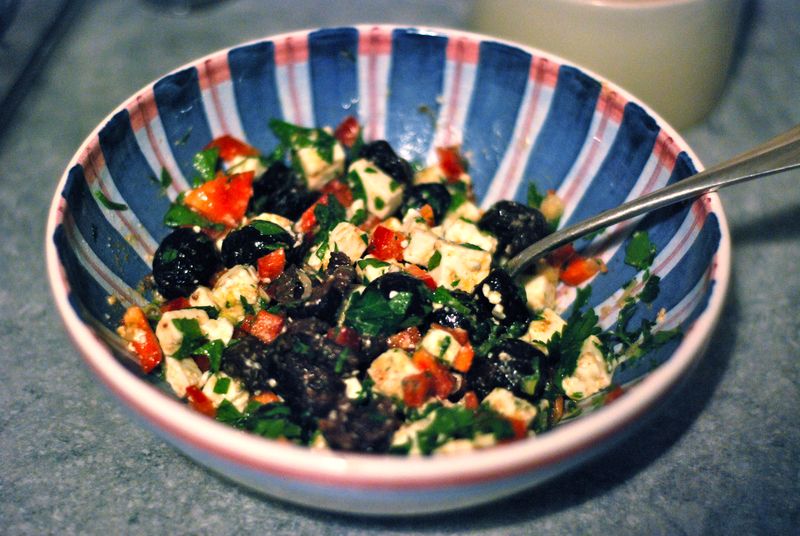
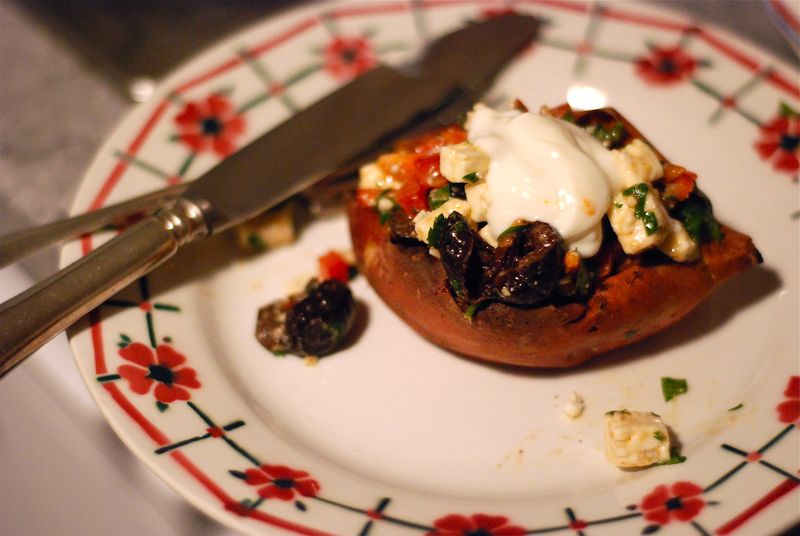
    Thank goodness the internet came to the rescue of my dignity the next night. Gemma mentioned some sweet potatoes that she eats once a week (those have to be good sweet potatoes, right?) topped with a spicy feta salad, which led me to this lovely place and the sweet sensation of relief when I realized every single ingredient required was already in my house.

    DSC_7388

    I'll say this, it's kind of a weird concept: piping hot, melty sweet potatoes and the boldly flavored, spicy, cold olive-feta salad on top. But it works! Each mouthful contains all these different kooky elements and yet they work together – punching each other up, cooling each other down – to make for a very interesting dinner and I mean that in a nice way, not in an "innnn-teresting" kind of way.

    Plus, it was decidedly not baby-friendly and that pleased me very much indeed.

    So join me in muttering my new mantra, won't you? Baby food is for baby! Adult food is for me! (That's so it, uh, rhymes.) And so it shall be evermore.

    Roasted Sweet Potatoes with Spicy Feta-Olive Salad
    Makes 2 servings

    Adapted from Traveler's Lunchbox

    2 large sweet potatoes
    1/2 pound (200 grams) feta cheese, cut into small cubes
    2/3 cup black oil-cured olives, pitted and chopped
    1/2 red bell pepper, chopped
    1 to 2 scallions, thinly sliced
    1/4 cup chopped fresh parsley
    1/4 teaspoon ground cumin
    1/4 teaspoon ground coriander
    1/4 teaspoon za'atar (optional)
    1/8 teaspoon cayenne pepper
    2 to 3 tablespoons extra virgin olive oil
    Juice of 1/2 lemon
    Salt to taste
    A spoonful of sour cream or yogurt

    1. Heat the oven to 375 F (190 C). Wash the potatoes to rid them of any dirt and place on a foil-lined baking pan in the oven. Bake until they are completely soft, about 45 to 60 minutes (depending on their size).

    2. While the potatoes are roasting, make the salad. Mix together all the salad ingredients in a bowl and set aside to marinate until the potatoes are done (add a little more olive oil if it seems dry).

    3. When the potatoes are fully roasted, remove them from the oven and place on plates. Slice each potato lengthwise down the center, folding open to reveal the orange flesh inside. Pile half the feta salad on each potato, season to taste, dollop yogurt or sour cream on top and serve.

  • Sour orange marmalade
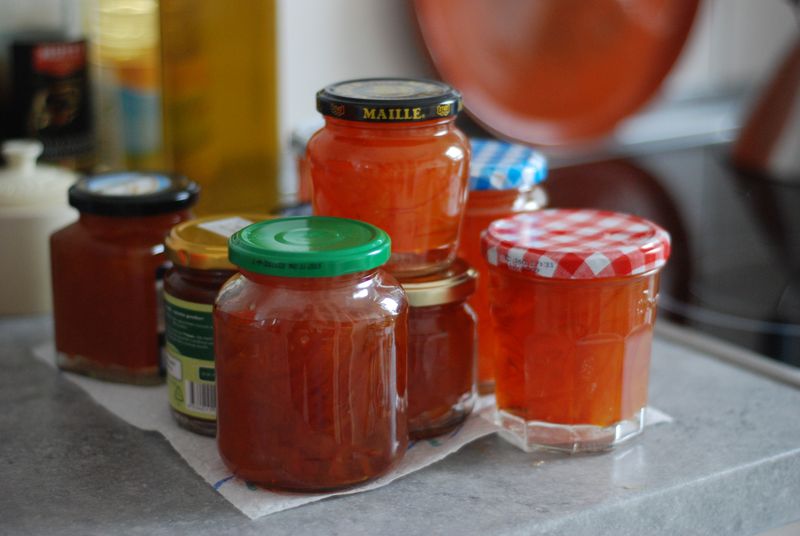
    I have made many a jar of jam in my life – I really like making jam, you guys – but nothing, not strawberries almost candied with lemon grass, not rhubarb and grapefruit preserves, not even the oven-baked, spiced plum butter from my book has ever come close to the experience that making that little cluster of Seville orange marmalade jars up there was. It was transcendental and I know that that might sound like it's bordering on the absurd, but what can I say? Perhaps it takes very little to transport me these days.

    Or perhaps, Seville orange marmalade is like the Mount Everest of marmalades – the zenith of jam-making, if you will. And I climbed it at a point in my life when I sort of assumed that nothing of the sort was going to happen any time soon. I mean, you have a baby and then your kitchen priorities shift. You know? I don't want to beat a dead horse, but I just figured that if I could barely make myself a hot dinner the other day, then jam-making, multi-day jam-making, was a far-off glimmer in the future.

    But the other day, on one of my market walks, I came across a stand selling Seville oranges (also known as sour or bitter oranges, depending on where you live). This is not a common occurence. In fact, I don't think I'd ever seen them in the flesh before. Over the years, I'd hear now and again in February of someone finding a few knocking about in a bin at some market. But I personally had never had the privilege. In fact, I'd long ago resigned myself to buying orange marmalade, having it be the only store-bought jam in my pantry. Once, on a trip to London a few years ago, I bought a big can of Mamade thin-cut Seville oranges and I made marmalade that I liked very much, but I couldn't help but think, each time I opened a fresh jar, that it was a little pathetic to be eating jam made from canned fruit. There was something so Soviet about it or something.

    So there I was, standing in front of this bin of Seville oranges in the biting cold, with my mouth agape and the baby in the stroller next to me. You can imagine that it took me about three seconds flat to buy two kilos.

    But then, after I got home with my haul, I got scared. I let the oranges sit on the kitchen table for three whole days while I worked up my courage to deal with them. I knew it was going to take a lot of elbow grease and time – two things I'm really short on these days. When, on the fourth day, I saw a telltale spot of white mold blooming on the peel of one of the oranges, I shook myself out of my stupor. It was time to make orange marmalade, come hell, high water OR a screaming baby. There was no time like the present.
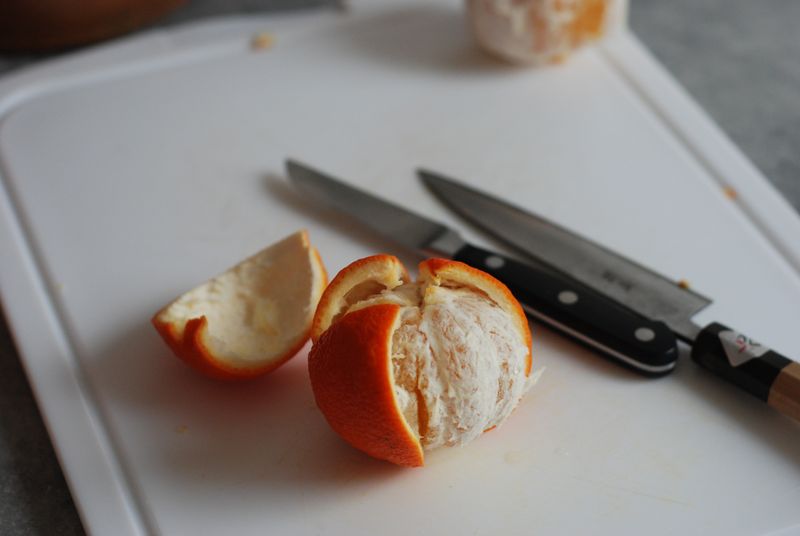
    Peeling sour oranges

    I consulted The Kitchen Diaries II and a bunch of recipes online (like this one and this one) to figure out just how get started. I liked that Nigel Slater has you score the peel off the fruit without puncturing the orange flesh, so that you start by slicing up the peel before doing anything else, rather than slicing the oranges whole. I put the baby to bed, turned on the radio and got to work.
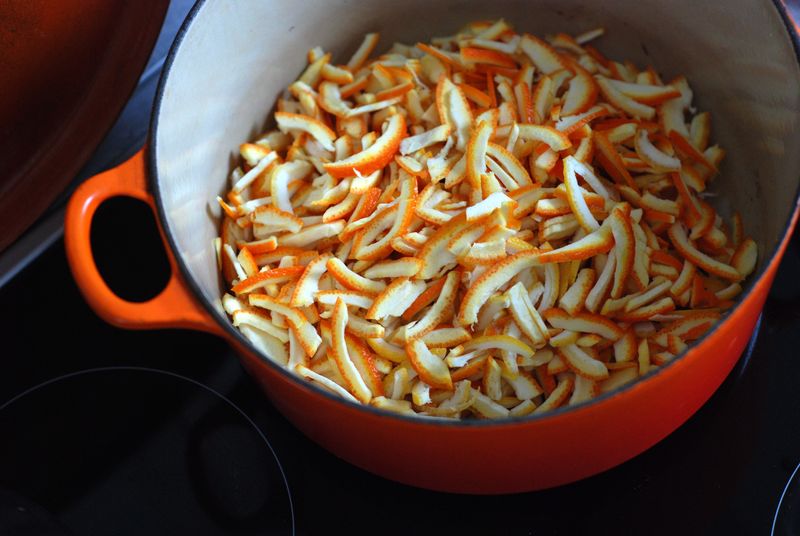
    Sliced sour orange peel

    Once all the peel was thinly sliced (you can cut it thicker, if that's what you prefer) and resting in my big cast-iron pot, I juiced the oranges into the pot and then extracted every single last sticky seed from the flesh. Seville oranges aren't like regular oranges – they're drier and have more nooks and crannies for the seeds to hide out in. The best way to ferret out those seeds is to push the squeezed orange flesh around on the cutting board – eventually the remaining seeds will squirt out the sides. The de-seeded flesh got chopped up and added to the peel and the seeds went into a mesh metal spice ball that my mother-in-law gave me a few Christmases ago. (I could never really figure out what to use it for, but now that it has redeemed itself as a VIKU, a Very Important Kitchen Utensil, I am considering having it gilded.) I put the mesh seed ball into the pot with the peel and the juice and flesh, filled it up with water and then went straight to bed, my fingers all pruney from having been sunk into sour oranges for two hours.

    The next night I brought the pot to a boil and let it cook for a good long while until the peel was translucent and the liquid level in the pot was much reduced. (All of this, the overnight soaking and the long boil, helps get the harsh bitter edge off the oranges, leaving behind a rounded, more agreeable bitterness, if that makes any sense.) Only then did I add the sugar.

    Now. Every recipe I consulted has you add twice as much sugar – in weight – as there is fruit. This seems to be somewhat of a rule in orange-marmalade-making. But I could not put that much sugar into the pot. I couldn't! I wanted to, I really did! I like following the rules! But in this case, it hurt my teeth just to look at it (I usually do a ratio of 50%-50% fruit to sugar with regular jams). Since Nigel's original numbers were the following: 1.3 kilos of fruit (he uses Seville oranges and some lemons) and 2.6 kilos of sugar, I decided to do 1.3 kilos of fruit (only oranges) and 2 kilos of sugar. And you know what? My marmalade turned out plenty sweet. In fact, I think I could probably have pushed it even a little lower. Not much, but a little.

    You let the sugar dissolve in the hot liquid and then you bring the whole thing to the boil again and let it cook until a little dish of jam stuck in the freezer for a few minutes develops a skin. It took my jam an hour to get to that point. One long, glorious, orange-scented hour. Incidentally, I'm pretty sure I've found my new favorite cooking smell. Bread? Brownies? Roast chicken? Scram, pals.

    While the marmalade cooks, you have to skim it a bit, so that your marmalade is sure to be translucent and beautiful when it's done, but I spent most of that hour on the couch watching this, thinking deep thoughts about what Berlin could have been, what Germany could have become, what it squandered and destroyed instead. So the marmalade doesn't really require too much of you.

    When it's done, you need your clean jars and lids at the ready, and then you just have to be quick, filling the jars to the brim, wiping off the rims, closing the lids tightly and turning them upside-down. (Letting them cool upside-down overnight gives you a vacuum seal on the jar. And readers: there is absolutely, positively no danger of this jam going bad – the amount of sugar, even the reduced amount that I used, will keep the marmalade safe and delicious for at least a year.)

    Seville orange marmalade on toast

    The next morning, in the cold, blue, early morning light of wintertime Berlin, I toasted a piece of bread, spread it with salted butter (ever since reading this and then trying it, I have to put salted butter under my orange marmalade – only one example of the many ways Amanda Hesser has given me an education in food over the years) and then put a thin layer of my fresh Seville orange marmalade on top. And. Well. You know.

    It was beyond.

    It put all those store-bought marmalades and canned-fruit marmalades to shame. This orange marmalade, folks, it tasted alive, for lack of a better word. It was so fresh, I could almost faintly pick out orange blossoms and sunshine in my mouth. I'm not even kidding! The flavor was out of this world. Life-changing. Transcendental.

    (Hugo stared at me with such outrage on his little face while I was eating my toast and he was stuck with baby Bircher müsli that I put a corner of my buttered, bitter-oranged toast in his mouth, figuring he'd recoil at the grown-up flavor. HA. He licked his chops and opened his mouth up for more.)

    And you know, it was such a thrill. The best part, besides my little arsenal of bitter sunshine in a jar, was really the doing of it all. I'm already excited for next February and that is saying a lot. BERLIN.

    Seville Orange Marmalade
    Makes about 9 jam jars
    Inspired by Nigel Slater's recipe in Kitchen Diaries II

    1.3 kilos Seville oranges
    2 kilos granulated sugar

    1. Wash the oranges. Score the peel of each orange with a sharp knife in quarters and remove without damaging the fruit. Slice the peel thinly or thickly, depending on your taste, and put into a very large cast-iron pot. Squeeze the peeled oranges into the pot, taking care to put any seeds aside. Deseed the remaining flesh. Chop the flesh and add it to the peel. Put the seeds into a mesh tea ball or a muslin bag and put in the pot. Fill the pot with 2.5 liters of cold water. Cover the pot and let sit for 24 hours (I left mine on the stove.)

    2. Bring the contents of the pot to a boil. Uncover the pot and let simmer for 45 minutes or until your peel is, as Nigel says, "soft and translucent."

    3. Remove the bag or ball of seeds from the pot, squeezing or scraping it for every last bit of pectin. Add the sugar to the fruit mixture and stir well. Raise the heat and bring the marmalade to boil. Let cook for anywhere from 15 to 60 minutes, stirring occasionally, until the marmalade, when spooned onto a little plate that you put in the freezer, forms a thin skin. Ladle the marmalade into clean jars, close them tightly and turn them upside-down to cool overnight. You can wipe any remnants of sticky jam off them in the morning (freshly filled, they'll be too hot to clean up).
  • Photo

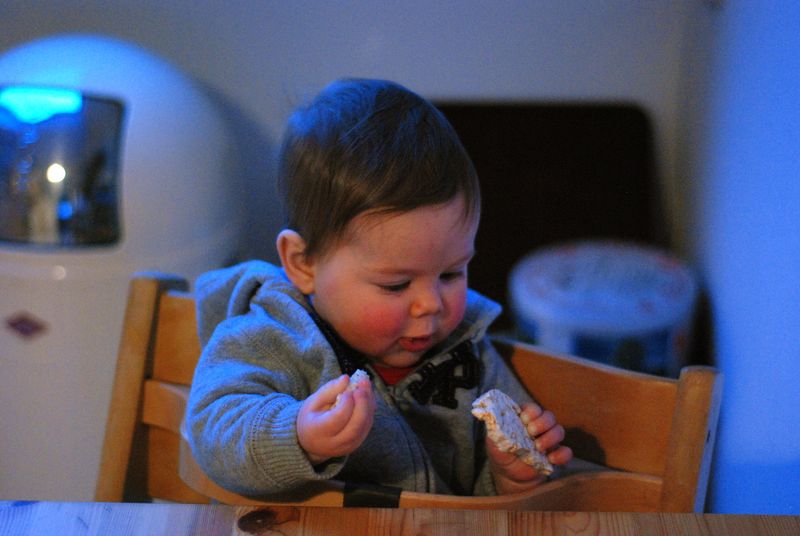
    Okay, friends, let's talk about baby-led weaning today. For those of you who don't know what baby-led weaning is, it's basically a philosophy of feeding children that says that children should be the ones who choose what they put in their mouths, not their parents. Instead of making puréed fruits and vegetables and spooning them into your baby's mouth, you put food (cooked until soft and cut into small pieces) in front of your baby and let him feed himself.

    (more…)

  • DSC_6637

    Exhibit A:

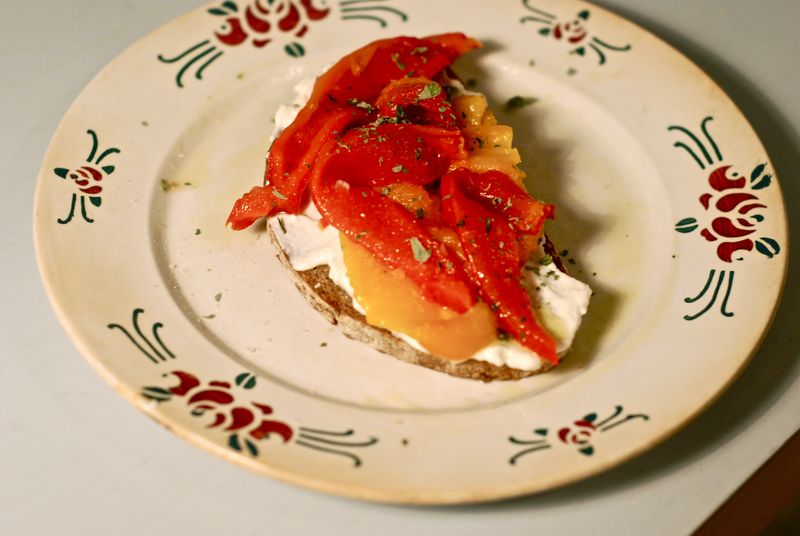
    Exhausted woman's attempt at fancy girl food after putting baby to bed, cleaning kitchen for the third time in one day (what the hell, baby?), answering one percent of the emails glaring at her in her inbox and putting fourth coat of paint on New Year's Resolution No. 6.

    Required:

    Slices, as needed, of nice, toastable bread.

    Ricotta (the plain old grocery store stuff, because I am only human).

    Roasted peppers (bossy instructions here), torn gently into shreds.

    Olive oil, flaky salt, dried oregano.

    Execute:

    Toast bread and put on plate.

    Spread with ricotta.

    Top with roasted pepper strips, entwined artfully.

    Drizzle with olive oil, sprinkle liberally with salt and oregano.

    Eat, then repeat with remaining ingredients until full or asleep at the dinner table, whichever comes first.

    Speaking of which, how early is too early to go to bed at night? Is 8:30 pm pushing it? Asking for a friend.

  • DSC_7316

    For the first time in my cooking life, I'm finding it hard to cook good food for myself. The accumulation of sleep deprivation over the past 8 months means that now, when Hugo goes to bed and I've finally got a few minutes to myself in the evening, I collapse on the couch and wish someone would just bring me a cold beer and a bag of potato chips for dinner. After a few comatose moments, I'm usually able to drag myself into the kitchen to fix a cheese sandwich and a bowl of yogurt for dinner, but my vegetable consumption has been pathetic lately. It's not like there isn't anything in the house – I buy plenty of vegetables to experiment with for Hugo – it's just that I'm all out of beans at night, when it's time for me. And these dark winter days mean that I need more than just a bowl of steamed broccoli to make me feel good.

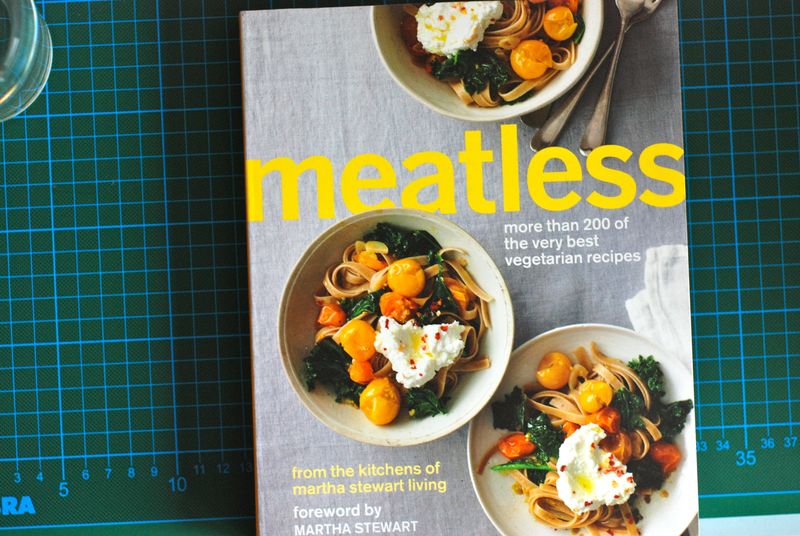
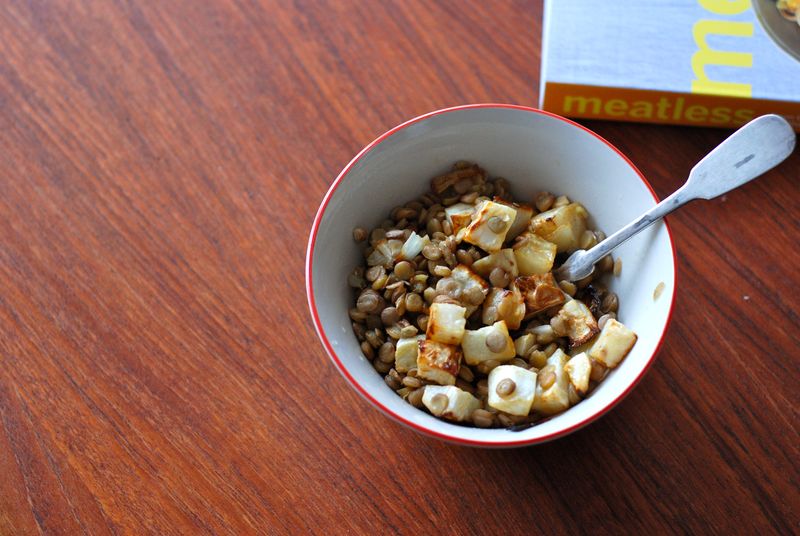
    But the other day, the nice people at Clarkson Potter sent me a copy of the latest Martha Stewart Living cookbook, Meatless, and suddenly things are looking a lot brighter over here. First, there were roasted cubes of celery root and onion tossed with boiled lentils and dressed with nothing but lemon juice and olive oil. I would never have thought to combine celery root and lentils, but the combination was delicious. I prepped everything while Hugo was hanging out with me in the kitchen; then, when he'd gone down for his nap, all I had to do was toss it together before digging in. It was so full of flavor and so filling. This is my new favorite lunch, I proclaimed to myself. (The original recipe has you add parsley, but I used some za'atar, since I have an industrial quantity of it, and it was amazing.)

    DSC_7223

    Then I got distracted by a soup that has you roast eggplant and chickpeas in one pan together (so easy!), before mashing them together with some broth and garlic and onion, finishing each bowl off with oregano and a dollop of yogurt. There was fried rice made with leftover brown rice (I finally cracked the perfect brown rice code in my rice cooker!) and shiitakes, and crisp little patties made out of mashed white beans that I ate with tomato sauce and basically, what I'm trying to tell you is this book is so full of inspiration and good food that I haven't really come up for air since.

    Happily, Potter was kind enough to send a second copy along for a giveaway! So, for a chance to win a copy of Meatless, please leave a comment below and I'll pick a winner at random tomorrow. Good luck!

    Update: Martha is the winner and has been emailed. Thank you all for participating – comments are now closed.

    Lentils with Caramelized Celery Root
    Adapted from Meatless

    2 cups water
    3/4 cup green or brown lentils
    1-2 tablespoons plus 1 teaspoon olive oil
    1 celery root, peeled and cut into 1/2-inch chunks
    1 onion, chopped
    Lemon juice to taste
    Salt and freshly ground pepper
    Za'atar, to taste

    1. Heat the oven to 375 degrees F. Bring the water and lentils to a boil in a medium saucepan. Reduce heat and simmer gently, partially covered, until lentils are just tender, about 20 minutes. Drain and transfer to a bowl.

    2. Toss the celery root and onion with the 1 to 2 tablespoons olive oil and salt to taste and put in a roasting pan. Cook in the oven for 20-30 minutes, until caramelized.

    3. Add the celery root and onion to the bowl with the lentils. Stir in the lemon juice, salt and pepper, za'atar and remaining olive oil to taste. Serve.

  • DSC_7134
    When Russ Parsons refers to something as "little slices of heaven", you can bet your bottom dollar that I'll pay attention. But in this case, he wasn't talking about dessert, he was talking about these little three-minute videos that vegetable god Alain Passard started putting online. Because Russ doesn't speak French, he hit the Google Translate button for the site, which resulted in some pretty hilarious prose. Those translate-bots have quite a knack for inadvertent poetry.

    To wit:

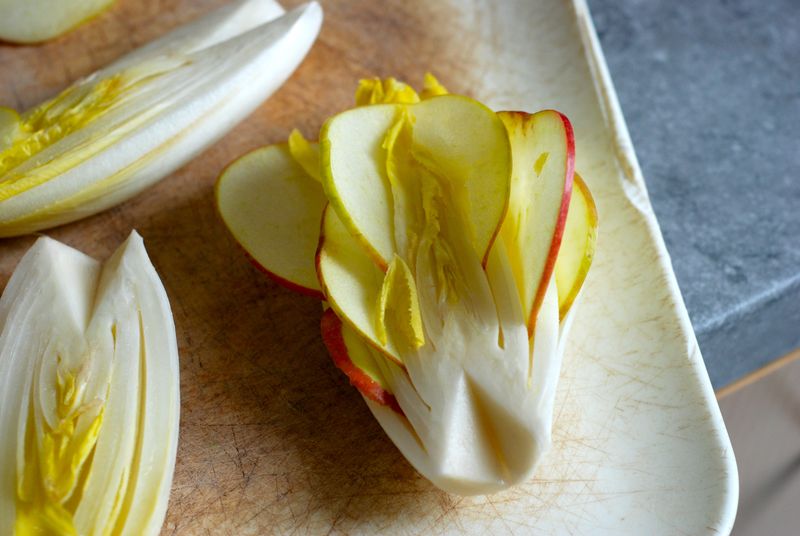
    "The trick? With a knife, begin by cutting your two small endives in half and, using a mandolin, make thin slices of apple. The most? Your disks should be almost transparent Apple, you see through, they must make less than a millimeter. The gesture? Carefully lift and spread your carefully endive leaves to slide a slice of apple between each. Do not hesitate to play the disc diameters taking sizes. It must be aesthetic."

    Ha! I was reading this out loud to my mother and had to stop because we were both laughing too hard. Something about my American accent made the whole thing even funnier.

    Anyway, all silliness aside, the video for endive-declaring-his-love-for-apple is right here and if you can manage to watch it and then not put this dish on the menu for your next meal, you are made of stronger metal than I. (It's so delicious.)

    Elsewhere:

    This interview left me deeply perplexed. (Via Lottie & Doof)

    The Turkish grocer near me was selling a whole pound of the most delicious, fudgy dates for just €2.99 – and now I'm thinking I have to make this cake.

    The "ultimate salty breakfast", yow!

    I can't believe this luscious-looking chicken has ketchup (my love!) in the sauce.

    I have so much rye flour that needs to be used up, I'll be making these very soon.

    Music to my ears!

    This chocolate cake made only with buckwheat and almond flour looks so good.

    Polenta al forno.

    Have a lovely weekend, folks!

  • DSC_7123

    In early December I started feeding Hugo his first solids. Since then I've gotten so many requests to write about what I feed him that I started to realize that just one post to cover it probably wouldn't do. After all, what I feed Hugo changes every week and anyway, it turns out that the whole topic of baby food is way more complicated than I ever thought. There's a lot of ground to cover.

    (Who knew? I didn't. Oof.)

    It's been heartening, really – I've found navigating what to feed Hugo often very confusing, and all those requests clearly show that I'm not alone. So I've been thinking: how about a once-weekly post where I write about what I fed him this week, what's been working and what hasn't, what tips I might have figured out and what frustrations I'm currently dealing with? It would be lovely to hear what those of you with small babies are dealing with, too, as you navigate the world of solid foods with your little one.

    I'll call the column, as it were, Cooking for Hugo and it'll show up here once a week. I'll hide most of it behind a jump so that those of you who are interested can click your way on in and those of you who aren't don't feel assaulted by mushy peas and carrots. It'll cover everything having to do with feeding babies, from recipes to gear to differing "philosophies" on how babies should be fed. I think it'll be fun? I hope it'll be helpful.

    Let's get started. Come on in!

    (more…)

  • DSC_7084

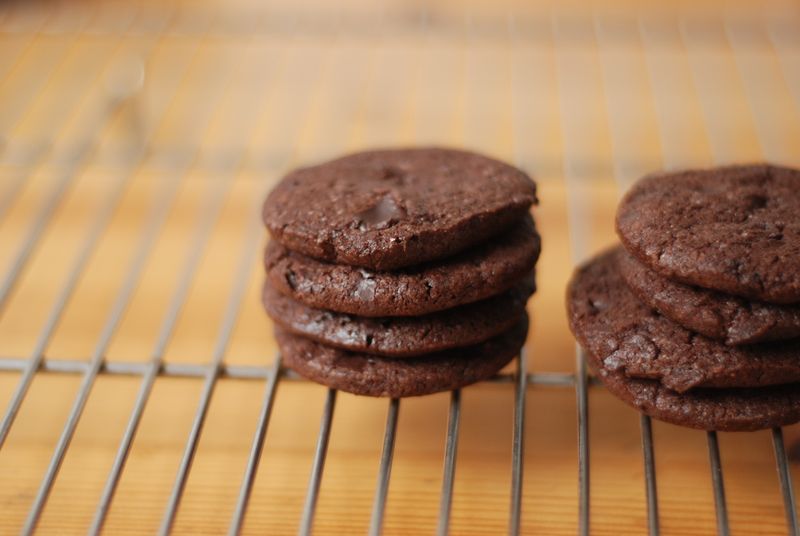
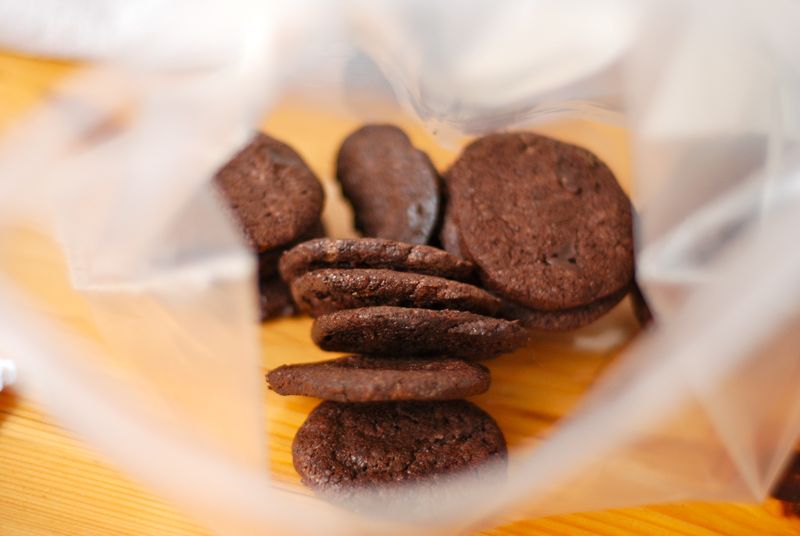
    This is just a little love note to the internet, which has been giving obsessives of all kinds an outlet for years and which has enabled the rest of us to shamelessly improve the quality of our lives by following the obsessives' lead whenever they say to. The obsessive I'm particularly grateful to today is Deb Perelman, who blogs at Smitten Kitchen, of course, and whose idea of a good time is tinkering with a recipe, like super-chocolately, not-too-sweet, elegant French sablés, over and over (for years, people!) until she gets it right. So right.

    Thank goodness for people like Deb, because lord knows I am way too lazy for tinkering with recipes (and these days, far too tired) and yet I, too, often crave the perfect chocolate cookie, which, as serendipity would have it, Deb figured out last week, right in time for my own craving to strike.

    DSC_7063

    This is the kind of cookie – deep, dark, smoldering and melting and perfect – that you don't even need to go grocery shopping for. If your idea of a good time is keeping a well-stocked pantry, you can probably make these cookies right now, or at least tonight after work. I think you should.

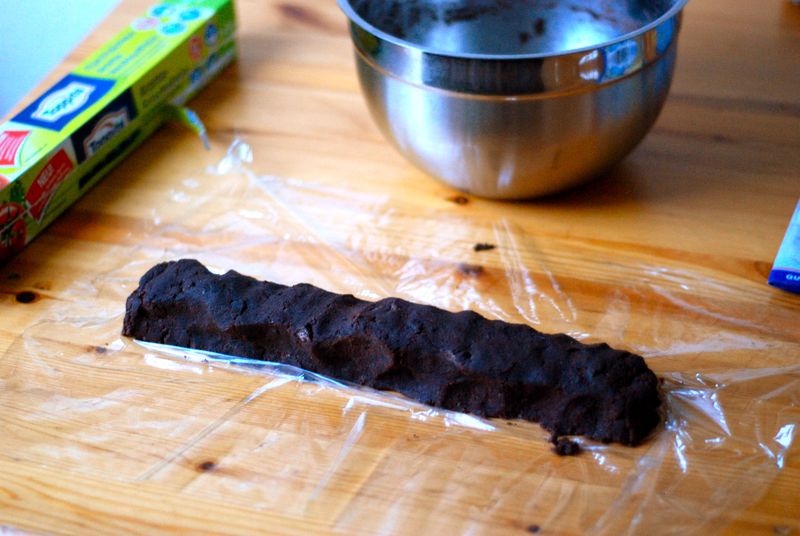
    You can do as Deb did and roll out the dough and then cut out little cookies or you can go the lazy woman's route and simple pack the blackish-brown dough into a roll, wrap it in cling film and stick it in the fridge until it's firm. Then all you have to do is slice off as many rounds as you need and bake them to order.

    HA! There goes your January diet.

    DSC_7080

    As I munched on a few of these the other day, something was niggling at me about the flavor of the cookies. What I realized a few bites later was that they sort of tasted like Thin Mints but without the peppermint. Uh, in other words, they would be absolutely fantastic doctored up with a little splash of peppermint extract, if chocolate-peppermint is your thing (it is mine, but I know it's not everyone's jam). Luckily, as I am a pantry-stocking freak, I have a little bottle of peppermint extract and will be trying out this version soon soon soon.

    A few notes on the recipe: My food processor gave up the ghost a few hours before I wanted to pulverize the chocolate, so I ended up having to chop the chocolate by hand. What this means is that my cookies were a little more chocolate-chocolate-chip-y than I was hoping for, but they were by no means less delicious. Just a little less refined. Also, I erred on the side of using less sugar rather than more and skipped the sugar sprinkle on top. If I had been making these for kids, though, I would have done the sprinkle. So pretty!

    Deb Perelman's Intensely Chocolate Sables
    Makes about 40 small cookies

    1 cup (125 grams) all-purpose flour
    1/3 cup (30 grams) Dutched cocoa powder
    1/4 teaspoon baking soda
    1/2 cup (1 stick, 4 ounces or 115 grams) unsalted butter, at room temperature
    1/2 to 2/3 cup (100 to 135 grams) granulated sugar
    1/4 teaspoon fine sea salt
    1 large egg yolk
    1/2 teaspoon vanilla extract
    3 1/2 ounces (100 grams) semi- or bittersweet chocolate, grated or finely chopped until almost powdery in a food processor

    1. Sift together the flour, cocoa and baking soda together onto a piece of waxed paper or into a bowl and set aside.

    2. Cream butter, sugar and salt together in a large bowl with an electric mixer until light and fluffy. Add egg yolk and vanilla, beating until combined, then scrape down sides. Add dry ingredients and grated chocolate together and mix until just combined.

    3. Scrape dough onto a piece of plastic wrap, shape into a 2-inch wide log, wrap tightly and let chill in the frige until just firm, about 30 to 45 minutes, or up to a day.

    4. Heat oven to 350 degrees. Line a baking sheet with parchment paper. Unwrap the dough log and slice off as many 1/4-inch cookies as you'd like to bake. Space them an inch apart on the sheet. Bake for 8 to 10 minutes, then remove the sheet from oven. Leave cookies on baking sheets out of the oven for a couple minutes before gently transferring them to a cooling rack. Cookies can be stored in an airtight container for up to two weeks.

  • DSC_6988

    I'll bet you've been wondering where I've been, haven't you. Felled by the flu, perhaps, you think. Off visiting her husband in his faraway city, maybe. No, dear reader, I was right here the whole time, only instead of cooking and writing or cleaning up my desk space (urgh) during my spare time this past week, I was deep – deep – into Downton Abbey. Yes, it's true. I abandoned you for an English television show. Forgive me. I can't help it. It is just so good.

    I'm almost at the end of Season 3 now (how, you fellow Downton freaks gasp? Right here. You're welcome, unless you want to get anything done again, ever, in which case, I'm sorry.) and am finally coming up for air and it occurred to me that it might be nice to, you know, get back to work again or at least vacuum the apartment so that my child doesn't start teething on dust bunnies, seeing as he's starting to learn how to scoot forwards and sideways all of a sudden. (And has two teeth! Two bottom teeth!)

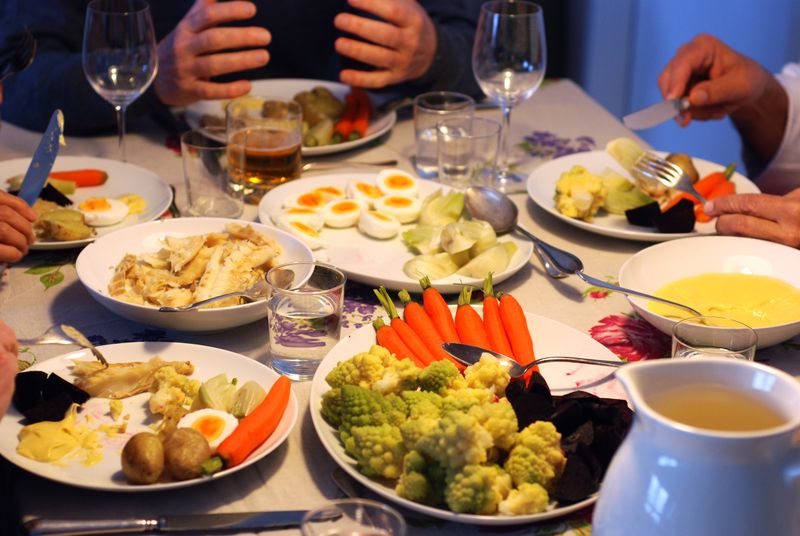
    I have cooked now and then in the past week, most notably last Sunday when I made my mother a birthday lunch consisting of salt cod (chewy!), a plethora of delicately steamed vegetables (pain in the necky!) and a big old bowl of mayonnaise (this one) that broke not once but twice before I found the best trick ever for saving broken mayonnaise. (There was a lemon tart, too, that was a disaster from start to finish, but I'm not going to dwell on that now, am I. Confectioner's sugar hid a multitude of sins and it was gobbled up in no time, thank goodness.)

    DSC_6960

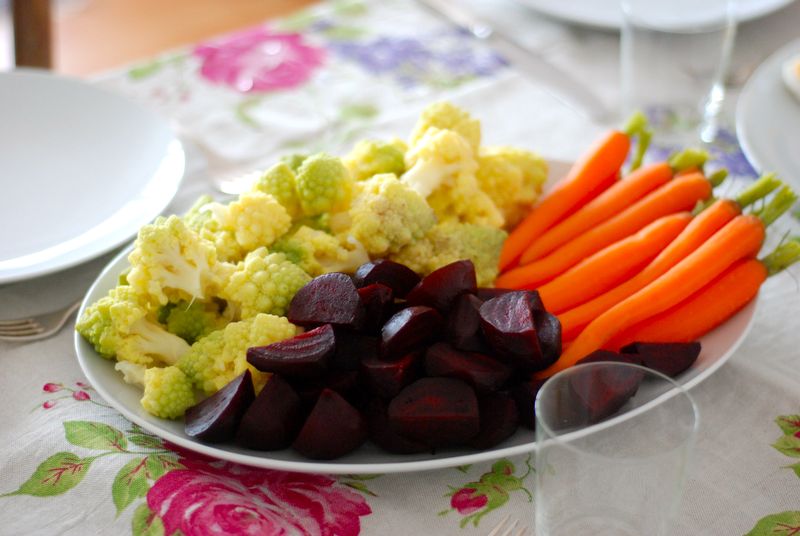
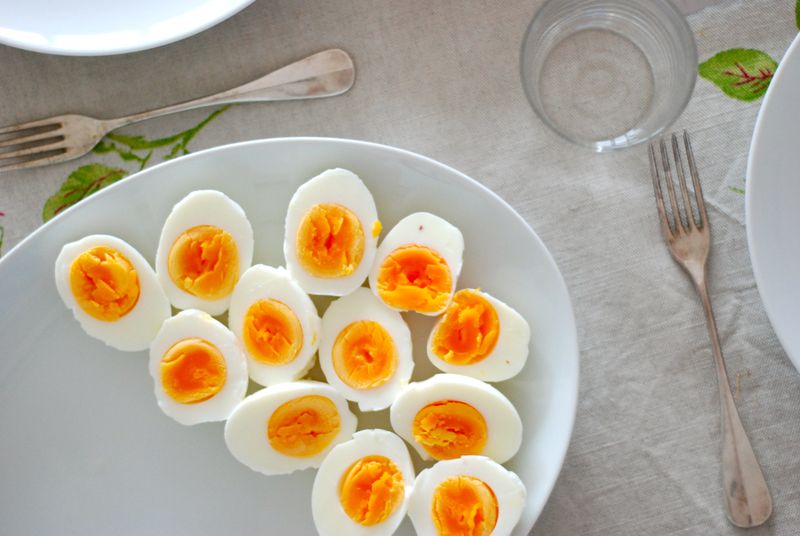
    Salt cod, cooked vegetables and boiled eggs served with a big bowl of garlicky mayonnaise is called le grand aïoli in southern France and during this very cold, very gray January, it was a welcome change from the usual meaty stew I would have thought to serve for a lunch party. All complaining aside, it was actually quite fun to cook, too. The salt cod soaked on the balcony for several days before the lunch and then only had to be briefly boiled and skinned and shredded the day of the party. I prepared the vegetables the morning of the lunch, roasting the beets in the oven to concentrate their sweetness, while doing the rest – Romanesco, small, sweet carrots, tiny potatoes, golden-yolked eggs and fennel wedges – one after another on the stove. And Max was home to entertain Hugo, so all was right with the world.

    Well, until that mayonnaise broke. The first time, I tried to save it with an additional egg yolk (put it in a clean bowl, carefully whisking the broken mayonnaise into it until it's nice and thick again). But then it broke again. This time, I had no more egg yolks to rely on. Our guests were arriving and things were getting very hot under my collar. (Did I mention the lemon tart from hell? It was staring at me balefully from the kitchen counter, under its blanket of powdered sugar.)

    I ran to the computer for help and found this tip: instead of an additional egg yolk, put a spoonful of mustard in a clean bowl and whisk in the broken mayonnaise. (The genius tip comes from none other than Julia Child, goddess of frazzled daughters trying to cook their mother's birthday lunches everywhere.) Max handed the baby off to a pair of eager hands and came in to help. He whisked while I poured the broken mayonnaise (is there anything more hideous?) into the bowl and, lo and behold, a thick, glossy, delicious mayonnaise emerged (and it didn't taste like mustard, in case you were wondering). I practically cartwheeled with joy.

    DSC_6968

    Gently steaming the vegetables until they're just done ensures that they taste fresh and sweet – so good that they hardly need a thing to dress them except for a big dollop of mayonnaise. That mayonnaise ties all the things on the table together, the chewy cod and the rich, soft eggs, too. It's the base note of a delicious little symphony. I'd even go so far as to say that that it was a ray of sun straight from southern France on that cold Berlin day.