• Photo(4)

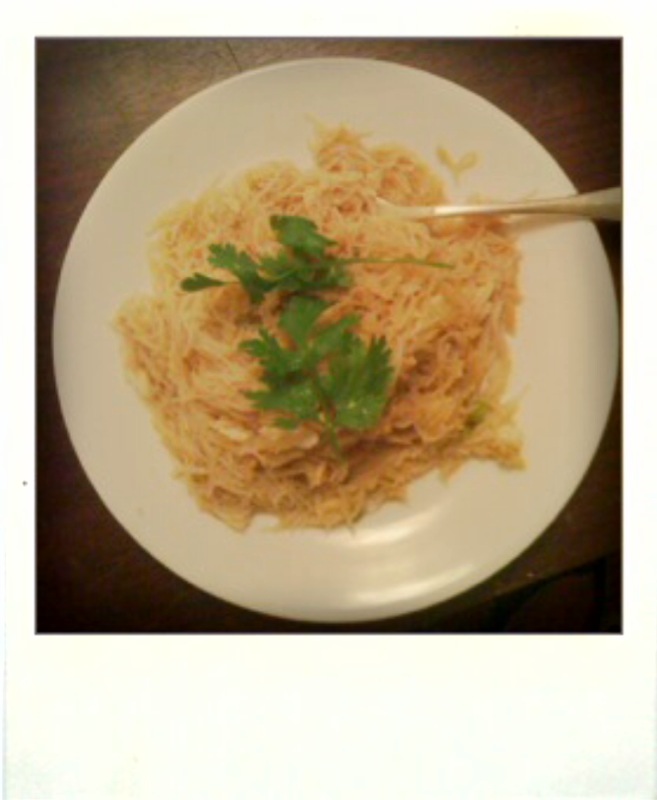
    Oh, how far have I come. Do you see that little green sprig, so innocent, so gentle, lying up there sweetly on that pile of noodles? Just a few years ago, I would have rather chewed on a stick than put a bit of cilantro into my meal, and certainly not for a reason as frivolous as garnish. Feh. But today, bring on the cilantro in all its weird glory! I want to strew with it! I might even chew on it, for a bit.

    This is what I like to call progress.

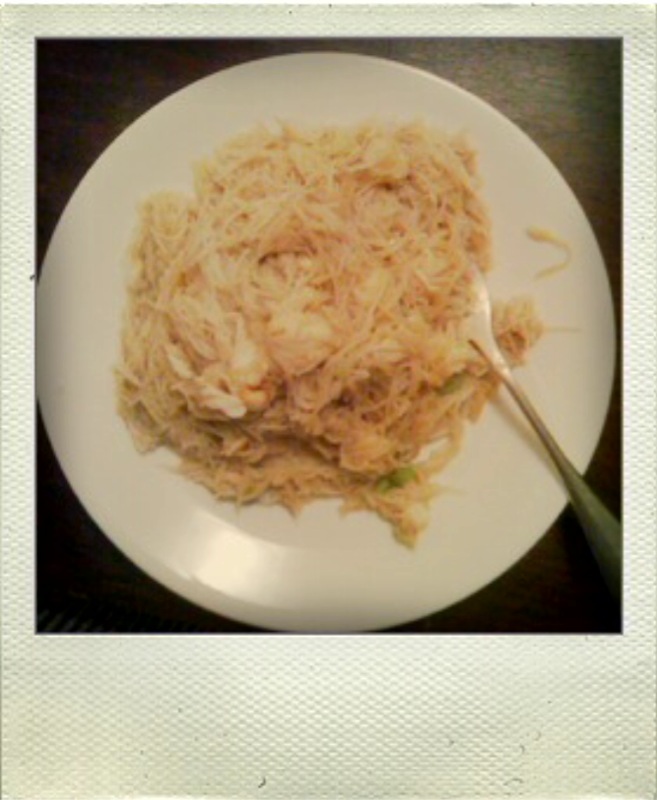
    (See wan plate below for comparison: definitely in need of a little sprucing, wouldn't you say?)
    Photo(3)

    Luckily, the dish itself is quite tasty even without the cilantro and, man, is it fast. I do believe this counts as one of the speediest meals I've ever made that involved turning on a stove (and that does not include scrambled eggs, thankyouverymuch).

    A brief aside on the nitty gritty: First of all, I couldn't find glass noodles. I bought Thai rice noodles instead, because it's all I could find that was even close, even though this is a dish from a Vietnamese chef. Don't do what I did: the rice noodles really aren't right here because of their texture, even though I thought the dish still quite delicious. You need that sort of chewy, pliant wonderfulness of a glass noodle here. Second of all, I bought canned crab instead of fresh. It was way cheaper and wild-caught, which is more than I could say for the frozen stuff available at the fish store in Forest Hills. (Which, maddeningly, closes by 6:30 every night, without fail. And refuses to label where the fish comes from. And doesn't give a hoot about all of this stuff either. Out-of-work, ethically-minded, entrepreneurial fishmongers of New York: come to Queens, would you? We need you.) Ultimately, between all the flavorings and the ratio of noodle to sauce to crab, I couldn't tell that the crab was canned (it tasted pretty good, is what I'm trying to say).

    The recipe comes from an old column called The Chef that used to run in the New York Times and that I adored. One of the section's writers, like Mark Bittman or Amanda Hesser, would go and spend some time with a chef (like Charles Phan of the Slanted Door in San Francisco, or Gabrielle Hamilton of New York City's Prune) and just shoot the breeze for a while, watching them cook, hearing them tell stories. That would get distilled into a little piece or several little pieces about the chef, his or her work and the restaurant they ran, with a few, truly choice recipes alongside (miraculously perfect for the home cook). That column is long-gone, sadly, and I never understood why. Does anyone reading this know Pete Wells? Tell him to bring back that column! It was such a gem.

    I found these noodles to be compulsively edible. They slip down easily and are pretty light to boot. Plus the combination of oyster sauce, soy sauce, fish sauce and sesame oil is irresistible: salty, nuanced, toasty, just so good. This is fast food at its best, and if you buy canned crab, even if it's wild-caught, it's cheap food, too.

    Glass Noodles with Crab
    Serves 2 very hungry people or 3 to 4 regular eaters

    2 packages (2 ounces each) thin glass (mung bean thread) noodles
    2 tablespoons neutral oil, like corn or canola
    1 tablespoon minced garlic
    1/4 cup trimmed and minced scallions
    1 cup crab meat, free of shell
    1 1/2 tablespoons fish sauce
    1 tablespoon soy sauce
    2 tablespoons oyster sauce
    1 tablespoon sesame oil
    Fresh cilantro for garnish

    1. Cover noodles in warm water for about 10 minutes. Drain.

    2. Put oil in a wok or large skillet, and turn heat to high. A minute later, add garlic and half the scallions and, almost immediately, the noodles and crab. Toss, and stir to mix the ingredients.

    3. Add the sauces, taste, and adjust seasoning as necessary. Toss with sesame oil and remaining scallions. Garnish, and serve.
  • This weekend marked this blog's 4-year birthday, which just tickles me to no end. Four years! Holy cats. Happy birthday, little blog. You complete me.

    I, of course, didn't realize it until this morning, so there was no birthday cake or candles or anything of the sort. I had a visitor in from out of town this weekend and was too busy showing off this beautiful city to raise a cupcake to the blog. Besides, it was way too hot for cupcakes. (Though we did have an entirely unexpected, truly delicious and completely random buffet lunch at Indus Express on 48th Street for the grand total of $9.95 each – not including the celebratory Taj Mahal beer! So I guess that kind of counts.)

    Instead of letting the blog blow out candles to itself this year, I'm going to list a few sites I've discovered over the past year which have made me rather hungry indeed:

    Slow Like Honey

    Bread Baby

    Not Without Salt

    The Catskill Kiwi

    Rachel Eats

    Bread & Honey

    Here's to you guys!

    And then I'm going to tell you something thrilling. I'm leaving for Italy in a few days, for my annual trip, and this year, for the first time ever, there will be a grill at the house. I don't know what exactly it will look like (though I'm gunning for something rather crude and rustic, like a steel grate over a pile of coals piled into a hole dug in the ground. Wouldn't that be scenic? My mother, I think, might currently be in the process of a dramatic eyeroll, as we speak!), but I'm getting awfully excited about cooking with it. You see, I've pretty much mastered the stovetop, and the oven, and even the broiler, too. Now, after too many meals at other people's houses where the tables sat groaning under the weight of grilled tomatoes, salsiccie, bruschetta and whole ears of corn, I've decided we don't have to live like this anymore: we, too, can grill! And grill we will.

    I'm bringing two recipes with me from the New York Times (one for a whole fish grilled in and on fresh fennel, and a recipe from Paula Wolfert for something called Roman steak), but seeing as I am a neophyte and it's my blog birthday, won't you guys inspire me with some of your grilling recipes, tips, secrets? I – and my co-eaters in Italy – thank you in advance.

  • Photo(2)

    Are you sitting down, dear ones? Do you have something to steady yourselves with?

    Alright. Now take this in:

    Tender buttermilk cake.
    Fresh blueberries.
    Streusel (pssst: in German, its language of origin, it's pronounced "stroysel", not "stroosel").
    And then (oh, then!): Fresh lemon syrup.

    Boom!

    Yes, I have in fact just listed the four compelling reasons why this lemon blueberry buckle is the very next thing you must bake, even if you live in a city currently suffering through a heat wave. (Strip down to your skivvies, if you must. This is important.)

    I know, I know: that list can, to some ears, sound a little…ordinary? Pedestrian? Yeah, yeah, blueberries, streusel, lemons, yadda yadda yadda? But listen, seriously, this thing is so good, so darn delicious, that I cannot let you just walk past. Stop! Stop and look at my buckle!

    Photo

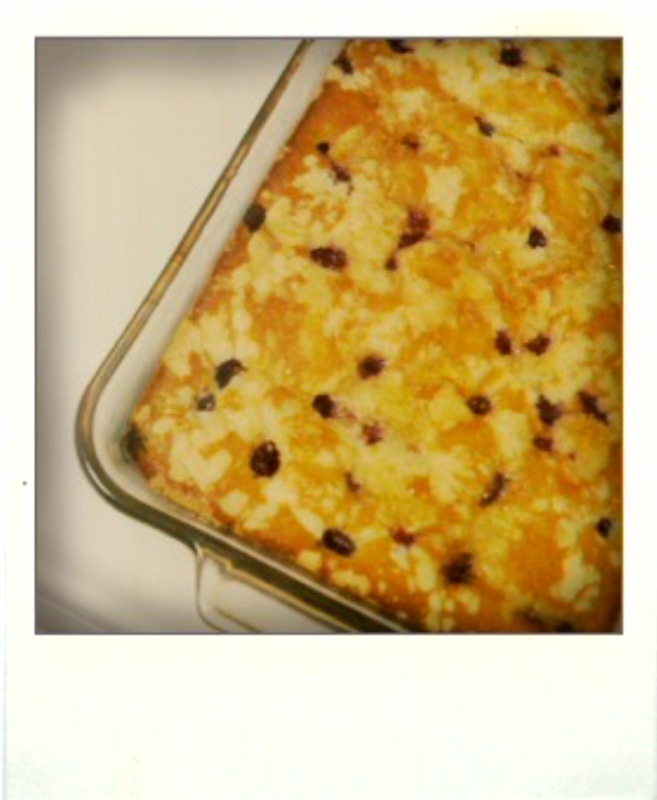
    A buckle, at least according to what resulted in this recipe, is a tender, buttermilk-enriched cake flavored with lemon zest and studded with fresh blueberries, then topped with more fresh blueberries and a lemon-zest besprinkled streusel that is strewn across the cake half-frozen. And then, in a stroke of genius, after the cake is pulled from the oven, it gets a final shot of extra lemon flavor from a hot lemon syrup spooned across the top.

    The best part is that you have to wait until the cake cools completely to eat it, which may seem like torture, but ends up being fantastic. Because: the cake mellows out; the blueberries cool into squidgy little blue pockets of flavor; the streusel settles into itself, crunchy in pockets and tender in others; and the syrup makes everything fairly glow with sweet, tart, citrusy goodness.

    Have I convinced you yet? That you must try this? Okay, listen to this: I made the buckle to bring to the office to welcome a colleague back from her maternity leave, and would you believe I actually considered hiding the leftovers from her when she left at the end of the day, in the hopes that I'd get to take them home? Swear to God. A breast-feeding mother. That's how good this is.

    (Uh, I made her take home the leftovers. I said I considered it, not that I actually did it. Sheesh.)

    (I did have two pieces, though.)

    (Should have kept a third.)

    (Are you making this yet?)

    Lemon Blueberry Buckle
    Serves 8

    Crumb topping
    1/2 cup flour
    1/3 cup sugar
    1/8 teaspoon salt
    Zest of 1 lemon
    1/4 cup ( 1/2 stick) butter, cubed, at room temperature

    In a medium bowl, whisk together the flour, sugar, salt and lemon zest. Add the butter, using a fork or your fingers to cut in the butter until it is reduced to the size of peas. Loosely cover the bowl, and place it in the freezer while you mix the cake batter.

    Cake and assembly
    6 tablespoons butter, at room temperature, plus extra for greasing the pan
    1 1/2 cups plus 2 tablespoons flour
    1 teaspoon baking powder
    1/4 teaspoon baking soda
    1/2 teaspoon salt
    1/4 teaspoon freshly grated nutmeg
    3/4 cup plus 1/3 cup sugar, divided
    Zest of 1 lemon
    2 eggs
    1/2 cup buttermilk
    2 cups blueberries, fresh or frozen, divided
    Crumb topping, chilled
    Juice of 2 lemons (about 6 tablespoons)

    1. Heat the oven to 350 degrees. Lightly grease a 9-inch square baking pan.

    2. In a medium bowl, whisk together the flour, baking powder, baking soda, salt and nutmeg.

    3. In the bowl of a stand mixer, or in a large bowl with a hand mixer, cream together the butter, three-fourths cup sugar and lemon zest until light and fluffy, 3 to 5 minutes. Add the eggs, one at a time, scraping down the sides of the bowl after each addition.

    4. Stir the flour mixture into the bowl, a third at a time, alternating with the buttermilk, until both the flour mixture and buttermilk are evenly incorporated into the batter. Gently fold 1 cup of the blueberries into the batter.

    5. Spread the batter into the prepared pan and distribute the remaining blueberries evenly over the top of the batter. Remove the crumb topping from the freezer and sprinkle it over the berries.

    6. Bake the cake until it is lightly golden and firm on top, and a toothpick inserted in the center comes out clean, 45 to 50 minutes. Rotate the pan halfway through for even baking.

    7. While the cake is baking, make a lemon syrup: In a small saucepan, combine the remaining one-third cup sugar with the lemon juice and whisk until blended. Heat the pan over medium-low heat and cook, stirring occasionally, until the liquid thickens to a syrupy consistency, 6 to 8 minutes. (The glaze will bubble while cooking and may need to be removed from the heat to check that it is the proper consistency.) Remove from heat and set aside in a warm place.

    8. Remove the cake from the oven and drizzle the warm glaze over. Cool to room temperature. The cake will keep at room temperature for 2 to 3 days, covered in plastic wrap.

  • Photo

    Let's say I bit off a bit more than I could chew. Move on Sunday, cook that same night already, are you kidding me? What can I tell you: I was in a moving-addled state of mind. It took me three more days just to move the contents of my kitchen, and a few more days from that point on to unpack everything and then get to cooking. So forgive me for my long silence and let's move on. After all, it's a whole new day! And there's tomato-bread soup to be discussed.

    (For those of you who care about these things, I decided to stay in Queens, in Forest Hills, to be exact, and simply moved from one side of a parking lot to another. My apartment is a studio now, but it has tons of windows and light, far more closet space than should be legal in New York City, and a pretty swank little kitchen, if I do say so myself. The counter space is still rather piddling, but the stove was manufactured sometime in the last 10 years, which is a step up from the last place, and there's no fear anymore that I'll singe my knuckle hairs off every time I try to boil a pot of water, so that's good.)

    The first thing I cooked in the new place was a poached chicken breast, well, three, actually, to shred into a big salad that I made for my neighbors the night before they, too, moved out of our apartment building. (Only instead of moving one block away, which would have been the right thing to do, they had the nerve to buy a house in the boonies and move out to Long Island. I might never forgive them.) But, as triumphant as I felt watching the little bubbles squiggle skyward in the poaching liquid, cukes and avocado diced just so in the salad bowl, it was hardly blog-worthy stuff. You, so full of patience while I left you here with the archives, deserved something a little more exciting, wouldn't you say?

    I would.

    Photo(2)

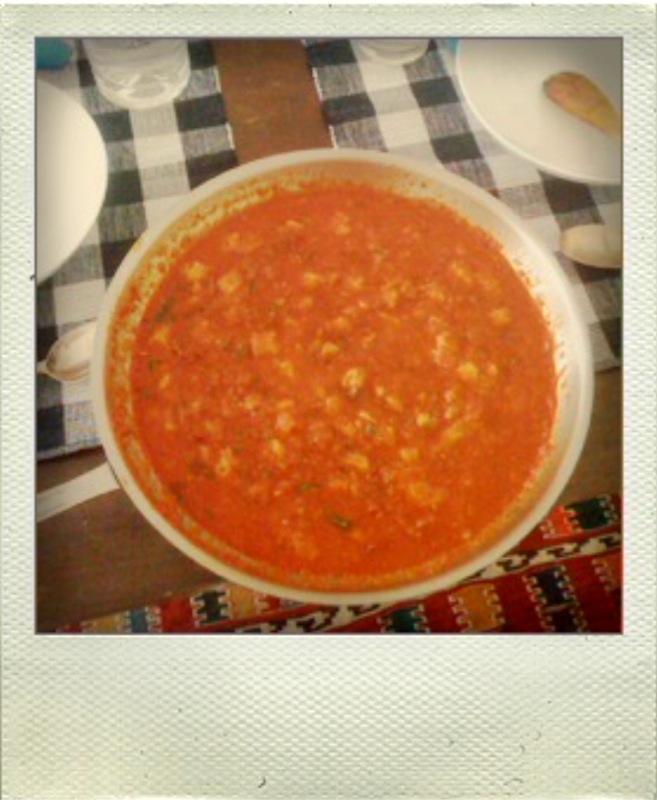
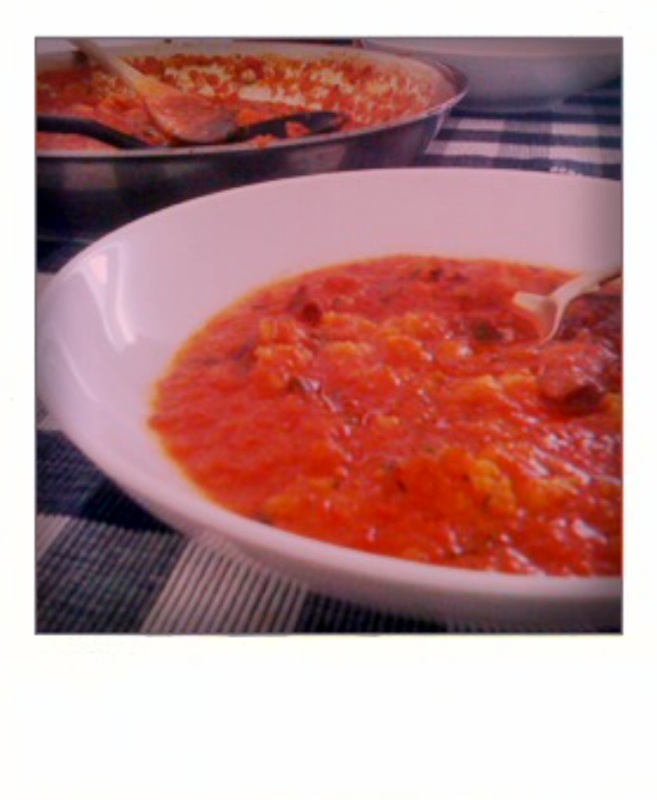
    Florence Fabricant, ever trustworthy, provided me with just the thing: a tomato-bread soup by way of Catalunya, chockful of most of my favorite things. Peasant bread and fresh tomatoes? Check. Smoked paprika and saffron? Check. Cubes of chorizo and minced parsley? Well, hello, lover.

    Normally, I think I'd be too lazy to enjoy the process of making this soup. There's an awful lot of dealing required for the tomatoes and there's quite a bit of dicing, cubing, slivering, mincing of the other things to be done, not to mention the use of a food processor. But after so many weeks out of the kitchen, it was nothing but a relief to be back in my apron, standing at the counter, working quietly, my mind at ease. I highly recommend cooking this soup during the day, preferably on a weekend when midday is quiet anyway, and you can imagine what it's like to be in Spain on a hot summer's day, people asleep during high noon, you the solitary cook, at home in the kitchen. Ooh, that's bliss, all right.

    And the soup is none too shabby either. It's thick and sweet-spicy (I used chorizo picante), the bread gone custardy, the saffron, smoked paprika, and pork fat combining to delectably rough-around-the-edges effect. This is a lusty soup if I ever saw one, and when cooled to room temperature, remarkably palatable on a summer's day. And such a welcome return to cooking.

    (In other news, the one thing, the one thing I can't seem to find since the move is my bag of Aleppo pepper. Random bags of votive candles, every mix CD I ever was given, even my replacement pack of dryer sheets made it. But the Aleppo pepper is gone. What the what? And, second of all, I saw Julie & Julia and…frankly, found both story lines a little snooze-worthy. Maybe because I liked actually reading Julia's book and Julie's blog instead of watching the movie version(s)? (Though Meryl is, as usual, so good.) I don't know. What I do know is that the internet venom aimed at Julie Powell these days is mystifying and getting old, awfully fast. Third of all…what was I going to say? Oh, right! My camera. Nikon repaired it and the lens and sent both back, beautifully wrapped, only for me to find that although they did manage to fix the lens, the camera body is still busted. Still. Busted. Despite. The. Repair. Slip. Nikon. Included. When. They. Sent. It. Back. Nice, right? So, my beloved is winging its way back to Nikon, probably as we speak, and if you could all put a little prayer in for its speedy recovery and return, I'd be grateful to you, oh, for eternity. That's all.)

    Thick Tomato-Bread Soup, Catalan-Style
    Serves 2 to 3

    4 tablespoons extra virgin olive oil
    4 cloves garlic, slivered
    4 ounces chorizo (casings removed), cubed
    1/2 teaspoon smoked paprika
    3 pounds ripe tomatoes, peeled
    Generous pinch saffron threads
    2 cups crustless country bread, finely diced
    Salt and freshly ground black pepper
    2 tablespoons minced flat-leaf parsley

    1. Heat oil in a large sauté pan. Add garlic and cook over low heat till soft. Add chorizo, raise heat and cook until starting to brown. Stir in paprika. Remove from heat.

    2. Place a sieve over the pan, halve tomatoes horizontally and hold cut side down over sieve as you gently squeeze to remove seeds and allow juice to fall into pan. Remove sieve. Reserve tomato pulp. Heat juice in pan until warm, add saffron and set aside off heat 10 minutes.

    3. Finely chop tomato pulp by hand or in food processor. Add to pan. Bring to a simmer. Stir in bread. Cook, stirring, 5 minutes. Season with salt and pepper. Allow to stand, off heat, stirring from time to time, until room temperature, about 30 minutes. Fold in parsley and serve.

  • I am in that seventh circle of Hell known as MOVING HOUSE, up to my eyeballs in half-filled boxes, too many books to count, dust bunnies, bubble wrap, tchotchkes, and the remaining assorted detritus of a life. Good grief, moving is just gutting, isn't it? All your earthly possessions reduced to a motley collection of cardboard boxes, crumpled newspaper, blanket-swaddled furniture?

    Anyway, all of this is to say that I haven't dropped off the face of the earth, or been swallowed alive by some flesh-eating giant, or even fainted away in the sudden summer heat. It's just that while packing I've just been eating cereal or completely mediocre takeout for dinner instead of cooking lovely things (and finally the newspapers are full of good stuff again, too) to tell you about.

    The good news is twofold: first of all, the move is this weekend. Second of all, while my new apartment may be smaller than the old one, my new kitchen is glorious and I cannot wait to get cooking in there. Maybe even Sunday night? That may be ambitious, but I promise you it will be soon. Ooh, ooh, there's a third thing, too! My camera is apparently on its way back to me, too, released from the dungeons of the Nikon repair service offices. Glory be, I can't even stand the suspense. Stay tuned, lovely readers.

  • Photo

    Oh, the glorious dumpling. Is there any other culinary marvel as delicious, as adorable, as appropriately named, as internationally recognized, and as beloved as the dumpling? Such a humble little thing, and yet so fervently adored, from Italy to China, from Germany to Japan.

    I think I've mentioned before that tomatoes are my desert island food, the one thing I'd happily eat every day from here to eternity, but if a questionnaire would ever allow for a second item on that list, it'd have to be the dumpling. Pork-stuffed, tomato-sauced, chicken-stew-topped, and finally – and most stunningly – fruit-filled.

    Most people think of dumplings as savory bites, pan-fried like gyoza, or tossed in a butter sauce, like gnocchi, bursting with soup like the Chinese soup dumpling or even scraped off a board into a pot of boiling water, like Spätzle (not actually a noodle! yes, a dumpling). But from the marvelous culinary archives of the Austro-Hungarian Empire comes forth what I believe to be the crown jewel of dumplings: the sweet one stuffed with fruit, rolled in toasted, buttered breadcrumbs and served, dusted with a fine shower of confectioner's sugar, to a table of hungry eaters who will adore you, in one fell swoop, after dining like such royalty.

    The Austrian fruit dumpling is encased in delicate quark-enriched dough flavored with fresh lemon peel and vanilla. Would you like to know what my personal idea of heaven smells like? Make this dough and take a long, deep breath before you stir in the flour. Quark is a German fresh cheese that looks a little like ricotta, but tastes really nothing like it: it's far more sour. The Vermont Butter & Cheese Company makes quark and you can poke around your cheese stores or specialty grocers to find other brands. Otherwise, here's a guide to making your own (I haven't tried this myself).

    The dough is rather soft and delicate – handle it as little as possible. As long as you keep your counters and hands well-floured, you should be fine. After you form the gorgeous dough into a log and cut it into equal pieces, you flatten those pieces until they're large enough to encase a sugar-stuffed apricot and gently press and poke until you've closed up the dough all around the apricot. Then you plop these little balls into a pot of boiling water where they'll bob and float until they're done. You roll the drained dumplings in butter-toasted breadcrumbs and then shower them liberally with confectioner's sugar.

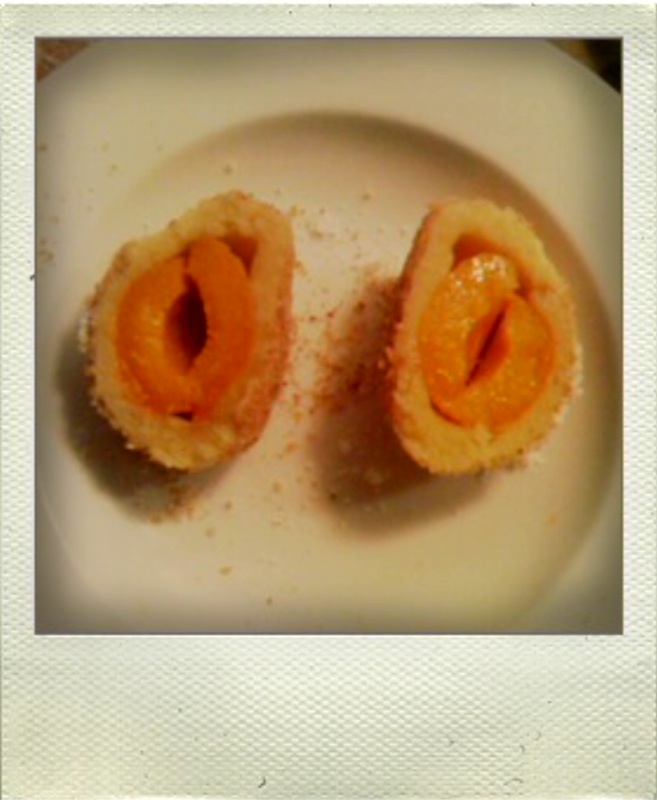
    And then, oh then, to eat them. What you'll find is a delicious outer cover of tender, tasty dumpling and a perfectly cooked apricot, sweet and tart at the same time, fairly bursting with juice, on the inside. The buttery, crispy breadcrumb coating and the soft fillip of powdered sugar finesse each bite.

    In Austria, these are served as part of a light meal, not as dessert, so we ate the dumplings (two per person is just fine) for dinner, then followed up with salad. (We used to have rice pudding with sour cherries for lunch at school in Berlin, too, so who knows.) But I don't think it really matters when you eat these gems. Just make sure you do.

    I know. You have to search for an odd German cheese. You have to strain it and then make a dough. You have to be all careful with it. And then you have to not only boil the dumplings, but make a further coating for them. There's a reason it took me 31 years to make my own. But you know what? I'm a lazy git. And I've learned my lesson. Don't wait as long as I did. This is the king of dumplings, the leader of them all!

    (And the recipe, from Nicky's gorgeous blog, delicious days, really is a cinch. It worked perfectly and doubles very easily. I translated from the metric for American readers below.)

    More photos here.

    Marillenknödel (Apricot Dumplings)
    Makes 6

    1/2 pound fresh quark cheese
    1 teaspoon of fresh lemon zest
    6 small apricots
    6 sugar cubes or 3 teaspoons of Demerara sugar
    4 tablespoons soft unsalted butter
    1 large egg yolk
    3/4 cup semolina flour
    2 tablespoons granulated sugar
    1 teaspoon pure vanilla extract
    A pinch of salt
    Scant 1/2 cup all-purpose flour, plus more for forming
    1/3 cup plain, unseasoned breadcrumbs
    Powdered sugar

    1. Place the quark in a fine mesh sieve and let drain for an hour into the sink. If you don't have an hour, 15 to 30 minutes are fine. Wash the apricots and dry them, then cut them open along their seams (only halfway!) and remove their pits. Fill with either a sugar cube or half a teaspoon of Demerara sugar.

    2. Bring a large pot of water to boil, add a generous pinch of salt, and reduce the temperature until the water bubbles just very lightly.

    3. In a big bowl cream together the strained quark, lemon zest, 2 tablespoons of soft butter, egg yolk, semolina, sugar, vanilla, and salt using a wooden spoon. When it's well-combined and fluffy,  fold in the flour. Don't over-mix. Turn the dough out onto a well-floured surface and with well-floured hands, form the dough gently into a thick log.

    4. Cut the log into into 6 equally sized pieces. With floured hands, gently pat each piece into a small disc, then place a sugar-filled apricot in the middle of the dough and gently wrap the dough around the apricot. Form a neat little dumpling (re-flour your hands as necessary) and double check that the apricots are completely covered by the dough. There will be seams, but try to make sure they are as closed as possible.

    5. Carefully slip the dumplings into the water and watch to make sure none got stuck to the bottom of the pot, stirring, if needed. Let them simmer at low heat for 12 to 14 minutes.

    6. Meanwhile, melt the remaining butter in a pan over medium heat and toast the breadcrumbs in the butter for a few minutes. Remove the dumplings with a skimmer, then roll them in the pan with the buttered breadcrumbs until evenly covered. Pile the dumplings on a serving plate and dust generously with powdered sugar. Serve hot.

  • Photo(6)

    (A disclaimer: my camera is in the shop, after an unfortunate collision with a Berlin sidewalk. So I'm taking pictures with my iPhone. Patience.)

    Cooking for one can be, as we all know, a chore. But cooking for one can also be, under different circumstances, a bit of a thrill. No one there to press their culinary preferences on you, no dietary restrictions to observe, no hatred of bacon to dance around. You can let your inner freak flag fly: after all, if no one's there to see that you secretly like pan-fried banana peanut butter sandwiches for dinner or poached eggs with hot sauce over pasta, you can indulge in your strangest cravings with absolute alacrity and that, truly, might be the best part of dining alone.

    The LA Times reviewed Deborah Madison's new book this week, about what people eat when they eat alone. It's a subject of much fascination, of course, because we've all been there, standing in the kitchen after work, backs pressed against the counter, drinking a beer and eating slivers of Cheddar and cold cornichons by the handful, or fried rice with bits and bobs from the fridge, or any number of other strange combinations borne out of convenience, speed, and a particular combination of flavors.

    (I, for example, like baked beans and broccoli. Triscuits and pickled herring. Sauteed cherry tomatoes and a can of tuna over spaghetti. A big green salad dressed with too much vinegar, enough to make my nose wrinkle.)

    I love hearing about what other people eat when they're eating alone. Not just for the voyeuristic angle (though it's sort of like looking like other people's shopping carts when standing in line at the grocery store: fascinating), but because I'm always looking for inspiration, too. And luckily for me, and for you, too, the review included one recipe that I'm filing into my permanent repertoire straight away, so good it was, so perfect in terms of its oddness and timing and – in the end, straightforward deliciousness.

    Photo(7)

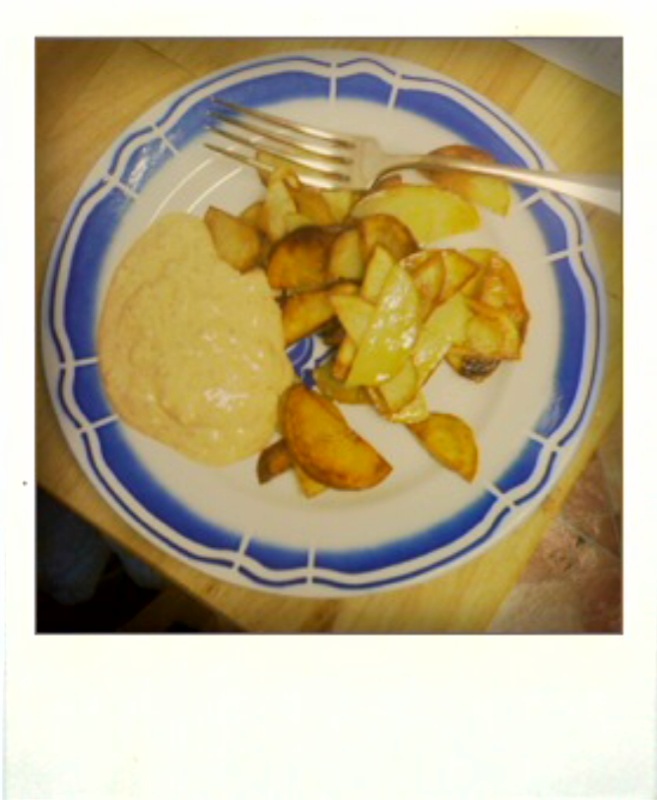
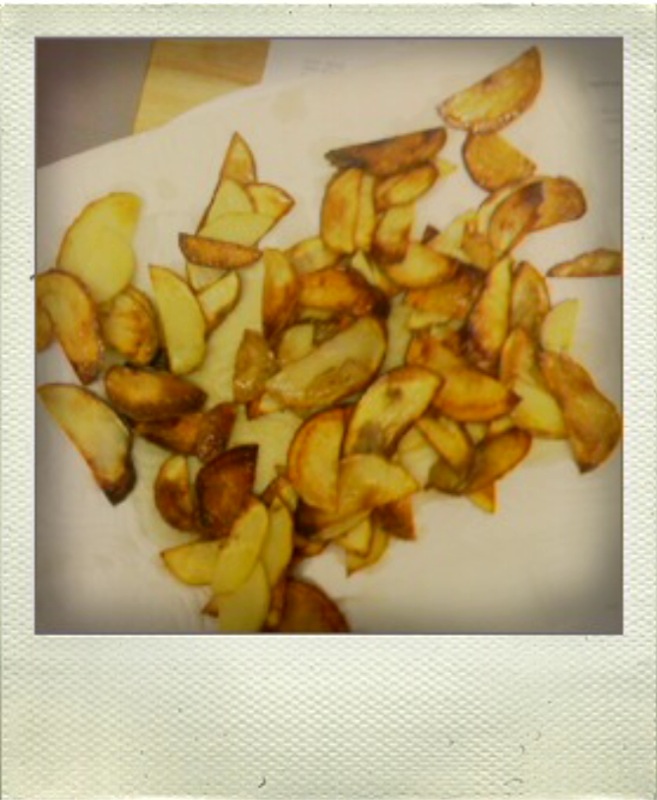
    It comes from Aglaia Kremezi, the Greek food writer, and is such a simple thing: potatoes sliced thinly and fried up in a matter of minutes in hot oil, then forked through a tangy, spicy  sauce of yogurt, feta, mustard and Aleppo pepper. After dragging my finger through the sauce to taste, I added a splash of vinegar because no meal alone – for me, apparently – seems to be complete without that extra zing.

    The hot, crispy potatoes and the cool, sour sauce are a match made in heaven. Crunchy, yielding, creamy, chewy – it's a textural marvel at the same time as it is just plain tasty. (Do you secretly or not so secretly like dipping your French fries in mayonnaise? This is the better version of that – the far better version, actually – in more ways than one.) In fact, you might find yourself regretting the fact that you used only three potatoes – they'll be gone in a flash. Luckily, it only takes a few minutes to fry up some more. What I'm trying to figure out now is what to do with that leftover sauce – it's rather addictively swipeable.

    So, tell me, lovelies: what do you eat when you're eating alone? Not eating alone due to heartbreak – because that's medicinal eating, really, another thing entirely – but because you have a glorious evening by yourself stretching out in front of you, with no one to please but yourself. Give me your strangest, your plainest, your most beloved dishes! I can't wait to read them.

    Fried Potatoes with Yogurt Sauce
    Serves 1

    3 Yukon Gold potatoes, or as many as you want to eat in a sitting
    3 or 4 tablespoons olive oil or sunflower seed oil
    1/2 cup plain yogurt (I used 2% Liberté, though the author says full-fat is better, just don't use use the thick, strained kind)
    2 tablespoons crumbled Greek feta cheese
    2 to 3 teaspoons Dijon mustard
    Plenty of Aleppo pepper (I used close to a tablespoon)
    1 tablespoon of white wine vinegar

    1. Halve the potatoes lengthwise, then slice them slightly thinner than 1/8-inch. Fry them in the hot oil in a large skillet over medium-high heat until golden brown in places. Drain them on three layers of paper towels.

    2. Combine the yogurt, feta, mustard and pepper. Add the vinegar and stir well, until creamy. Put the potates on a plate with some of the sauce on the side and dip the forked potatoes into the sauce as you go. You might have sauce left over – a good excuse to fry up a few more potatoes tomorrow.

  • Photo

    (A disclaimer: My camera is in rehab. I am without it for at least 2 weeks while the kind folks at Nikon repair the damage I inflicted on it when it fell out of my lap in Berlin onto the sidewalk, landing squarely on the lens and damaging the camera body, too. Sob. I was going to use my trusty old point-and-shoot in the interim, but I can't find the cable that connects it to the computer anymore. Double sob. So I'm using my iPhone camera. Yes. And it stinks. I know. Patience.)

    My dearest readers, thank you all so much for your comments, your emails, your love sent from across the borough, the city, the country, the world. I know we don't know each other, traditionally, let's say, but all the love and comfort I felt and still feel reading through what you wrote to me sustains me as much as any hug from a good friend. Really truly.

    I think I've said it before, but I'll say it again. After all, it bears repeating. This decision to start a blog four years ago? One of the best of my life. This internet thing? Such a lovely place. I love the little spot I've carved out for myself here. Sometimes I imagine it as a cozy little den where I've got a nice fire roaring, a few warm lights flickering, a pot of something or other bubbling quietly on the stove and all of you gathered around with a cup of tea or a glass of wine to sit and chat with me for hours.

    Back in the summer of 2005, when I started the blog, I didn't expect this to happen, to have an audience of more than a few. I was a little wary of the internet, of social networking sites and group blogging events, to say nothing of internet dating. I liked my real-world, flesh-and-blood community and I liked to write. I figured all that would come of the site would be a writing practice and the chance to work through all those damn recipes clogging my desk drawers.

    And then. The first comment came in. And then the next. And the third. There were emails and more comments and before I knew it, I was totally charmed. There was a whole other community, a virtual one, to fall into, to be a part of. And it wasn't nearly as scary as I thought. In fact, it was rather warm. After all, we sit around writing about recipes, swapping notes, cooking for each other, right? It's like one big Kaffeeklatsch. I love it.

    Photo(2)

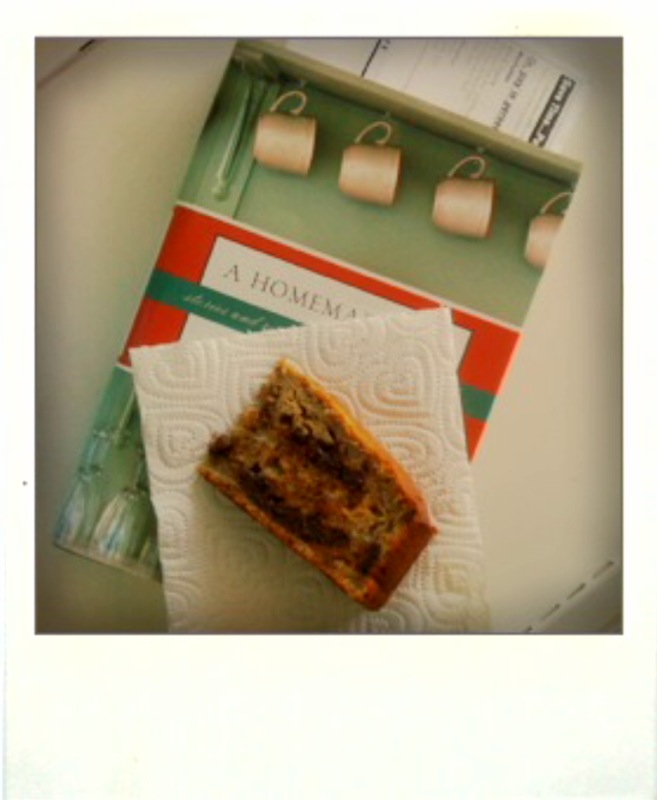
    My first and most loyal pen pal was sweet Molly at Orangette. We wrote each other great big emails about life and love and food and then we met and talked for hours and then we wrote some more. You know the term kindred spirit? I think that's a pretty good term for what she is to me. I know I'm not alone when I say that I always knew she'd write a book. Right? She's just got it. And what a book she finally did write, A Homemade Life, filled to bursting with stories of her father, her love affairs, meeting her husband, and more. It's juicy and beautifully written, it brought me to tears more than once, and even made me laugh out loud. It's just like Molly herself.

    Best of all, I suppose, is that once you've devoured the book and have gone and told your dad how much you love him, and planned a trip to Paris, and daydreamed about finding your own true love, you can cook from the book. And cook from it I have. From a bitter-creamy salad of endive, avocado, radicchio and feta, to tender little tuna bouchons flavored with Gruyère and parsley, to slow-roasted tomatoes sprinkled with ground coriander (you, quite literally, cannot just eat one), the book is crammed with good food. I've kept it by my bedside and I've had it splayed open in the kitchen and sometimes I think I should just have two copies, one for each place.

    This weekend I finally tried her banana bread (you know about Molly and the special place in her heart for banana bread) with crystallized ginger and chocolate. The recipe first appeared on her site years ago, but she tweaked and perfected it over the years and now it's something else entirely. A delicious, elegant loaf that is not too sweet, spicy in places, and oozing with melty little pockets of chocolate. It's quite a triumph. Much like her book. Much like herself.

    So proud of you, girl.

    Banana Bread with Chocolate and Crystallized Ginger
    Makes 1 loaf or 1 8-inch round cake

    6 tablespoons unsalted butter
    2 cups all-purpose flour
    3/4 cup sugar
    3/4 teaspoon baking soda
    1/2 teaspoon salt
    3/4 cup semisweet chocolate chips
    1/3 cup finely chopped crystallized ginger
    2 large eggs
    3 large ripe bananas, mashed
    1/4 cup well-stirred whole-milk plain yogurt (not low or nonfat)
    1 teaspoon vanilla extract

    1. Set a rack in the center of the oven, and preheat to 350F. Grease a 9- by 5-inch loaf pan or an 8-inch round cake pan with cooking spray or butter.

    2. Melt the butter on the stove or in a microwave and set aside to cool slightly.

    3. In a large bowl, whisk together the flour, sugar, baking soda, and salt. Add the chocolate chips and crystallized ginger and whisk well to combine. Set aside.

    4. In a medium bowl, lightly beat the eggs with a fork. Add the mashed banana, yogurt, melted butter, and vanilla and stir to mix well. Pour the banana mixture into the dry ingredients, and stir gently with a rubber spatula, scraping down the sides as needed, until just combined. Do not overmix. The batter with be thick and somewhat lumpy, just make sure all the flour has been incorporated. Scrape the batter into the loaf pan and smooth the top.

    5. Bake into the loaf is a deep shade of golden brown and a toothpick inserted into the center comes out clean, 50 mins to an hour. If the loaf seems to be browning too quickly, tent with foil.

    6. Cool the loaf in the pan on a wire rack for 5 minutes. Then tip out onto the rack, and let it cool completely before slicing. The loaf freezes well wrapped in plastic wrap and again in foil to protect from freezer burn.

  • DSC_1244

    I think it's time for me to spill the beans. I've been mulling it over for a long time, how to tell you all the news, and as long as I couldn't figure out how to tell it, I thought it best just to keep it to myself. It's been a long time since I've had much of an appetite for cooking, is the thing. And writing about cooking when you're not in the mood to eat isn't a lot of fun, not for the writer and not for the readers, either.

    The truth is, Ben and I parted ways a few months ago. It was a long, hard winter in more ways than one. But we did our very best, I think, tried as hard as we could.

    Ben was a huge part of this website, a loyal eater and regular inspiration for the posts I wrote, so his absence in my life is making blogging harder than I expected. Part of it was the elephant-in-the-room effect. But cooking for one, as I think many of you know, can be tough, too. Newspaper recipes don't inspire me and I can't seem to work up an appetite for much beyond spaghetti with tomato sauce and the occasional salad.

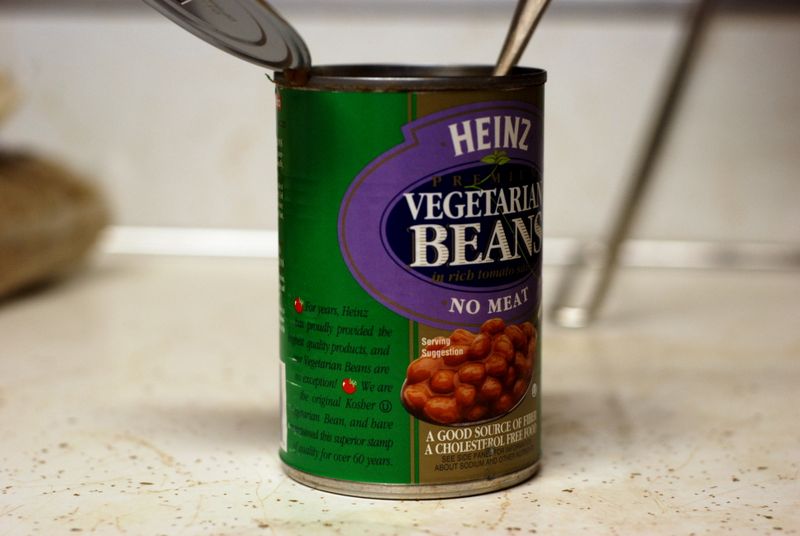
    Tonight, standing in line at the grocery store with my dutiful purchases of low-fat yogurt, fibrous cereal and pre-washed arugula, I suddenly got the urge, rather the hunger, for baked beans. When I was a little girl, my father made baked beans from a can on a regular basis and for me, it's one of my most reliable comfort foods. I couldn't believe it hadn't occurred to me sooner. I zipped out of the line to the bean aisle, grabbed a can and finished checking out.

    And indeed, as I ate them heated up and spooned onto a plate with braised kale, it felt good to finally be hungry for something. Cloying, fudgy, vinegary baked beans: who knew that they'd be the things that would make me actually want to enter my kitchen again? The mind and the stomach work in mysterious ways.

    And you know, despite all the rain that seems to be following me from New York to Los Angeles to Berlin and back, life keeps surprising me with unexpected moments of joy and peace. I'm holding onto those with one hand and a can of baked beans with the other. Bear with me as I find my way back to the stove.

  • DSC_1126

    Oof. That ever happen to you? You spend a big part of your evening grocery shopping, prepping, and cooking, only to find yourself – twenty minutes later – staring at the half-eaten plate of pasta in front of you, wishing you'd just fixed a salad?

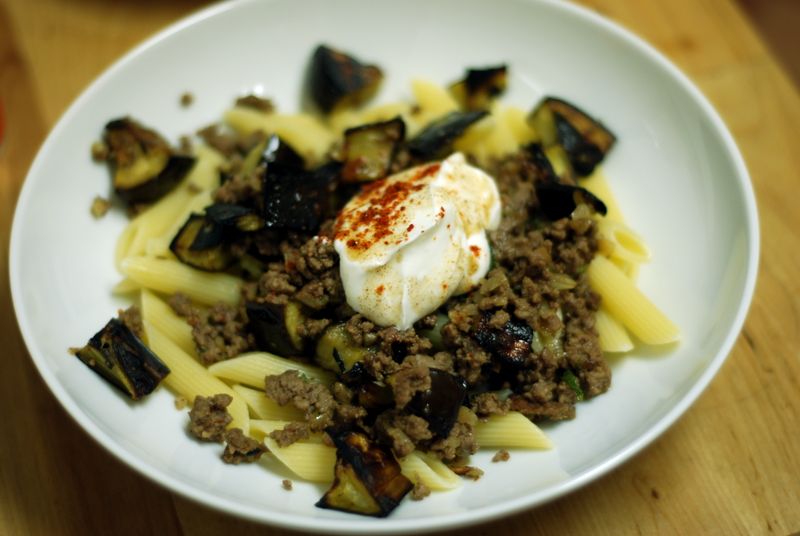
    I hate it when that happens. Especially when it's with a recipe I've been hoarding forever – and something that sounds as good as pasta with turkish-style lamb, eggplant and yogurt sauce. Right? Sounds tasty, doesn't it? The thing is, the meal indeed was pretty good. I used Melissa Clark's recipe, subbing ground beef for lamb (it's what I had in the freezer). What you do is roast eggplant at very high heat – a nice little trick in and of itself, since you end up with meltingly soft on the inside, super-crisp on the outside, addictive little eggplant cubes – and then combine that with sauteed ground beef flavored with shallots, minced garlic and a generous amount of Aleppo pepper.

    (Aleppo pepper! Aleppo pepper. I could say that all day long. It just rolls off the tongue so nicely, wouldn't you say? Aleppo pepper!)

    You serve that mixture over boiled pasta (orecchiette would be best) and top it off with browned butter and garlicky yogurt. Manti, deconstructed, as Melissa says. So, yes, it's all very delicious and interesting and all that, but still, I just couldn't get my appetite up.

    Am I secretly – even to myself – considering vegetarianism? Was it just too much food (Melissa says this serves 2 to 3 people, but eyeballing my leftovers, I think at least 4 could be happy)? Did I get overwhelmed by the amount of leftovers staring me down? It's a Thursday morning mystery, is what it is. In the meantime, does anyone want to come over for dinner tonight?

    Pasta with Turkish-Style Beef, Eggplant and Yogurt Sauce
    Serves 4

    1 large eggplant, about 1 pound, in 1/2 -inch cubes
    5 tablespoons extra virgin olive oil
    1/2 teaspoon kosher or coarse sea salt, more to taste
    3 fat garlic cloves, minced
    1 large shallot, minced
    1 pound ground beef
    1/2 teaspoon red pepper, preferably Turkish or Aleppo, more to taste
    Freshly ground black pepper to taste
    1 1/2 tablespoons chopped fresh mint, more to taste
    1/2 pound orecchiette or penne pasta
    2 to 6 tablespoons unsalted butter, to taste (I barely used a tablespoon)
    2/3 cup plain Greek yogurt

    1. Preheat oven to 500 degrees. Bring a pot of water to boil for pasta.

    2. Toss eggplant with 4 tablespoons oil and a large pinch of salt (I also mistakenly added one minced garlic clove here). Spread on a baking sheet, making sure there is room between pieces, and roast until crisp and brown, 15 to 20 minutes.

    3. In a large skillet, heat remaining tablespoon oil. Add 2 minced garlic cloves and the shallot and sauté until fragrant, 1 to 2 minutes. Add beef, 1/2 teaspoon salt, red pepper, and black pepper to taste. Sauté until beef is no longer pink, about 5 minutes. Stir in mint and cook for another 2 minutes. Stir eggplant into beef. Taste and adjust seasonings.

    4. Cook pasta according to package directions. Meanwhile, in a small saucepan, melt butter: the amount is to your taste. Let cook until it turns golden brown and smells nutty, about 5 minutes. In a small bowl, stir together yogurt, remaining garlic (well, I didn't have any remaining garlic, plus I don't like raw garlic, so I left the yogurt garlic-less) and a pinch of salt.

    5. Drain pasta and spread on a serving platter. Top with beef-eggplant mixture, then with yogurt sauce. Pour melted butter over top. Sprinkle on additional red pepper and more mint. Serve immediately.