• After my vacation, when I could blissfully expect others to take over the reins at the stove and produce any number of delicious things (rabbit with rosemary or homemade tagliatelle with meat ragu and fresh peas, for example); where melons and apricots and tomatoes and zucchini tasted like the versions of themselves that we dream they should taste of; and yeasty pizza al taglio and flaky piadine and freshly made sheeps-milk ricotta – light as a cloud and almost quivery – abounded with plenty, it is an understatement to say that I had little interest in getting back to the kitchen.

    I am probably preaching to an already-convinced choir that home cooking in Italy, where ingredients practically pulse with flavor and juice and freshness, completely surpasses any attempts I might make to approximate it in my kitchen here in New York. Over there, roasted tomatoes topped with chips of browned garlic, homemade bread crumbs from the unsalted loaves of the region and feathery wild fennel fronds, all bathed in a broth of olive oil and cooking juices, tasted of summer and sunshine and earth. If I attempted those here – even with the tomatoes of the Greenmarket – nothing as good would (could!) emerge.

    So, it's taking me a few days to get back into the swing of things – to find my appetite for shopping, preparing, cooking and eating again. I'll find my hunger for all of this, I'm sure. But I'm still reveling in my memories of last week: of our dining room table crowded with the family I see too infrequently, of quickly-melting cones of gelato in the afternoon, of floral-scented berries plucked off the vines in the early morning hours when dew dappled all the grasses, of beach food that came in the form of homemade chitarrine with tiny squid and clams and shrimps, and of those roasted tomatoes that tasted so much like home.

    Ben and I are off to Maine this weekend – I think a few days of New England summer food (corn! lobsters! blueberries!) and some bracing ocean air will be good medicine. And when Ben's mother invited us over for dinner at her place last night, I figured that preparing our dessert would be just the thing to get this cooking-shtick of mine back in gear. I chose to make a fruit crisp – laden with plump summer fruits. The recipe comes from the owner of Manhattan's Pearl Oyster Bar (and the ex-girlfriend of the owner of Pearl's undisputed rival, Mary's Fish Camp – oh, restaurant intrigue, is there anything better?) and was published in the New York Times three years ago.

    I loved the combination of fat blackberries and aromatic nectarines. But the recipe was off. There was far too much sugar listed: a half-cup tossed with the nectarines would have been tooth-achingly sweet. I used just a tablespoon and found it to be plenty. Also, while the topping looked just fine raw, it all but melted into a cinnamon-flavored paste while in the oven. Yes, the flavor and texture of the jammy berries and ripe nectarines was luscious, but this was no crisp, as far as I'm concerned. A grunt? Perhaps. If you want a foolproof crisp topping, use Chris Kimball's from The Best Recipe. It holds up its shape and is delicious.

    Rebecca Charles' Blackberry Nectarine Crisp
    Serves 6

    7 tablespoons cold, unsalted butter
    1/4 cup all-purpose flour
    1/2 cup rolled oats
    1/2 cup firmly packed brown sugar
    1/4 teaspoon ground cinnamon
    1/4 teaspoon salt
    4 cups nectarines, pitted, peeled and cut into 1-inch chunks (about 3 large nectarines)
    1/2 cup granulated sugar (I used 1 tablespoon)
    1/2 teaspoon vanilla extract
    1 heaping cup whole blackberries
    Vanilla ice cream

    1. Butter a 2-quart baking dish or six 8-ounces ramekins with 1 tablespoon of butter. Heat oven to 375 degrees. In a food processor, pulse flour, oats, brown sugar, cinnamon and salt once or twice to mix. Cut remaining butter into small chunks, add to flour mixture and pulse a few more times, until mixture just comes together into small crumbly clumps. Reserve.

    2. In a large bowl, combine nectarines, granulated sugar and vanilla. Pour nectarines into baking dish or ramekins, scatter blackberries on top and sprinkle with the processed mixture. Bake 45 minutes, until bubbling. Serve immediately with vanilla ice cream.

  • Shopping_list

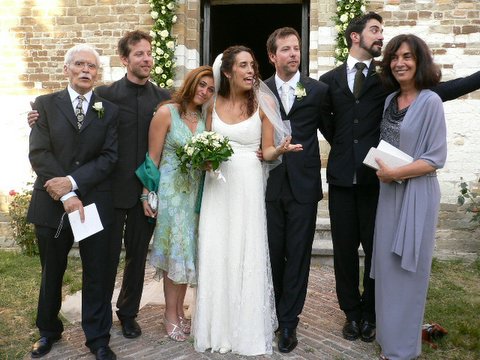
    What a week it’s been. Books were read, new swimsuits were purchased, berries were picked, families were bonded, mosquitos attacked, a wedding was attended, much suntanning occurred, and it all happened far too fast. I’m a lucky girl to have such an idyllic haven in Italy. Saying goodbye is absolutely wretched. In an attempt to tell you about the past week with any semblance of eloquence, I’ll let the pictures do most of the talking.

    Urbinoarch
    A cloudless sky with a Renaissance arch.

    500
    Our car’s big day!

    Berries
    Juicy berries from the garden.

    Famiglia
    A four-generational family portrait.

    Latorre
    A candle at sunset, overlooking the fertile valley.

    Pizzabianca
    Chewy, larded pizza bianca, strewn with fragrant rosemary and coarse salt.

    Urbino
    Urbino takes my breath away every single time I come around the bend in the road.

    Wedding
    A seriously gorgeous wedding party.

  • Torre

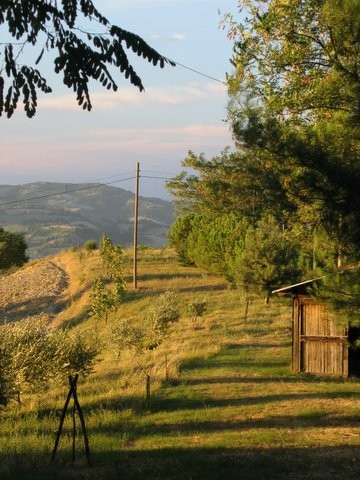
    For the next 10 days, I'll be in Italy visiting my mother and my grandfather (that's his tool shed you see up there) and various other members of my Italian family for some much-needed rest and relaxation. I plan on cooking very little, reading quite a bit, and watching as much soccer as I possibly can.

    Thank you, dearest darlingest readers, for all your lovely words of encouragement. They've put a spring in my step.

  • Soup_10

    This seems like just the week for chilled, vegetal soups. Especially ones enriched with buttermilk and yogurt, giving the pureed vegetables a pleasant tang and lactic heft. As for ease of preparation, there isn’t much that’s simpler than chopping up a few cukes and avocados, and blitzing them into liquescence with some salt, sugar, vinegar and the aforementioned buttermilk and yogurt. All the fuzzy bits get strained out and the whole thing is chilled to a sublimely cooling state before being topped with mint strips and spooned up for dinner.

    Douglas Keane, the chef at Market in St. Helena, provided the recipe to the LA Times a few years ago. I made the soup and ate a bowl one night, but I haven’t been able to bring myself to finish the rest off all week. It’s not the soup’s fault – it’s quite lovely really: the sweetness of the avocado mellowing out the more astringent qualities of the cucumbers and buttermilk, and don’t you agree that everything in summer is improved by a topping of feathery strips of mint?

    But the recent appearance of an entire family (clan? pride? gaggle?) of nuclear-sized cockroaches (waterbugs, my foot) in my apartment, my impending four-year anniversary at work (four years? What on God’s green earth am I doing with my life?), an ongoing struggle with my insurance company (do they want me to cry every time I am forced to call them?), the miserable and defeating state of my bank account, and the fact that I’m long overdue for a vacation (6 months, people, is too long to work without a break, American work ethic be damned) is making me irritable and weepy and in need of nothing more than cereal for dinner and a big helping of french fries covered in chocolate sauce and love for lunch.

    So, I’m leaving the healthy soup (probably providing good nutrition and glowing skin to boot) behind in search of something that will leave me feeling a bit more soothed and sheltered. Whether I can find that in food remains to be seen.

  • P1030449

    Did you know this man could cook? I'm sure most of you remember him as the belligerent ghost who tried to kick Patrick Swayze off the train in Ghost, but Schiavelli was also a gourmand and a writer who chronicled his childhood spent hanging around his Sicilian family in Brooklyn. I used to work at the company that publishes his books and one day I ran into him as he walked down the hallway to his editor's office. He was very tall and elegantly dressed, wearing a fedora. His familiar face caught me off-guard and I did a double-take before rounding the corner to the photocopying machine. I smiled to myself as I heard a familiar refrain echoing in my head, "Get off of my train!"

    Schiavelli used to prepare regular dinners at the now-shuttered Alto Palato restaurant in West Hollywood. One of his pasta dishes bore a resemblance to the Sicilian classic, Pasta chi Sard (which, in Sicilian dialect, means Pasta with Sardines), but he cleverly renamed his dish Pasta chi Sardi a Mari (Pasta with Sardines Still in the Sea). I have a feeling this is the kind of dish my father would love, if he'd ever get his act together to actually buy fennel seeds or golden raisins. The LA Times adapted Schiavelli's recipe for the newspaper almost four years ago, and I finally got around to trying it last night for dinner.

    This is one of those fantastic meals that looks so entirely unassuming, but manages to combine flavors in such a way that the final product is out of this world. And in just 20 minutes! For those of you who claim to hate anchovies, I swear to you (I really do!) that if you try this recipe, you won't even be able to taste them – they are a back note, a barely-there frisson of marine je-ne-sais-quoi, and completely inoffensive. The mellow garlic, herbal parsley, sweet raisins, and aromatic fennel seeds balance out the anchovies perfectly and the proportion of each ingredient in the recipe could teach recipe testers a thing or two about restraint.

    You soak a few raisins in hot water, while carefully warming together oil, garlic, minced anchovies and the fennel seeds. You throw the chopped parsley into the skillet, and then bring a pot of water to boil for the pasta. Schiavelli calls for bucatini, but regular spaghetti can be substituted. While the spaghetti boils, you add the drained raisins to the fennel mixture, then add the cooked pasta and a healthy amount of cooking water. Over high heat, the water reduces, and acts as a thickener and a flavor-booster. Each strand of spaghetti is coated with a lightly flavored, green-flecked sauce, and the toasted pine nuts thrown in at the end add crunch.

    If you use jarred anchovies (which are more convenient to keep around than tinned ones) and have fennel seeds and golden raisins lying around your pantry, this is the kind of dish that could become your rainy-day, late-night special. The kind of meal you throw together when there's nothing else in the house and it's too late for elaborate preparations of any kind. It's the best kind of fast food, simple and sophisticated.

    Pasta Chi Sardi a Mari
    Serves 4 to 6

    1/4 cup golden raisins
    3 tablespoons olive oil
    1 clove garlic, minced
    4 anchovy filets, minced
    1 teaspoon fennel seeds
    6 tablespoons minced parsley
    1 pound bucatini or spaghetti
    Salt
    1/4 cup toasted pine nuts

    1. Cover the raisins with hot water and let soften 15 to 20 minutes.

    2. Warm the olive oil, garlic, anchovies and fennel seeds in a skillet over medium-low heat. After about 5 minutes, the anchovies will begin to melt. Add the parsley and keep the mixture warm, but do not let the garlic scorch.

    3. Cook the pasta in plenty of boiling, salted water. Drain the pasta, reserving 1/2 cup of the pasta cooking water, and add the noodles to the skillet with the sauce. Drain the raisins and add to the skillet. Increase the heat to high and add the reserved pasta water. Cook, stirring the mixture together, until most of the water has evaporated and the sauce clings to the noodles, about 3 minutes. Stir in the pine nuts. Serve immediately.

  • 9781400041206

    I have absolutely nothing to tell you about cooking-wise, because I spent the entire weekend devouring this book. It is the best thing I’ve read all year, and, people, I read for a living. Bill Buford, the former fiction editor for The New Yorker, worked as an unpaid grunt in Mario Batali’s kitchen at Babbo and then traveled to Tuscany to apprentice under master butcher Dario Cecchini. The account of his time in the kitchen at Babbo and in Italy is beautifully written, hysterically funny, and totally, utterly captivating. It’s the kind of book I wish wish wish never had to end.

    And if I didn’t already have an insatiable desire to eat at Babbo – just once! – I certainly do now.

  • Pie_2

    Reading about regional American food makes me go all soft inside. An interesting narrative, simple ingredients, straightforward preparation – it makes for a good book and usually pretty good eats. Maybe it's because I haven't seen very much of rural America, or because much of that kind of narrative is bound up in the romantic ideals of what America used to be like, but I could curl up on my couch and read about that stuff all day long.

    So when the LA Times published an article about John T. Edge, food historian and Southern Food Alliance director, my ears perked up. The reviewer, Charles Perry, was exasperated with Edge, finding his books misinformed and often overblown. But what kept Perry (and me) intrigued was the selection of recipes that Edge included. Apparently they were both "unusual and worth trying" (italics mine). I didn't need much encouraging.

    In a case of total serendipity, I had volunteered to bring dessert to my book club on The Known World by Edward P. Jones, a novel about slave-owning blacks in the antebellum South. Could there be a better opportunity to make 100-year old Hypocrite Pie from North Carolina? I suppose I should have gone at the recipe a bit more gimlet-eyed and left myself more baking time when Perry noted that the recipes needed "tweaking". But I figured the LA Times test kitchen did that tweaking for me before reprinting the recipe (well, they did adjust the sugar amount, so I'll be thankful for small mercies).

    I whizzed together an all-butter crust and let it chill throughout the day before coming home and throwing the pie together. After sauteeing apples in butter and sugar and cinnamon until the apartment smelled like Thanksgiving, I layered them at the bottom of a crust-lined pie dish (make sure you roll out that crust as thin as thin can be – mine was too thick). Then I beat together the buttermilk custard and poured it over the apples. The raw pie smelled divine – the creamy sourness of the custard offset the sweet, spiced apples perfectly. I slid the pie into the oven and waited. And waited. And waited.

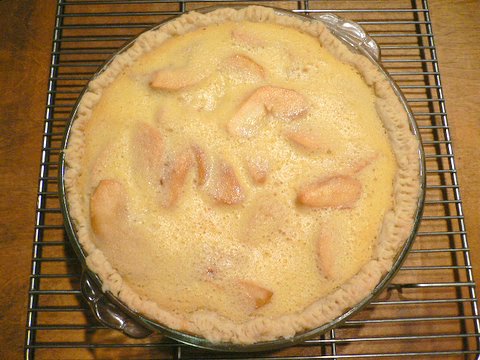
    If I hadn't had to run to book club, I would have waited longer. But I couldn't. So after an hour of baking, I pulled the pie from the oven. The crust was pale as can be, and the custard wasn't much darker. It had set, though, and the knife test came out clean. But just as I thought, when we cut into the pie later, it could have used more time in the oven. And perhaps a wee parbaking of the crust before the filling was added. The custard tasted good, but it was still a bit too jiggly, and the crust at the bottom was soggy. However, the crisp and melting edges of the crust were toasty, almost shortbread-y against the sweet filling.

    I loved the homey pie's mysterious name. I loved its ease of preparation and its vanilla custard smell. I loved imagining North Carolinians eating it at the dinner table a hundred years ago. I wish I'd had more time to bake the pie properly – to a gilded, firm state. Because I think I would have enjoyed it more had it not been so… pallid. But I'm glad I made it all the same.

    Hypocrite Pie
    Serves 8

    6 tablespoons butter, divided, at room temperature
    3 tart apples, peeled, cored and sliced
    3/4 cup sugar, divided
    1/2 teaspoon cinnamon
    2 eggs, room temperature
    1 teaspoon vanilla
    1 tablespoon flour
    1 cup buttermilk, room temperature
    Unbaked crust for a 9-inch, deep-dish, 1-crust pie

    1. Preheat the oven to 300 degrees. Melt 2 tablespoons of butter in a skillet. Add the apples, 1/4 cup of sugar, and the cinnamon. Cook over medium heat until the apples are tender, 4 or 5 minutes. Set aside.

    2. In a large bowl, combine the remaining 4 tablespoons of butter with the remaining 1/2 cup sugar and beat until creamy. Beat in the eggs 1 at a time. Mix in the vanilla, flour and buttermilk and beat until silky.

    3. Prick the bottom of the pie crust with a fork. Spoon the apples into the crust and spread them around as flat as possible. Pour in the buttermilk mixture, ensuring that it covers all the apples. Bake in the oven until a knife inserted in the center comes out clean, 50 – 55 minutes (be prepared for it to take longer).

  • Salad_1

    Despite the incessant rain over New York City, last night's dinner called for something light and colorful and nutritious: a counterbalance to a weekend of baked beans and chocolate, and the perfect dinner-for-one. The recipe comes from the chef at Jer-ne in Marina del Rey and was printed in an LA Times article about the beauties of shaved salads by Leslie Brenner.

    I'm adore shaved salads – fennel and celery root and cabbage and carrots: the list of raw vegetables that benefit from being sliced paper-thin and dressed with nothing more than olive oil, lemon juice and salt goes on and on. But the idea of pairing fennel with watermelon and raw tuna was something new to me and just the ticket for a one-plate meal.

    I sliced two ounces of raw tuna, then drizzled them with lemon oil and piled shaved fennel on top. Mimicking the coral fish, thinly sliced watermelon was arranged on top of that. More lemon oil was drizzled all around, and I sprinkled flaky Maldon salt over everything to give it some edge. My plate looked gorgeous – restaurant food in my very own kitchen.

    But sadly? It tasted totally insipid. The delicate tuna flavor disappeared entirely behind the fennel, and the watermelon was so thin that the fresh crunch and refreshing taste was gone a millisecond after each bite. And why did Weiss use lemon oil instead of lemon juice and oil, which would have provided some much-needed tartness?

    The idea of using watermelon in savory dishes is lovely – I remember first trying a salad of watermelon, sliced grape tomatoes and feta, all bathed in a sharp, citrusy vinaigrette a few years ago (at The Red Cat? I think), and being totally blown away by the combination of textures and flavors. But this tuna carpaccio was a total snooze, even if it was the prettiest thing I ever did put together for dinner.

  • Beans_4

    To those of you who have a waning interest in my childhood and how it came to be that I spent much time in Germany with my mother and yet also a large amount of time in Massachusetts with my father, let me tell you that it's far too complicated and long-winded to explain on a blog, and a food blog at that, but that it is thanks to this schizophrenic, bi-continental upbringing that I have an equal appreciation for spaghetti al pomodoro and a can of baked beans. Separately, of course.

    When I lived with my father in Boston, he had a weekly repertoire of dinners up his sleeve, including spaghetti with my (maternal) grandmother's tomato sauce, Moo Goo Gai Pan from Golden Temple on Beacon Street, and canned baked beans with a pile of broccoli alongside. To this day, I consider baked beans with broccoli to be one of my comfort foods, something to be eaten when nothing else will do. I'm never too picky about the brand of beans I buy, though I end up veering towards Heinz's Vegetarian Beans, if only because there's something so appealing about the green-and-purple label.

    In March, Amanda Hesser printed James Beard's recipe for baked beans as an accompaniment to Tucker Carlson's journey down memory lane to the time he spent working at the B&M plant. Every weekend since then I thought about making the beans, but realized I didn't have the requisite 11 hours to do so. Until this weekend, when rain and an out-of-town Ben kept me indoors to finally slog my way through the entire (gulp) fifth season of Six Feet Under and have Beard's beans bubbling away in the oven simultaneously.

    There's not much to the recipe besides a lot of patience. You soak dried pea beans for hours, then boil them, then layer them with an onion and spareribs and a molasses-dried mustard mixture in a pot to cook for several more hours in a low oven. Because I figured I might as well gild the lily, I also made my very first batch of true Southern cornbread in my cast-iron skillet (thanks to Hoppin' John's Lowcountry Cooking). It may not be how my father served his beans, but some things have to change over time, no? The beans were good, and even better the next day. The cornbread, so salty and plain compared to that Northern stuff I'm used to, was the best thing to eat crumbled with the porky beans (a slice drenched with maple syrup was delicious, too, and very Little House in the Big Woods).

    But as I ate and sobbed my way through the final few episodes (I mean, seriously. Best Show EVER), I realized that even though the bean recipe came from James Beard and was Slow Food incarnate, I kind of preferred the processed version, the one that takes me three minutes to prepare and is an instant time machine to another part of my life. And that's really okay. It was sort of satisfying to figure that out (a lot of deep thoughts this weekend, I know. Forgive me, I was a little PREOCCUPIED WITH A FICTIONAL FAMILY'S DEMISE).

    After all the Fishers died and I washed my face and cleaned myself up, I went back into the real world to meet a lovely group of bloggers, organized by Sam. We ate far too much chocolate and talked and laughed. It was so lovely to meet everyone. Thank you, Sam, and Happy Birthday!

    SamandfredP1030419P1030420P1030421

  • I'm kind of a sissy when it comes to grilling. Growing up in Germany, having a barbecue always seemed so utterly and entirely American. After all, the Americans did it best: juicy burgers with their toasty buns, spicy chicken slathered in barbecue sauce, gooey marshmallows falling off of scavenged twigs. My family in Italy would grill from time to time – a whole fish in a wire basket, perhaps, or a few slices of bread to be rubbed with garlic and drizzled with oil – the original and inimitable bruschetta – but that was about it. And even then, the grill was in the province of men. My imposing Sicilian uncle would take care of the fish, and our Milanese friend Giancarlo would stand over his grill and toss toasted bread back at the dinner table for us to dress.

    In America, too, grilling and manhood seem inextricably bound – in fact, it often seems to be the only place where men feel truly comfortable when cooking. Get a group of people together for a summer barbecue and the men will always end up standing around the grill, giving each other terse "suggestions" for how to get the fire going. I let this behavior intimidate me over the years. I convinced myself that I didn't really care much for grilled food anyhow – a saute pan was good enough for me! But somewhere in the back of my brain, I suspected that if I could wrestle my way to the front of the grill and master that sucker, it might well be worth it.

    For the past year, I've been lucky enough to live in a ground-floor apartment with a patio and hence a grill. It's a bit of a sad-looking grill, lopsided and with a tipsy-looking ash-collector (erm, that's what I call it. I may be mastering the grill, but that doesn't mean I know the lingo), but who cares about looks when it comes to grilling? I didn't need some fancy-pants grill selling at Williams-Sonoma for 500 dollars (for some reason, a Southern twang just crept into my interior monologue – let's ignore it and move on). What I did need was a grill brush to swipe off a year or two of heat-fused proteins and grit, and a recipe that sounded so mouth-watering it would propel from my safe place of non-grilling existence to the wild life on the other side.

    I purchased the grill brush for little more than four dollars at the Chinese-run restaurant equipment store around the corner from my office, along with some fierce-looking skewers. I was in business. Last summer, Julia Moskin wrote about multi-cultural grilling and included several recipes for kebabs that sounded utterly delicious and not too difficult. The recipes included lovely little salads to be served alongside the kebabs, which totally charmed me. For a catch-up dinner with some girlfriends on Wednesday night, I chose to make a Syrian recipe for beef kebabs spiced with onions and cinnamon and allspice, to be stuffed along with a citrusy salad into a grill-warmed pita. Are you hungry already?

    The recipe called for ground chuck to be mixed together by hand into a "paste" along with spices, chopped onions (I used shallots), tomato paste, lemon juice, and pine nuts. I was then to form the meat around flat skewers – but this didn't quite work. If I lifted the skewers, even carefully, the molded meat would just fall off. What worked better was forming the meat into sausage shapes with my hands, and then thrusting the skewer through each one. I chilled the raw kebabs for an hour, then went to work getting the grill to light.

    Anticlimactically, the briquets we had lying around the house were the quick-start ones, soaked with lighter fluid. All I did was touch a match to a pile of them and they went up in flames. Thrilling! About 10 minutes later, the grill was ready, so I oiled the rack, laid the skewers down carefully over the hot coals and heard the meat sizzle. Turning the skewers and kebabs 7 minutes later proved a bit difficult since I was wielding a spatula and oven mitts (not to mention my nerves were getting in the way), but all I needed was a bit of practice. When the meat was cooked through but still juicy, I threw a few pitas on the grill and we sat down for dinner.

    We split the pitas and filled them with the juicy meat – sweet with spice, flame-smoked – and lemon-and-oil slicked romaine and cucumbers. The sandwiches were delicious – alternately warm yet cooling, crusty and fresh. The lemony salad was the perfect foil for the hearty meat – in fact, I filled my pita mostly with salad, and had just a piece or two of meat stuck in. We ate with our fingers, always satisfying, and felt the night set in around us. I think I could get used to this outdoor-cooking thing.