• DSC_2772

    I saw a shooting star the other night; I was standing in front of my grandfather's house, though I have to learn to call it my mother's house now that almost three years have passed since he's been gone. I was standing there, with my neck folded back so I could stare at the Milky Way glimmering above us, hearing the acacia leaves rustle all about when I saw that celestial rush and sparkle past the roof. That very spot is the only place I can still see the Milky Way and every time I stand there in the dark looking up at the heavens I snap right back to when I was a little girl, learning about the universe for the very first time. Decades evaporate before my eyes.

    DSC_2149

    It's been a long time since I wished on shooting stars, or stray eyelashes or any other kind of talismans. I try to make my own luck, don't want to rely on the gods or astronomy for the twists and turns of my life. Lately, I've been trying to focus a little more on living in the moment, zeroing in very closely on how each individual day goes instead of constantly, frantically, looking to the future for the answers. So I remind myself that I am a lucky person: to be alive, to share in the human mystery that is love, to call many places in this world my home, to squirt lemon in my mouth and taste sharp sourness.
    DSC_2130

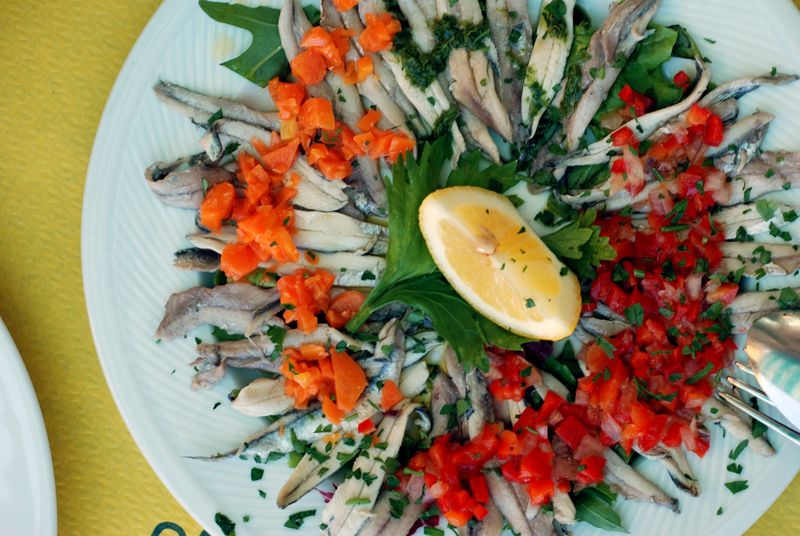
    I am grateful for the little marinated anchovies my mother and I ate for lunch one day a few weeks ago, especially the ones topped with little cubes of parsleyed carrots. The anchovies were vinegary and sort of sweet, too, and they melted in our mouths.
    DSC_2178

    I am grateful that my mother is happy.

    DSC_2181

    I am grateful that for three to six days a year, I am allowed to lie slothfully on the beach and work on my tan lines and read magazines that proclaim The Return of Fur and revel in the Coolness of Camel Coats, and I'm grateful for borrowed white sandals that make me feel like a little kid again.
    DSC_2140

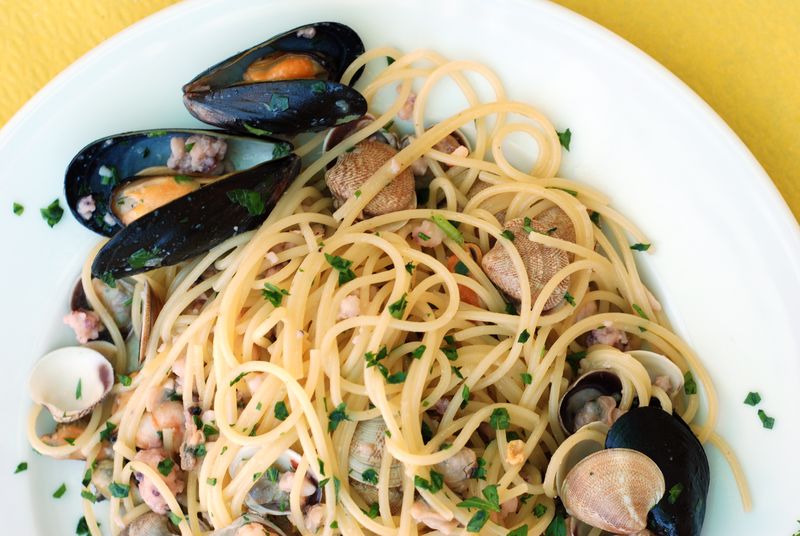
    I think it's lovely, in this time of instant gratification and international overnight shipping, that I have to go to Italy to eat spaghetti dotted with tiny little clams, so sweet and tender and briny that even the spaghetti tastes infused with the sea. I'll never eat this anywhere else and I like that.
    DSC_2158

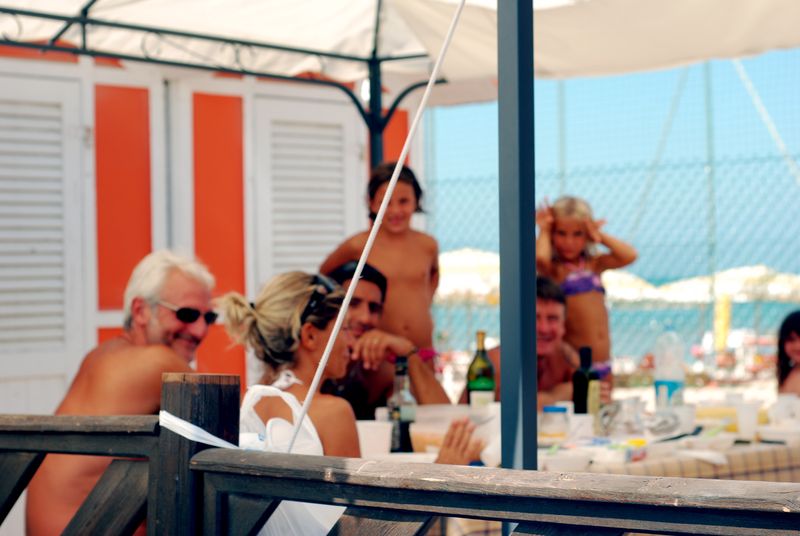
    One day I saw a big, beautiful family eating a simple lunch by the beach. I used to be too shy to do anything but stare sort of secretively at this kind of family, hoping no one would notice me looking at them. Now I think life is too fleeting to keep things like that to myself, so I told them how lovely they were and they broke into delighted laughter, all of them. I wish you could have heard it. I wish I could hear it again.

    DSC_2253

    Time goes by slower there than other places. It's good because it leaves lots of room for silly self-portraits, for picking figs, for yelling at the wild deer to scram from the garden, for lavender picking and for finding newborn kittens abandoned in the scrum of foliage across the street.

    DSC_2190

    And then you get impatient and snap at your mother who yells at the cat who slinks away sadly and just like that, the harmony is broken like a guitar string and you feel sort of flushed and awful. Luckily, because that's what I am, lucky, we get over things pretty quickly – we're good at that, we've had to be – and before you know it, I'm back to scratching the cat's chin while I think about what we're having for dinner.
    DSC_2317

    Dinner: melon so sweet it is almost syrup on the plate, and salty slices of prosciutto.
    Dinner: arugula from the garden, folded into homemade piadine spread with sour stracchino cheese and eaten with our fingers, oily and hot.
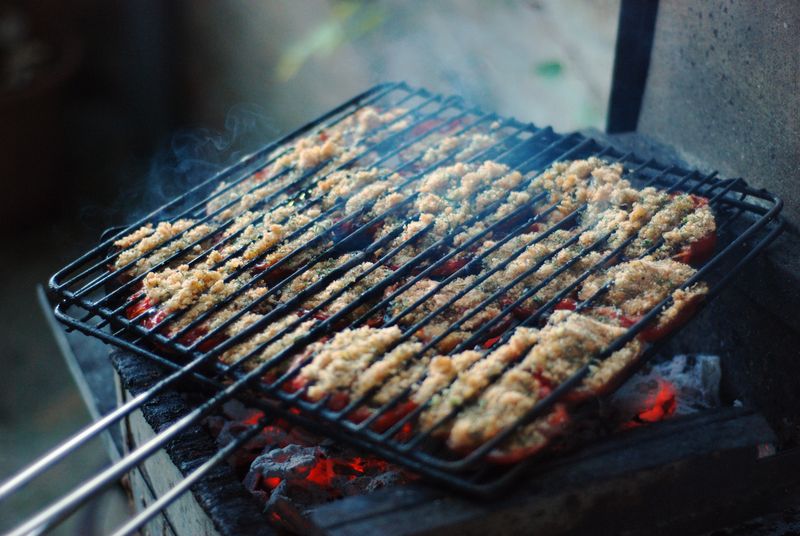
    Dinner: grilled tomatoes stuffed with wild fennel-flecked breadcrumbs, charred beneath, juicy and soft within.
    DSC_2408

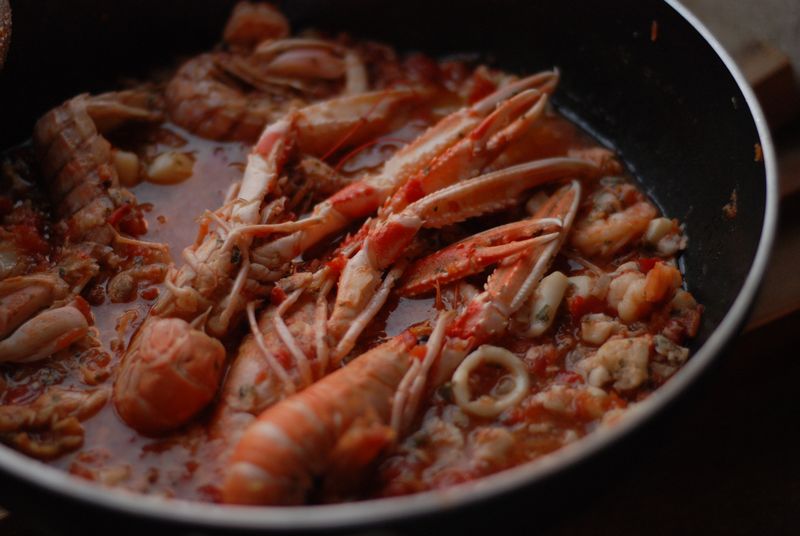
    I learned how to make ragù di pesce and I promise to teach you how to cook it yourselves very soon, because it is wonderful and you deserve it for being so patient and kind with me while I took August off. I wish I could make it and have you all over for dinner in our garden, with fairy lights strung above us, mosquitoes nipping at our ankles, the crickets keeping us company in the gloaming.
    DSC_2262

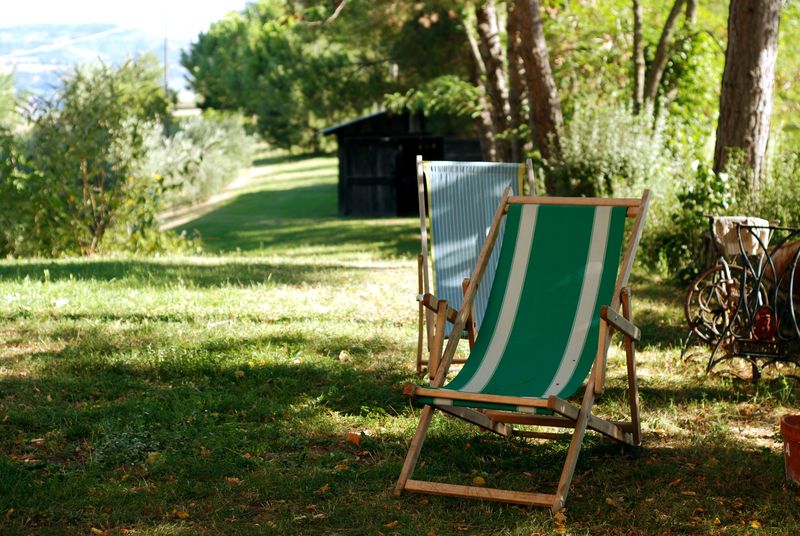
    I miss my grandfather and his gnarled knuckles, his dirty t-shirts, his toothy smile. But the house is my mother's now and it is lovely, and her garden has a baby cherry tree growing in it, and this November we are harvesting the olives from the trees he planted so long ago, and she is brave enough to kill the leggy insects that get inside the house herself and I know he's with my grandmother whom he loved more than anything in the whole world, even if they are buried in two different cemeteries, separated by a country road.

    DSC_2511

    My mother taught me to love figs fourteen years ago. We were sitting at the kitchen table in her apartment in Rome and she'd peeled a great big pile of them for me to try, green-skinned ones, and it was hot out and her heart had recently been broken by someone who I'd loved very much. It was a terribly confusing time, but I can still feel the cool fig flesh in my mouth, the surprise of those hundreds of crisp little seeds, the impossible depth of sweetness. She was back in her hometown and I was far away from mine and we were both sad, for the same and such different reasons.

    DSC_2925

    But that was a long time ago and now, when I'm at her house at the right time in August, I can stand below the fig tree, eating fig after fig while looking out into the valley below, planning to teach my children to love figs, too, to eat them only when they're there and not anywhere else so that they stay special.

    DSC_2563

    I hope your summers were corn-filled and sun-kissed, my darling readers. I thought about you a lot this past month, about the faces I know and the many, many more I don't, but whose presence I cherish all the same. I know it seems crazy to say this about thousands of people you've never meant, but you all mean so much to me, more than I can actually put in words and I'm deeply grateful to you, for being here and reading me, year after year.
    DSC_2329

    The next five months are going to be tough ones for me, as I get to the nitty-gritty of writing this book and so I'm going to have to step away more than I would like to. The truth is that writing this blog and writing my book are two sides of the same coin and while I may have once thought, naïvely, that I could do both, the hard truth is that I cannot. I won't be entirely gone: after all, I have ragù di pesce to tell you about and my list of good things to eat in Berlin is almost done, but it will be a little quieter. I hope you understand. I know you will; you all are always far kinder to me than I am to myself.
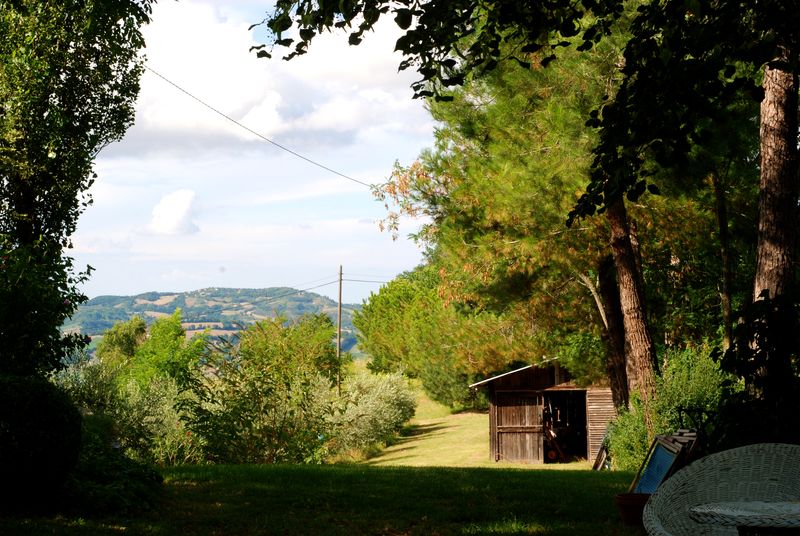
    DSC_1664

    May your Septembers be full of promise and sliced tomato salads and that special golden light that only comes when the summer ends.
  • DSC_1152

    It's finally cooled off in Berlin, which means that we can sleep under thin coverlets at night again, that big puffy clouds float past my little office under the eaves at a rather brisk clip, that I can enjoy hot tea in the mornings once more, and that I don't have to drink an icy glass of milk for dinner but can actually cook a pot of spaghetti, with sauce. Two burners, going at once! That's rather nice. Our tomato plants on the balcony are finally bursting with little red fruits. At first I could just pluck one or two off and rub them against my pant leg before popping them in my mouth, but now there are handfuls going in salad bowls. It's intoxicating – though I swear I'll never live in a house, I often find myself dreaming of vegetable gardens these days.

    Another thing I'm obsessed with lately is the "Cooking From Every Angle" column on Food52. It is crammed with interesting little snippets and delicious ideas. I daresay it's my favorite thing about that site – every time I scroll through the column, I can hear my stomach growl. It makes me want to buy spices at a furious clip, replenish my cluttered utensil drawer with clever tools, stew fish in tomato sauce for a spaghetti dinner and freeze tiny berries in lemon-flavored ice cubes. But the thing it makes me want to do most is eat toast.

    DSC_1151

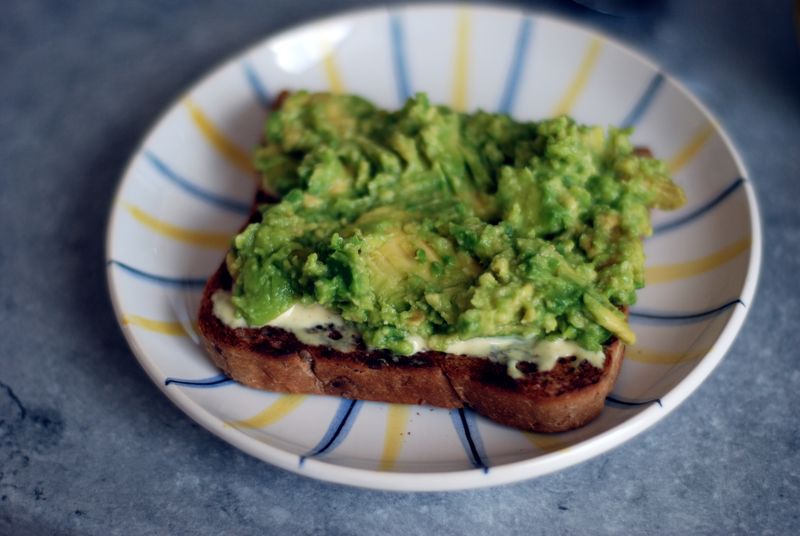
    Not just any toast, mind you. But toast spread with mustard mayonnaise and topped with mashed avocado.
    It is my new lunch. It is what I think about when I go grocery shopping
    for boring things like plain yogurt and face cream. It is what I crave
    when I open the refrigerator door. It is all I'd like to eat right now.

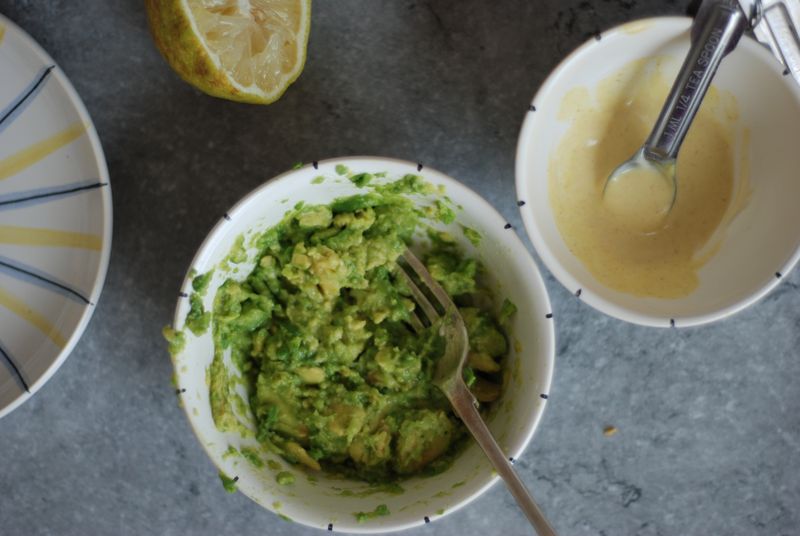
    There's barely a recipe. You mix together equal parts smooth Dijon mustard and mayonnaise and spread this on a piece of hot toast. (I like to toast toast until it's quite well-done and crunchy. What's the point of flabby toast?) Then you take half an avocado, scoop it into a bowl, sprinkle it with Maldon salt and a few drops of lemon juice and mash it with a fork until it's tamed but not entirely creamy. I rather like those bite-sized pieces of avocado to remind you of what you're actually eating.

    This gorgeous green-yellow mash then is gently spread to the edges of your mustard-mayo spread toast. You can plop this on a plate and sit down at your table to eat it, or you can lean yourself against the kitchen counter with a hand cupped under the toast to catch crumbs as you eat. Whatever you do, don't plan on sharing the other half of the avocado with anyone. Halfway through one toast, you'll already be on to toasting the second piece. Then the avocado will be gone and you'll be licking savory mayonnaise off the corners of your lips and plotting just how many avocados you can eat in one week. As it turns out, quite a few.

    DSC_1203

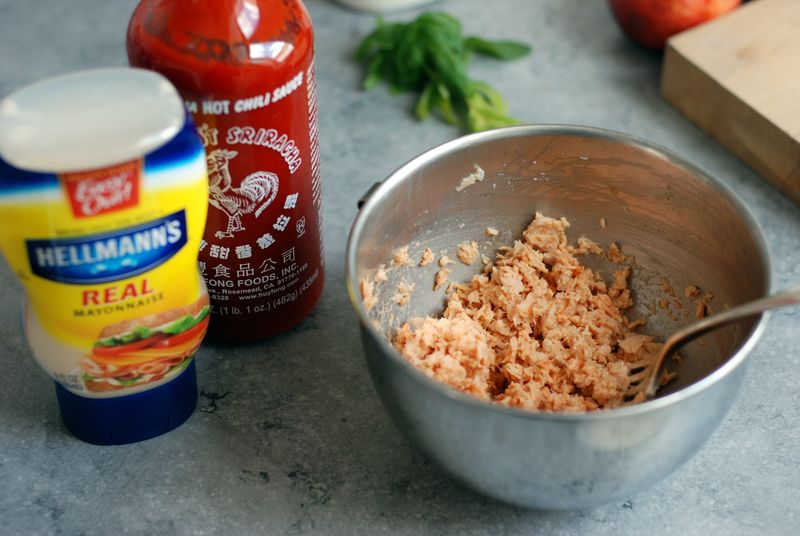
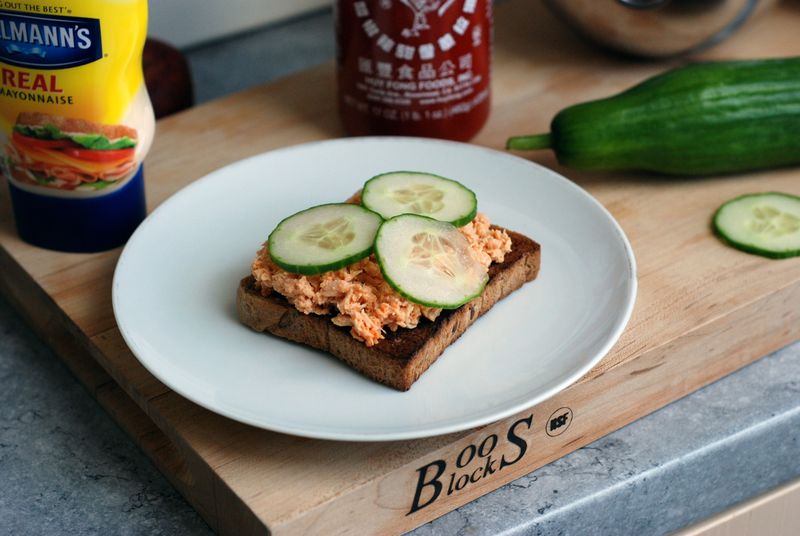
    If you tire of this delicious meal, though I don't see how you could, or if you're allergic to avocados or just rather interested in eating something slightly different every once in a while, this is another open-faced sandwich lunch I've taken to like a house on fire lately: spicy salmon mash on toast. Is that what I'm calling it? I guess it is. There: Spicy Salmon Mash on Toast. You take a can of wild salmon – preferably printed with some kind of logo attesting to its sustainability or inclusion in the Marine Stewardship program – and drain it, then flake the fish into a small bowl. Into this small bowl go equal amounts of mayonnaise and Sriracha sauce – I use somewhere between half a teaspoon and a teaspoon of each. Mash everything gently together with a fork, taking care not to entirely liquefy the salmon; you want some integrity left in each bite. Then, once again on very crispy toast, you pile the pink flakes as high as you'd like to go.

    Important here is something cooling to offset the spicy salmon – I find three very thin cucumber slices to do just the trick. They are like mini air-conditioners for your palate and crunch ever so agreeably along with the rather velvety fish. Then there's the rough rasp of the toast and you've got a symphony of textures enlivening what you thought was going to be a delicate, little luncheon-for-one.

    DSC_1213

    I thought this was strictly girl food, to be honest, only something to be eaten at home during the day on a break from work. But then I made it for lunch the other weekend, when there was nothing else in the house and it was too hot to think straight, and it turns out that men like this, too.

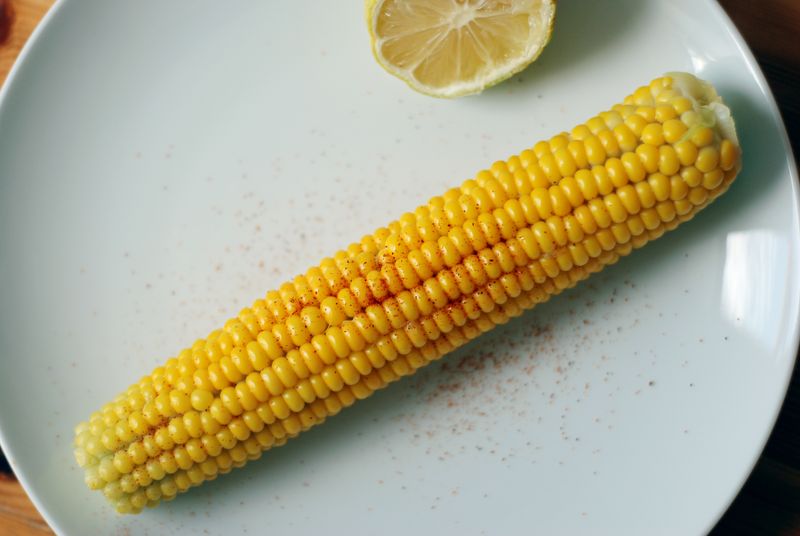
    I got greedy at the market this week and even though we're leaving for Italy tomorrow, I came home loaded down with bags of local zucchini and sour cherries, mini-Roma tomatoes, sweet and juicy, and soft-skinned local apricots. And, most precious, four ears of sweet corn, an unusual sight in Berlin. Alright, unheard-of, really. I boiled two ears for lunch and ate the first one sprinkled with lemon juice and cayenne pepper, like an Indian friend of my father's once taught me how to do. The other I ate more prosaically with sweet butter and great flakes of salt.

    DSC_1167

    It made me miss the Union Square farmer's market and those shimmering hot New York afternoons. Florid Manhattan sunsets and my friends. My Berlin corn was less plump and juicy than my beloved New Jersey corn. Faintly bitter and a little bit tough. Sort of like Berlin itself, I guess.

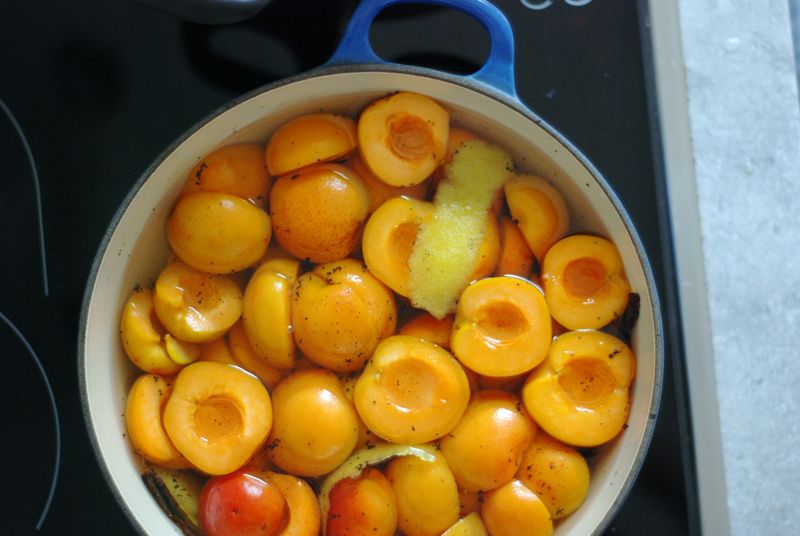
    Then I stewed a pot of apricots, inspired by Rachel, and it made me think of my aunt's apricot tree in Italy and how much I can't wait to be there, which is good because it is high time, I think, high time that I take a break and unwind. I've had a few too many nervous nights lately, a little too much fear and loathing surrounding the writing of this book of mine.

    DSC_1177

    So, to that end, friends, I'm going to be taking a little break from here. I hope you don't mind, but I need to unplug, as overused as that term may be, and get out of my head for a little bit. Focus on the beach and weeding rapacious baby acacia seedlings out of my mother's property, pray to the mighty fig tree that its fruit might ripen a month early, drink a bitter Italian cocktail at sunset in town while munching on a salty piece of rosemary pizza, and take walks before dinner with friends, my feet crunching over dry soil and wild mint.

    I'll be back soon: if I'm brave, in September, and if I cave, before then. Either way, I'll return with delicious things to share. Until then, have yourselves a bunch of wonderful Augusts. Hold on to these days. Soak them up. Eat as much corn as you can, and fresh berries, and great big slices of watermelon. Go to the beach and stay too long. Take walks in flip flops at dusk. Photograph the way summer light falls on your living room wall. And remember what Longfellow once wrote: 

    Then followed that beautiful
    season,
    Called by the pious Acadian peasants the Summer of All-Saints!
    Filled was the air with a dreamy and magical light; and the
    landscape
    Lay as if new-created in all the freshness of childhood.
    Peace seemed to reign upon earth, and the restless heart of the
    ocean
    Was for a moment consoled.  All sounds were in harmony blended.
    Voices of children at play, the crowing of cocks in the
    farm-yards,
    Whir of wings in the drowsy air, and the cooing of pigeons,
    All were subdued and low as the murmurs of love, and the great
    sun
    Looked with the eye of love through the golden vapors around him;
    While arrayed in its robes of russet and scarlet and yellow,

    Bright with the sheen of the dew, each glittering tree of the
    forest

    Flashed like the plane-tree the Persian adorned with mantles and
    jewels.

    See you soon, folks.

  • DSC_0932

    I sometimes get the impression that people think I can do no wrong in the kitchen. That my pasta's always al dente, my cakes always risen, my eggs always fluffy. Folks, let me tell you: no one, but no one, is immune to the kitchen disaster.

    See this towering beauty of almond meringue, gooseberry-studded whipped cream and yellow cake? Baked in the wee small hours Sunday morning before a 50th wedding anniversary party for my dearest friends in the whole world attended by all their friends and family as well as a woman who regularly wins baking contests in her home state of Hessen? It was, in a word, raw on the inside. Raw. Raw. Raw.

    As in, uncooked batter. As in, inedible. As in, DISASTER.

    I almost melted into a puddle of shame. I almost let it ruin my day. I almost cried. And then my friend gave me a steadying hug, helped me saw off the top part of the meringue, scooped out the raw innards, and glued the good parts of the cake back together (after all, there was all that nice whipped cream and fresh gooseberries and meringue and toasted almonds). Then we put the surgically-enhanced cake back on the buffet table along with all the other home-baked marvels and you know what? It was the first cake gone.

    So next time you find yourself whisk in hand, lower lip trembling, in front of a kitchen disaster, just remember: you're not alone! And there's got to be a solution somewhere. Even if it means throwing it all in the bin and ordering pizza.

    Happy Monday!

  • DSC_0564

    Quick, quick! There's a break in sight. The temperature's 10 degrees cooler than it was yesterday. Now's your chance. Swing on your bike, get to the market. Buy a couple of pounds of tomatoes, the redder the better. Do you have parsley or cilantro? Good. Fennel or celery? Only if it's lying around in your crisper, don't bother buying more. Ooh, there's the Turkish bakery stand selling small loaves of its soft, chewy pide bread, the black nigella seeds on top the best part. Sure, get a round of that, too.

    Bike home again, bag swinging against your legs. A cool breeze might even form. Soak it all in, tomorrow you'll be hiding indoors again.

    At home, pull out your mother's food mill that you believe is older than you. Try to mill the first chopped tomatoes, turn the handle jankily, feel your temperature rise, give up. Your fuse is too short these days, forgive yourself. So the recipe says to peel and seed the tomatoes. Doesn't Barbara Kafka know that tomato seeds are sometimes the best part? Go about chopping the tomatoes by hand. Peel a few with a y-peeler, then stand around chewing on tomato peels for a bit. Lose interest in the peeling. That's alright. Some days, a recipe is just there for inspiration.

    DSC_0560

    Put a bunch of spices to warm in a pan. Oh! There's that little frying pan you thought you'd lost in the move! Sitting right there…in the frying pan drawer. Oh well, sometimes you look for milk in the fridge for half an hour before realizing it's right in front of you. You're supposed to add garlic, but for some reason there's none in the house. This must be the heat, you figure, addling your mind. Who doesn't always have a few cloves of garlic lying around? Okay, so you use a shallot finely diced instead. This turns out to be more than fine, delicious even.

    Paprika, cayenne, cumin – hot colors fusing together into a muddled brown, the kitchen filling with fragrance. Even though the recipe says an immersion blender is too much, you use an immersion blender, just a few pulses, to chop the tomatoes a little more. You leave it chunky, though, just as Barbara says to, and stir in the spiced shallot. Forget about the celery, or the fennel, which was your inspired idea for a celery substitution. Who wants to chop anything more than a few tomatoes? Not you.

    In goes a little vinegar, a squeeze or two of lemon, chopped parsley because cilantro is too hard to find and did you already mention your short fuse? Be kind to yourself today. A few stirs with the spoon and soon you're sitting at the table, slurping spoonfuls of cold soup, dunking Turkish bread into the bowl. Who cares that you gave up with the tomatoes after about five and that the spice mixture is meant for over two pounds? This means the soup is humming, the spices vibrant in your mouth and throat. Maybe it's a little too strong, but it doesn't really matter. You eat in big spoonfuls anyway, grateful for the kick of flavor, the faint numbing of your lips. You feel your inner temperature, the knot of frustration and the sweat at your temples subside.

    Tomorrow will be hot again, there might only be salads and cold yogurt and more complaining on the horizon. But today you have cold Moroccan tomato soup, a faint breeze and that will have to do.

    Moroccan Tomato Soup
    Serves 1
    Note: The original recipe is here and is probably far more balanced and mild than what I ended up with. I practically licked my plate, though. Below will serve one person in need of something cool, spicy and calming for lunch in an irritatingly hot clime.

    1 shallot, minced fine
    2 1/2 teaspoons sweet paprika
    1 1/2 teaspoons ground cumin
    Large pinch of cayenne pepper
    4 teaspoons olive oil
    1.5 pounds tomatoes, cored, peeled and cut into 1-inch pieces
    1/4 cup packed chopped cilantro or parsley leaves
    1 teaspoon white-wine vinegar
    2 tablespoons fresh lemon juice

    1. In a small saucepan, stir together the shallot, paprika, cumin, cayenne and olive oil. Place over medium-low heat and cook, stirring constantly, for 5 minutes. Remove from the heat and set aside.

    2. Put the chopped tomatoes with their juice in a large bowl. Pass an immersion blender through once or twice, leaving most of the tomatoes still chunky. Stir in the cooked spice mixture, the cilantro, vinegar, and lemon juice. Taste for salt. Eat immediately.

  • DSC_5544

    I remember one August in Berlin many years ago, my mother and I came back from visiting our family in Italy and had to turn the heater on. It was that cold. In August! Things have, uh, changed in northern Europe over the past 20 years. Currently, Berlin is in the grip of a heat wave – meaning we've got temperatures hovering around 100 degrees Fahrenheit and have had them stuck there for days now.

    I know, I know – New York and the whole Eastern Seaboard have humidity that we blessedly do not. But come hang out in my attic apartment and feel the hot air licking your legs like a Sicilian scirocco and tell me where you'd rather be: here or in a good old North American movie theater, where the air conditioner is cranked up to Wintry Storm and you're wrist-deep in popcorn.

    Or maybe that's just where I'd rather be.

    I've beaten a hasty retreat to my mother's apartment, taking a sharp knife and some tomatoes with me. That's about all I can stomach in this heat. But look what I found on the way! My very first transcribed recipe, for crostata. I'd learned how to make it from the teenaged daughter of our friend Maria one summer and after returning to Berlin, I'd written down the recipe for my mother's friend Joan. I must have been around seven or eight years old at the time. She's kept it all these years.

    "Later EAT!" I love that.

    So I have a few questions for you, friends. Can you cook in this heat? Or do you just survive on cereal and cold milk? If you can cook, what are you making?

    And also, what's the first recipe you remember learning? The first thing you were taught to make? For me, it was that crostata. I remember feeling the oily, smooth dough beneath my fingers, the cool roughness of the wooden countertop, the smell of my aunt's oven as it heated. What was it for you?

  • DSC_0475

    Dear, sweet, gentle reader. It is taking all of my mental and most of my physical capacity to endure life until tomorrow night when Germany plays Spain in the semi-finals of the World Cup. If you've been following along, and I sure hope you have (the drama! the intrigue! the exhilaration!), you might have caught drift of the way the German team is playing and though I've been a devoted fan since the age of five, when a sticker of Rudi Völler in all his permed and mustachioed glory found a permanent home glued to the underside of a shelf positioned right above my bed so that I could see him before I went to sleep at night and first thing when I woke up, I have to say it's never been this much fun to watch them play. And how they have played!

    Anyway, since you come here for food and chat and not sports commentary, I will do my very best to keep my nerves to myself, but I'll just say it's hard, okay? It's hard! You should see my cuticles. My new gray hair. Me muttering to myself before I go to sleep at night. "They'll be okay without Müller, right?" "Maybe David Villa will get the stomach flu." "Four goals against Australia! Four goals against England! Four goals against Argentina!" "Please, psychic octopus, please be wrong just this one time."

    It's exhausting.

    Food and chat, woman! Focus. Okay.

    DSC_0454

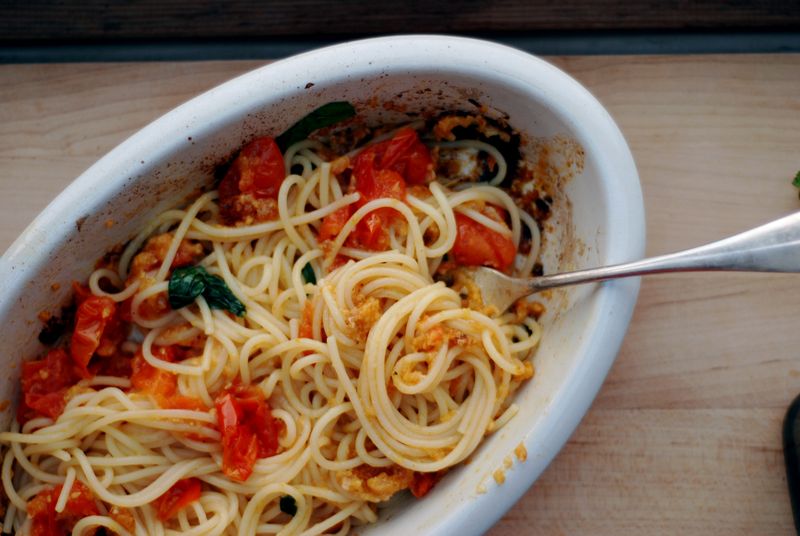
    So, the other day I was thinking about spaghetti. I think about spaghetti a lot, you know. Maybe because I'm half-Italian. Maybe because we eat it multiple times a week. Maybe just because it's good. Who knows. I was thinking about spaghetti and how I go through phases with spaghetti sauce. Like, there were a good two years where my favorite tomato sauce involved canned cherry tomatoes, a small can of tuna and a garlic clove. I made it over and over and over again until I could no longer look at tuna the same way again (good thing, too). Then I had a thing with Marcella Hazan's tomato-butter-and-onion sauce. Over and over and over again, until it started tasting like tomato soup to me and I had to take a break. Then there was the sauce made with sliced zucchini simmered in diced tomatoes (Muir Glen, I miss you!), particularly delicious with grated Parmigiano – I do believe that one lasted the longest. But my first love, the tomato sauce that started the obsessive sauce-making, well, I had managed to banish it from my memory so entirely that when it popped back into my head the other day, I almost jumped.

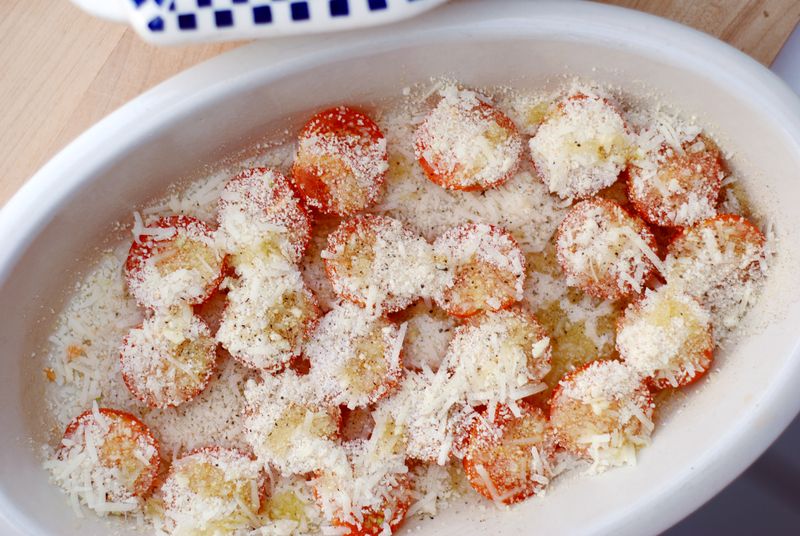
    That tomato sauce, made of little cherry tomatoes halved and baked in the oven with a cheese-breadcrumb topping, was one of the four pillars of my diet during my first years in New York. I made it All. The. Time. I found it in the Best American Recipes cookbook from the year 2000 and I committed it to memory. My roommates were obsessed, my faraway boyfriend smitten. It was fast, it was cheap, it didn't dirty many pots, and it was delicious. Best recipe, indeed.

    DSC_0459

    But as these things go, I overdid it. I made it one too many times, relied on it too much for weekly nourishment. I started getting tired of halving those little tomatoes, making sure their perky little faces faced the right side up in the baking pan, getting the sprinkle of breadcrumbs and cheese just right. One day, I moved on. (What came next? Olives and capers with peeled plum tomatoes, I believe. Oh…that was a good run. Don't forget the parsley.) So on that I forgot all about my beloved baked tomato sauce, until I was lying around thinking about spaghetti sauce the other day, probably in an attempt to distract myself from the terrifying prospect that was the Argentina game, because why on earth else would I have needed distraction?

    [FOUR-NIL, SUCKERS!]

    Focus, woman. Fo-cus.

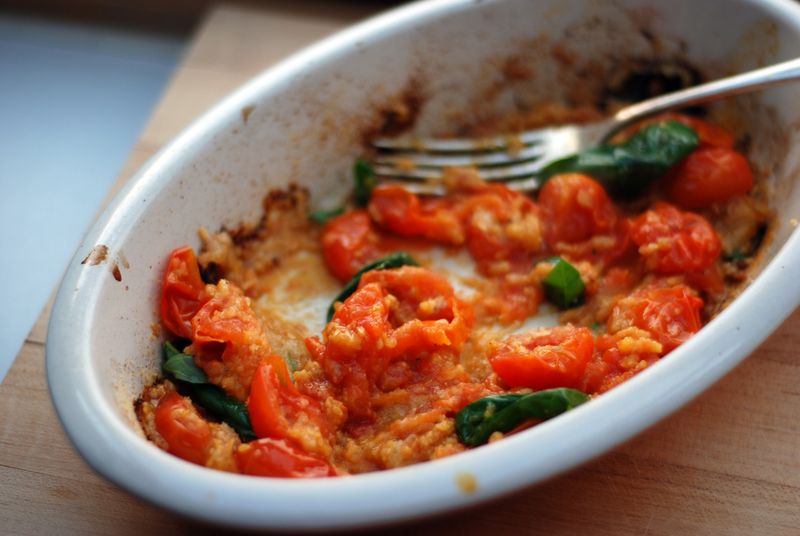
    I went through my old recipe binder and sure enough, there was the recipe, lying sweetly in wait to be welcomed back into the fold again. And really, it is so good. The tomatoes, roasting under their garlicky-cheesy cap, collapse and go all sweet and sticky. The breadcrumbs get toasty, the cheese melts and browns, the garlic infuses everything with this savory, mouthwatering scent. You mash everything together loosely, adding some olive oil for moisture and aroma, and torn basil leaves for flavor. Then in go the cooked pasta (penne are nicest, I find, but spaghetti works wonderfully, too). You can dish it up into plates, then, or, if you're eating alone just fork it up out of the serving dish (the little crusty bits in the corners are especially good). And that's it. Obsession-worthy, no?

    DSC_0465

    Almost enough to distract me from the game taking place just a short 27 hours and 8 minutes from now. Almost. So now if you'll excuse me, I have some incantations to do.

    DEUTSCHLAND!!!!!!

    Pasta with Baked Tomato Sauce
    Serves 4

    1/3 cup extra-virgin olive oil
    1 pound very ripe cherry tomatoes, halved
    1/3 cup plain dry breadcrumbs
    1/4 cup freshly grated Parmigiano
    2 tablespoons freshly grated pecorino (or, if you don't have this, just more Parmigiano)
    2 garlic cloves, finely chopped
    Salt and freshly ground pepper
    1 pound dried penne or spaghetti
    1/4 cup loosely packed fresh basil leaves, torn

    1. Preheat the oven to 400 degrees Fahrenheit. Grease a 13-by-9-inch baking dish with one-third of the oil. Place the tomatoes cut side up in the dish.

    2. In a small bowl, combine the bread crumbs, cheeses, and garlic and toss with a fork to mix well. Sprinkle the bread-crumb mixture over the tomatoes, making sure that each cut side is well covered with the crumb mixture. Sprinkle with salt and pepper. Bake until the tomatoes are cooked through and starting to brown on top, about 20 minutes.

    3. Meanwhile, bring a large pot of salted water to a boil. Add the pasta and cook for 8 to 10 minutes, or until al dente. Time the pasta so it finishes cooking about the time the tomatoes are ready to come out of the oven.

    4. When the tomatoes are done, add the basil and stir vigorously to mix everything into a sauce. Drain the pasta and immediately transfer it to the baking dish. Add the remaining olive oil and mix well. Serve at once.

  • DSC_9484

    We are a household rich in mustard. I believe at some point in the last month there were five tubes of mustard in our cupboards along with two jars in the fridge. Hot, horseradish-spiked, tarragon-flavored or rustic, we've got 'em all. I used to think mustard was about as interesting as math class, until I wised (wizened? wose?) up and starting using mustard in my cooking, and now I can't imagine life without it.

    Germany is a good place to live if you like mustard. Plain yellow mustard squirted on a Rostbratwurst is a classic; sweet Bavarian mustard dolloped next to a pair of Weisswürste is some people's idea of heaven. There are poached eggs in mustard sauce and mustard-roasted pork. And our neighbors to the south, the Austrians, have taken the art of mustard packaging and elevated it to an art form. You should hang out in the mustard aisle of an Austrian grocery store sometime. (And that Wiener Würstel mustard? Possibly worth the price of an airline ticket straight to Vienna. We practically ate it by the spoonful.)

    DSC_9425

    I've mentioned before (a hundred times before?) that my pile of newspaper recipe clippings dates back to the early naughts. These days I bookmark the ones I want to try, but the binder of printed recipes is a thick one and well predates this blog. When I unpacked my book boxes back in winter, I shelved the binder and then, frankly, forgot about it. After all, my Bookmarks folder could keep us fed for, um, years. What reminded me was Molly visiting and telling me about Francis's pasta. I knew I had the recipe somewhere…but where? After rifling through the computer and a notebook on my bookshelf, I finally turned to the binder, that gloriously overstuffed binder. There it was. And, o ho, there was so much else.

    This, for example, stunning little number from Regina Schrambling in the Los Angeles Times way back in 2002. It's Madeleine Kamman's recipe and is henceforth going to be my Last-Minute Dinner Party Secret Weapon because it is so delicious and so easy and uses so much mustard you will scarcely believe your own measuring spoon.

    DSC_9430

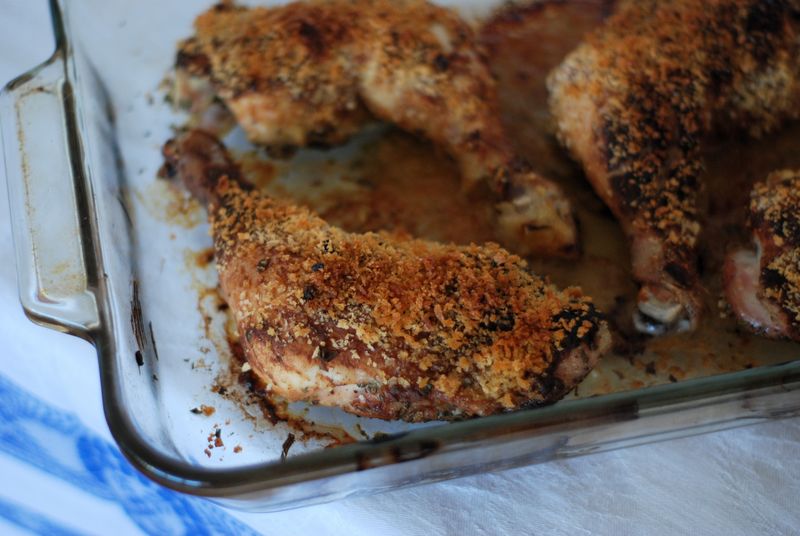
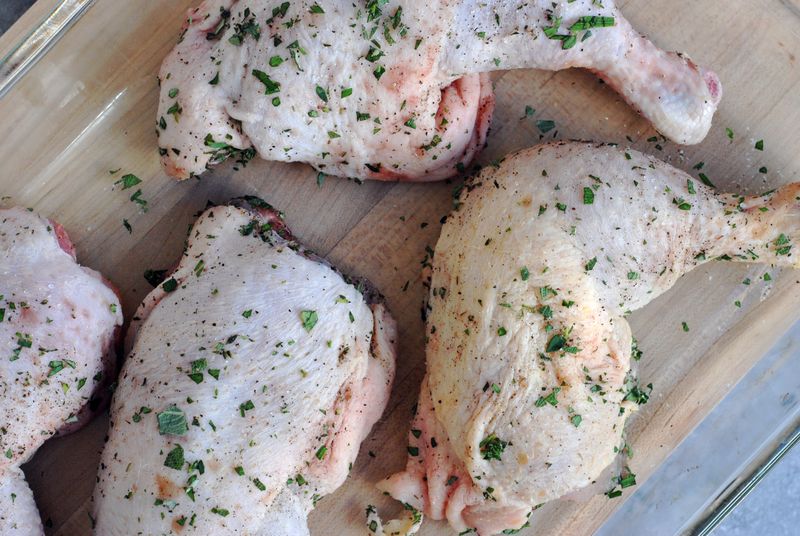
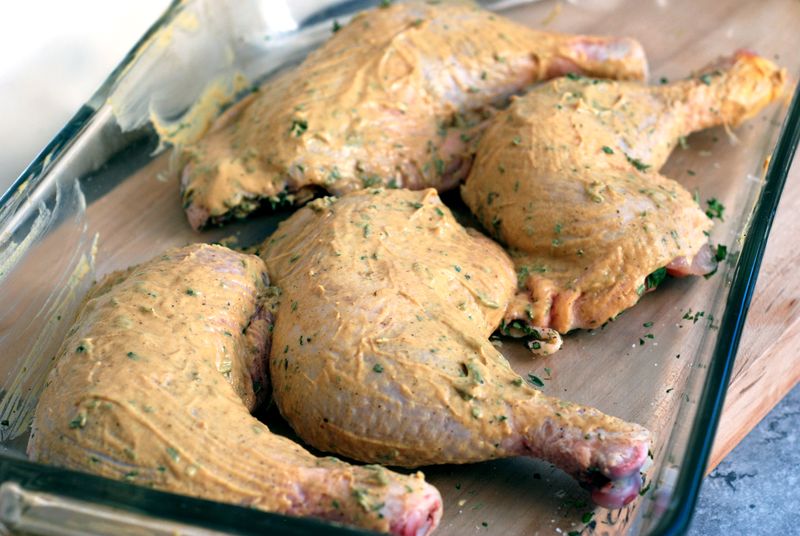
    The original recipe is for duck legs, but I used chicken legs instead. And instead of herbes de Provence (which I sort of loathe because though they might be traditional, I find the mixture to be so over-used that it just tastes like dusty old cupboards to me), I used a mixture of minced fresh herbs from my balcony (a mix of thyme, marjoram, and sage). And instead of Dijon mustard, I used the rest of a truly fabulous tube of Austrian tarragon-scented mustard. It sort of killed me to finish it, I loved it that much, but sometimes dinner party guests must be deferred to over personal greed and that is when being the bigger person really is key.

    So, after washing and drying your chicken legs and then rubbing them with chopped herbs and salt and pepper, you paint them lavishly with mustard. A full tablespoon per leg. Don't worry: it seems excessive right now but something happens in the oven heat where the mustard sort of dries up (in a nice way) and becomes part of the salty, savory crust and you might almost find yourself, at the dinner table, wanting to dip the chicken in more mustard as you go. Though maybe that's just me. Germany is in the quarter-finals of the World Cup, perhaps that explains my exuberance.

    DSC_9434

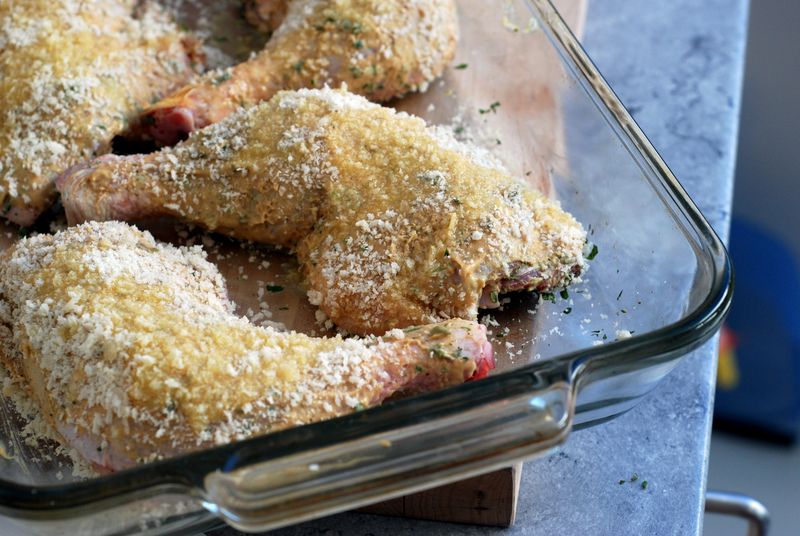
    Panko crumbs were one of the weird things I discovered in my kitchen boxes after I started unpacking my things in Berlin, along with a half-used roll of aluminum foil and a few almost-empty jars of things like dried summer savory and mustard seed. I could have lived without the herbs and aluminum foil, but thank goodness I brought those panko crumbs. You need a handful of them to coat your mustard-swathed chicken legs and plain old breadcrumbs just wouldn't do here.

    And that's basically it! A drizzle of melted butter over the top before you slide the pan into a hot oven and before you know it, you've got crisp, herby, mustard chicken legs to grace your table and convince your dining companions that you are a truly fabulous cook. Like I said, Secret Weapon.

    Now, if you'll excuse me, I have more recipes to dig up for you. Oh! I'm totally re-inspired. It's going to be an exciting month.

    Chicken Legs Roasted with Mustard
    Serves 4

    4 chicken legs (thighs included, about 2 1/2 pounds)
    2 teaspoons fresh, minced herbs, such as a mixture of sage, thyme and tarragon or marjoram
    Sea salt and freshly ground black pepper
    4 tablespoons Dijon mustard or tarragon mustard
    1/3 cup panko
    2 tablespoons melted butter

    1. Heat the oven to 325 degrees.

    2. Rinse the chicken legs and pat them dry. Rub them all over with the minced fresh herbs. Season well with salt and pepper. Brush the mustard over the skin side of each leg to coat thinly. Lay the legs in a shallow baking dish, leaving space between them. Sprinkle evenly with the panko or breadcrumbs and drizzle evenly with the melted butter.

    3. Roast about an hour or until the meat is very tender and the coating is crisp.

    // <![CDATA[
    var s_account = &quot;tribglobal&quot;;
    // ]]>
    http://www.latimes.com/hive/javascripts/metrics/s_code_trb.js

  • DSC_9481

    With deepest apologies to William Carlos Williams:

    This is just to say
    I have eaten the kohlrabi
    that was in the icebox

    and which
    we were planning
    on saving
    to eat just like that
    [plain and peeled]

    Forgive the hyperbole but
    kohlrabi salad
    [so crisp so cool]
    is the only way I'll ever eat it again

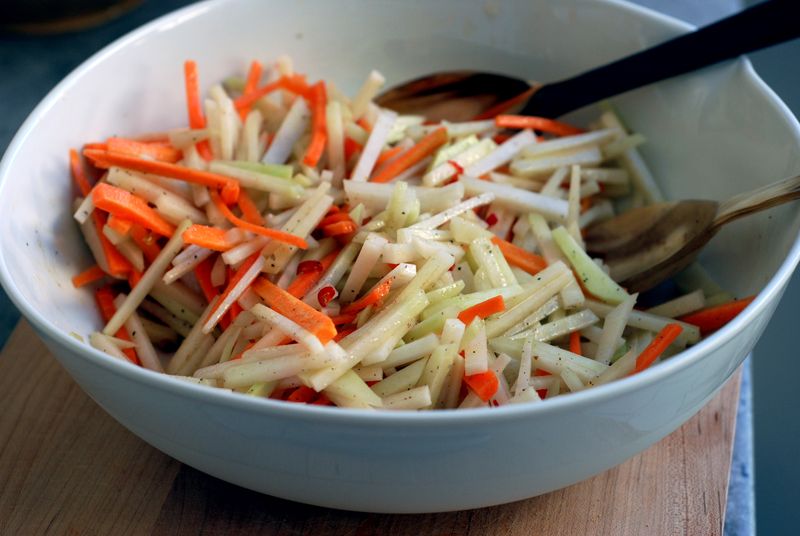
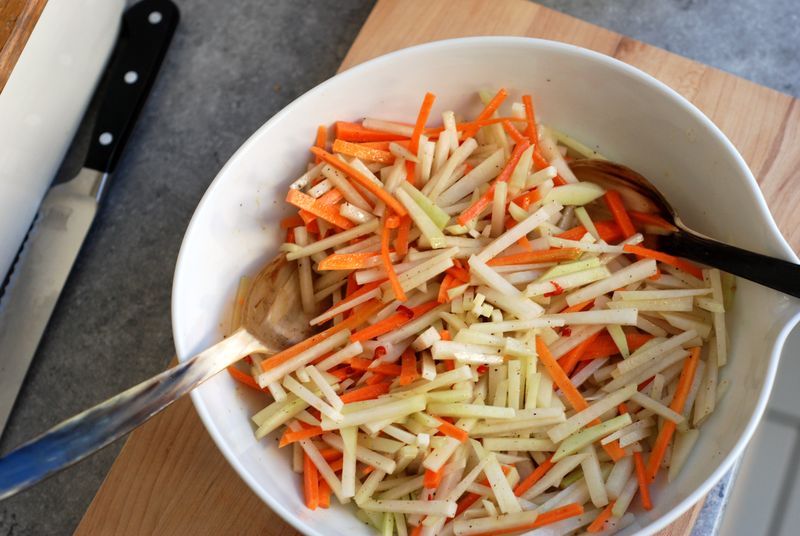
    Now the truth is, I grew up eating kohlrabi and I love it, indeed, just peeled and sliced thickly, munched over the cutting board, cool slices feeling rough against my tongue. But this salad lets kohlrabi come in from running around naked in the sprinklers and dresses it up, gives it some clothes, a clean pair of shoes, a whiff of sophistication, subtle sweetness and spice. If you've never tried kohlrabi before, seek some out (your local farmer's market certainly has the pale green knobs lying around on a table somewhere) to make this. I promise it will become a summer staple at your table.

    DSC_9472
    So much so that your children will grow up thinking of kohlrabi like they do of carrots, always around. You will forget the time that came before, when kohlrabi was just some strange and foreign root you didn't know how to pronounce. Those of you with gardens, maybe it will even prompt you to become kohlrabi farmers. This salad is capable of all that and more. (If your kohlrabi come with the greens attached, try this recipe. It sounds delicious.)

    The recipe comes from Ivy Manning's Farm to Table Cookbook and originally included pea shoots, which are one of those things I could rarely ever find in New York, let alone Berlin. So I left out the pea shoots and instead put in a couple of Thai bird chilis. There's something about the dressing and the sweet crunchy vegetable batons that needs that floral heat, just a little bit.

    I love how subtle the salad is, how refreshing and clean. The fennel seed and the sesame oil combine to mysterious effect: as you crunch your way through the salad, you keep asking yourself, "what's in this thing?" and then, "I need more." Before you know it, you're ripping off famous poets to declare your love for salad. It's okay. The kohlrabi made you do it.

    Kohlrabi Salad
    Serves 4

    2 medium red or green kohlrabi bulbs
    1 large carrot, peeled
    1 teaspoon fennel seed or 1/2 teaspoon ground fennel
    2 tablespoons rice wine vinegar
    1/2 teaspoon kosher salt, or more to taste
    1/2 teaspoon freshly ground black pepper
    1 small garlic clove, pressed (optional)
    2 tablespoons olive oil
    1 teaspoon toasted sesame oil
    1 to 2 Thai bird chilis (optional), minced

    1. With a sharp chef’s knife, peel the tough outer skin and cut the stems from the kohlrabi. Julienne the kohlrabi with a mandoline or sharp knife (you will have about 4 cups), and then julienne the carrot.

    2. If using whole fennel seed, toast the fennel seeds in a small dry sauté pan over medium heat until they begin to brown slightly and smell toasty. Transfer them to a mortar and pestle or spice grinder, and grind them into a coarse powder.

    3. Combine the ground fennel seed, vinegar, salt, pepper, and garlic and chilis, if using. Slowly whisk in the two oils. Pour over the vegetables and toss to coat. Taste for salt. Serve.

  • DSC_9552

    I don't know about you, but strawberry jam tastes like Band-Aids to me. It always has. How would I know what Band-Aids taste like, I'm sure you're wanting to know. I'm an absent-minded cuticle chewer, that's how. You'd be surprised how many inadvertent bites of Band-Aid I've had in my life.

    I like eating strawberries sliced and sugared and drizzled with balsamic vinegar. (Just the tiniest bit, people. You shouldn't be able to taste the vinegar, but it will bring out the very essence of strawberry-ness and your simple bowl of sliced, sugared strawberries will make even someone who (I swear) told me just the other week that he thinks strawberries are his least favorite fruit (can you even believe it??) sit up and ask for seconds.) I like eating them whole, dropped into a bowl of plain yogurt. I like eating them on my cereal or over a sink or at a picnic, where I am bound by my genetic code to get red strawberry juice on some article of clothing. In short, give me all the fresh strawberries of the world and I'll gobble them right up. Offer me some strawberry jam and I'll be honest, I'd almost rather just eat a boiled egg.

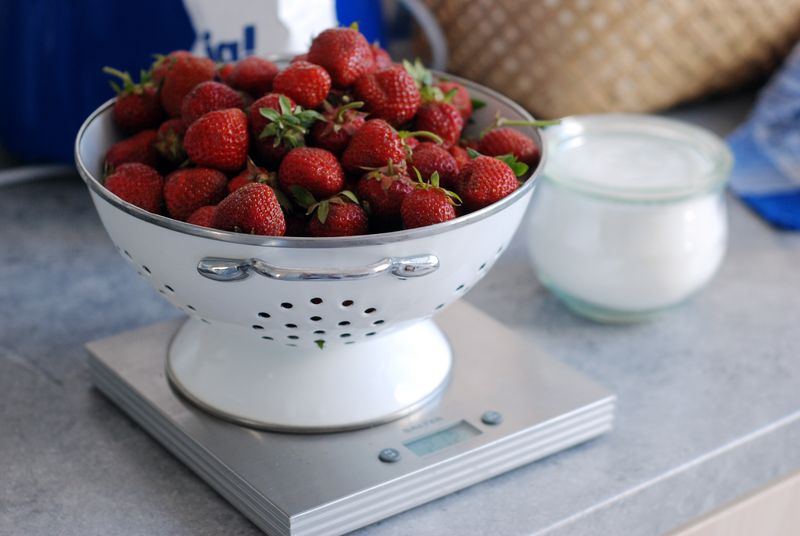
    Last week, though, I went strawberry picking with my friends in a field right outside of Potsdam (of Sans Souci and Conference fame). What is with that weird greed that bubbles up when you're out picking fruit and you've filled all your baskets and somehow you just can't stop from picking, because with every step you take you're confronted with more and more perfect berry specimens that simply cannot be allowed to remain on the plant? I came home with more than three kilos, people, three. For two people, one of whom would rather be eating a kiwi. So jam it would have to be.

    DSC_9495

    A week before I went strawberry-picking, Molly came to visit for a week, bearing a jar of Christine Ferber jam as a present. I used to be sort of obsessed with Christine Ferber's jam recipes, but over the years moved away from her methods, which felt fussy to me, even if the results were often spectacular. But inspired by the pretty little jar sitting on my kitchen counter, I decided that if anyone was going to get me to eat strawberry jam again, it would probably be her, the jam fairy of Alsace.

    It was difficult to decide between two strawberry jam recipes of Christine's that I found online. One involved extracting juice from raspberries and mixing that with the strawberries along with balsamic vinegar. The other involved candying lemon slices and adding those along with spiky lemon grass leaves to the strawberries. How on earth would I choose? I suddenly found myself planning two batches of jam.

    DSC_9502

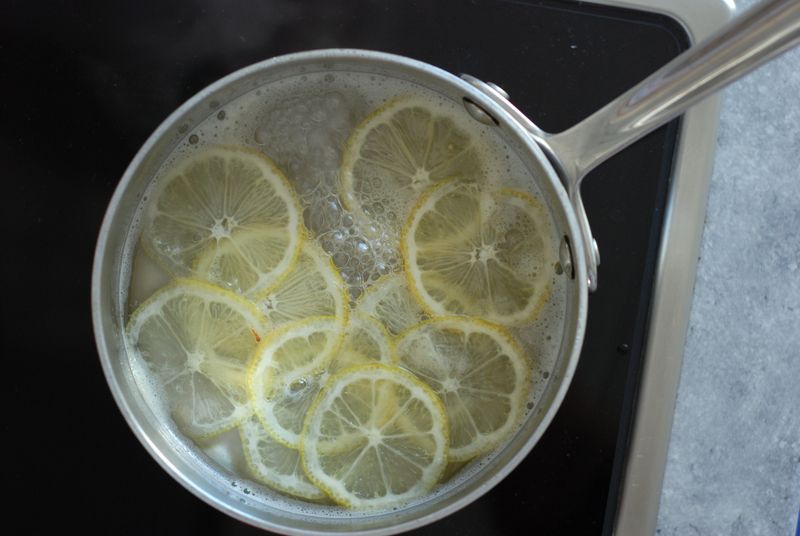
    The lemon version has you put paper-thin slices of lemon in a water-lemon juice-sugar syrup and simmer gently until the slices are candied and looking shiny. You add the lemons and their syrup to the pot of sugared strawberries, along with those lemon grass leaves, which I pounded a little bit for extra fragrance. Christine's recipes use more sugar than the ones I'm used to (my mother usually aims for a three to one ratio of fruit and sugar), but I wanted to follow it just as it was written. I can be a little pedantic like that sometimes.

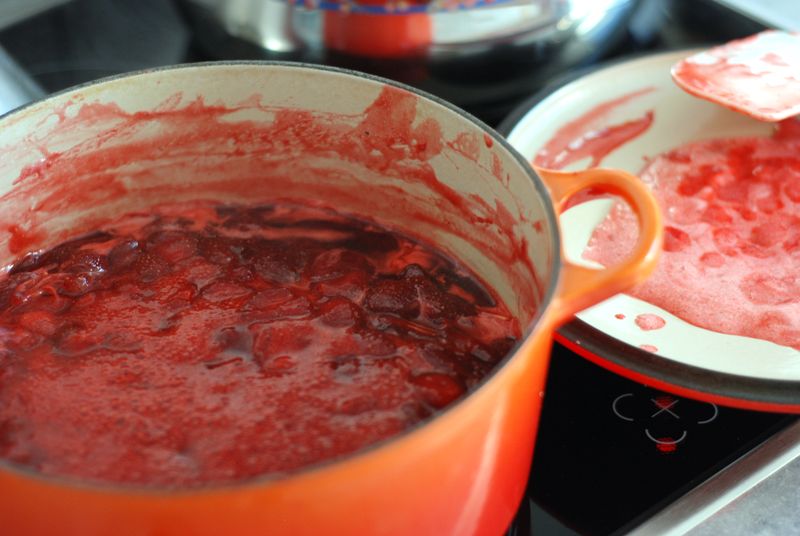
    Christine is also a professional, so she wants you to skim skim skim that jam, which I did (my mother usually skips that step). I got very, let's say, focused on the skimming. But let me tell you, I've never made a jam that was as jewel-like and clear as this one. It was worth the effort.

    DSC_9521

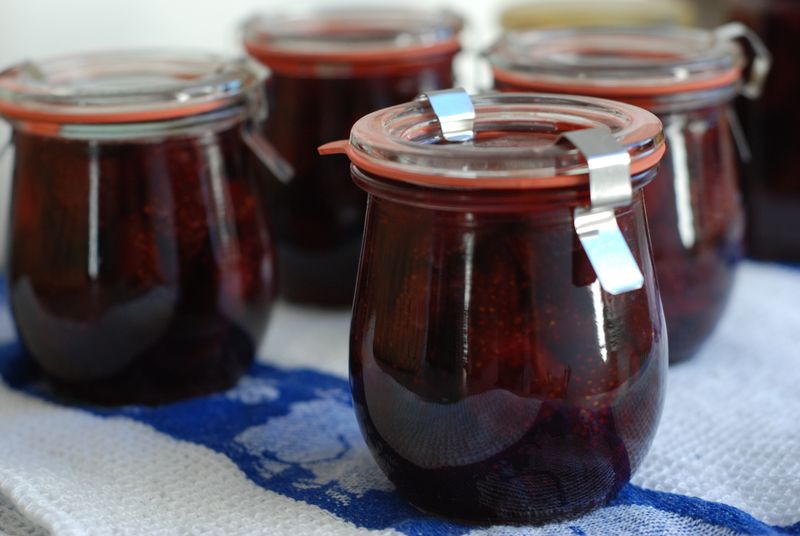
    The best part of jam-making, for me, is picking which glass jars to fill. At the moment, I'm having a little love affair with Weck's tulip jars, inspired by an author of mine whose book on canning you should pre-order now (trust me on this one). Her recipe for Plum Jam with Cardamom, speaking of recipes worth the price of the cookbook they're printed in, should go in some kind of Cooking Hall of Fame, it is so good. And wait until you see this cookbook. Ooh! I am so excited for you – it is a total gem. Anyway. Weck jars. In the US, they're hard to find and a little expensive. (Try Lehman's or Heath Ceramics for online ordering.) Here in Germany, where Weck jars were born, they're cheap and easy to find.

    You have to process them in a water-bath, which is another step my mother always eschews as, to be honest, do I when using regular jam jars with screw-on lids, but the cuteness of the Weck jars is worth the extra effort of the water-bath. So! Here's how it goes:

    You wash those babies with lots of hot soapy water and soak the elastic bands for a few minutes in hot water. You let everything dry off and then you fill the jars with the piping hot jam. Wipe off the rims, fasten the elastic bands to the lids, pop them on top of the jars, clamp down the metal clips and, using tongs, put the filled jars into a pot of boiling water. Bring the water back up to the boil once the pot is filled and boil for 5 minutes. Then carefully remove the jars from the pot with those tongs and let them cool on a cloth towel, overnight. Remove the clips the next day – if you've processed your jam correctly, the lids will be on very tight and you can go store the jam jars in your pantry and feel smug. If you pull the clips off and discover that the lid isn't being held on by a vacuum seal, there was a problem with the processing. Either keep that jam in your fridge to be eaten by you sometime in the next few weeks, or re-process the jar (wash the lid and elastic band again, re-fasten, put everything back in place, but put the filled jam jar (cold this time) in a pot of cold water, which you bring to a boil and then process for five minutes.

    DSC_9537

    Questions? Leave them in the comments and I'll do my best to answer them. Remember, jam-making is not the same as pickling: there's very little danger. The amount of sugar in most jams is enough to kill any bacteria and the cooking process (not to mention the optional water bath) finishes off the rest. Little old ladies in tiny European towns have been making jam without vacuum seals and water-baths and high sugar volumes for millennia, or at least centuries.

    Anyway, the jam. Clear and garnet-hued, it was certainly the prettiest jam I've ever made. The strawberries held their shape beautifully. The lemon slices snake their way through each jar. The jam is, for lack of a better word, the brightest, cleanest-tasting strawberry jam I've ever had. The lemon sort of elevates the usually more muddled-tasting strawberry onto a different plane, but because of the candying process, the lemon's bite is quite tame, muted even. The fragrance of the lemon grass wafts through each spoonful but if you didn't put "lemon grass" on the jam label, you wouldn't be able to identify its flavor. It's just this sort of faint, floral nudge here and there. In a word, fantastic. Boiled eggs? I'd rather have this stuff on toast, please. Giving it away is going to be kind of hard.

    As for that other recipe? My strawberries were gone before I could get to the second batch.

    Strawberry-Lemon Grass Jam
    Makes five ½-pint jars

    2¾ pounds strawberries
    4 cups granulated sugar, divided
    2 tablespoons fresh lemon juice
    Scant ½ cup water
    10 paper-thin slices lemon
    10 fresh lemongrass leaves, cut in half crosswise

    1. Prepare your jars, whether by sterilizing in a hot oven or by washing in hot, soapy water. If processing in a water bath, put a large pot of water on to boil.

    2. Pick over the berries, discarding those that are green, white or mushy. Rinse briefly in a colander and shake off the excess water. Hull the berries and slice coarsely into a 6-quart pot. Stir in 3½ cups sugar and set aside.

    3. In a 2-quart pot, combine ½ cup sugar with the lemon juice and water. Bring to a simmer, stirring to dissolve the sugar. Add lemon slices and simmer gently until translucent, about 15 minutes. Pour over the strawberries and stir in the lemon grass. Bring to a simmer, stirring to dissolve sugar. Then bring to a boil. Stir gently and skim the foam from the top. Cook for about 15 minutes, or until the temperature reaches 220 degrees on a candy thermometer. The jam should sheet from a metal spoon and a spoonful placed on a cold plate should gel within a few minutes. Remove the pieces of lemongrass.

    4. Ladle hot jam into hot jars, leaving ¼-inch headspace. Wipe the rim of each jar with a clean, damp cloth. Place a hot lid on each jar and screw down firmly. Turn upside down and let cool completely, at least 12 hours. Or, as each jar is filled and capped, place in boiling-water bath with the water 1 to 2 inches over the jars. When canner is full place cover on pot, bring back to a steady boil and process 5 minutes.Remove jars with a lifter and set on a rack or towel 12 to 24 hours. Store in a cool, dark place.

  • DSC_9448

    Potato salad. Two such innocent little words, so full of hope and promise on their own, but when put together, I don't know, they always seem to summon a vision of something gelatinous, yellow-tinged, rotting slowly in a glass vitrine somewhere. Potato salad makes me think of dingy midtown delis. Flies flying lazily over congealed mayonnaise. Potatoes, folding waxily under the pressure of a plastic fork, too-sweet mayonnaise glued stubbornly to the side of a styrofoam plate. In short, my friends, potato salad has never been my thing.

    A few weeks ago, I was poring through my cookbooks to come up with ideas for a dinner party. Nothing fancy, just good food. There would be that carrot salad, a pile of asparagus in vinaigrette and chicken marinated in herbs. But I needed one more dish to round out the meal and, with a copy of Ottolenghi's cookbook open on my lap, kindly sent to me by the publisher and immediately stained with cooking juices by me, I found just what I was looking for: a dish called, innocently, "Crushed New Potatoes with Horseradish and Sorrel".

    That was it, I thought. Who doesn't love a crushed potato? And horseradish is the bee's knees. I had almost everything I needed already in my kitchen. All I needed to do was boil potatoes, crush them with a fork and dress them with a yogurt-horseradish dress…Wait a minute! Potatoes. Dressing. Salad!?

    DSC_9451

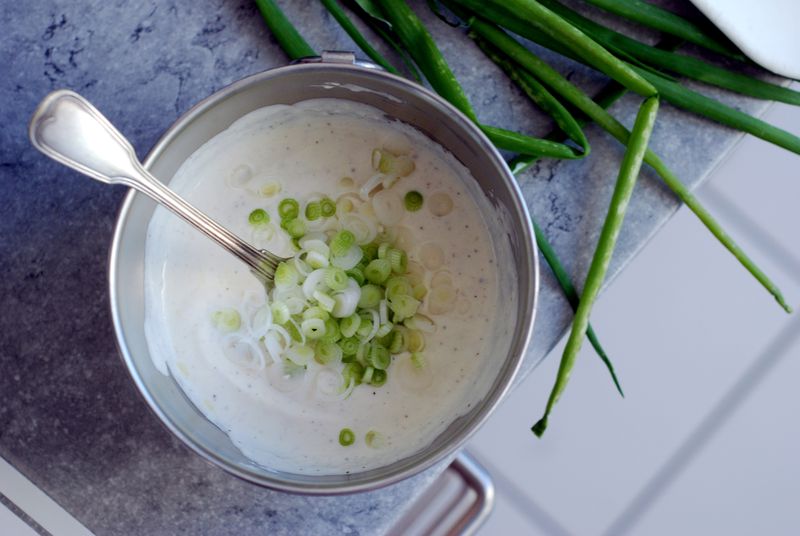
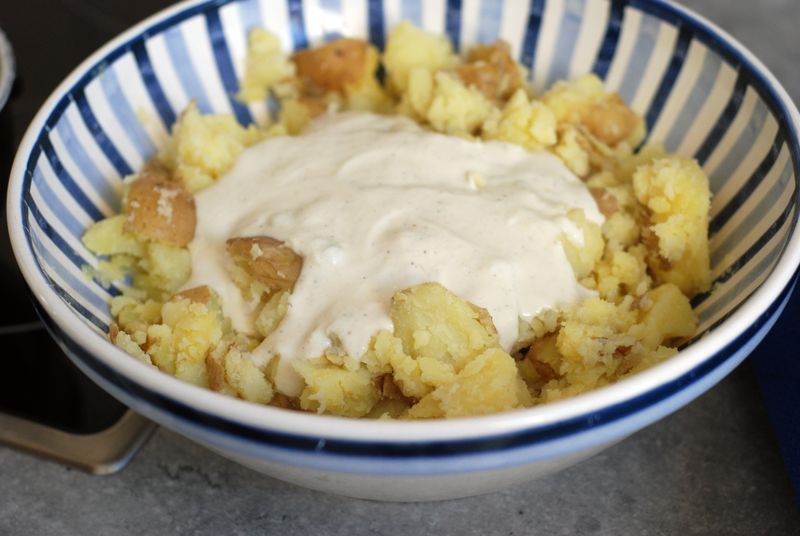
    Banishing all thoughts of rotting, fly-speckled, mayonnaise-bound potato salads to a faraway place (where I put thoughts of car accidents, Germany not winning the World Cup and dill), I boiled those potatoes, I whisked that dressing, I sliced those scallions and I snipped that cress. What resulted was what I will from now on call My Summer Potatoes. A gorgeously balanced, fresh-tasting, warm-and-cool potato salad that had an entire dinner table, six people, mind you, asking for the recipe. It was fantastic. The potatoes are sweet and tender, their fluff turning into the lightest mash. The horseradish adds bite and intensity, an unexpected sophistication. The scallions are very important – balanced by the cool, smooth yogurt, their fragrance feels essential.

    I made a few changes from the original recipe – Ottolenghi calls for crushed cloves of garlic, but I have this thing about raw garlic, in that I hate it and don't want it near the food I eat, so I added a few more scallions in its stead. I left out the sorrel, because the scallions and watercress sprouts called for seemed to be the perfect amount of greenery and crunch. And instead of Greek yogurt, I used plain old yogurt – the moisture and silkiness of which the salad really needs. (Readers in the US, you should use Liberté if you can find it. You want something smooth and creamy and full of flavor.)

    You can bring this salad to picnics, without fear that it will poison someone with salmonella. You can make this for dinner parties and sit back and garner compliments. You can make it after work, boiling potatoes in your underwear (I know how summer gets). It will be wonderful, over and over, and you will forget that potato salad once made your skin crawl. Potato salad!, you will think. Such lovely words, so full of hope and promise.

    DSC_9468

    The cookbook is full of recipes like this – thoughtful variations on foods we already love, punched up with interesting flavor combinations from the Arab world and the Mediterranean pantry. Sumac, za'atar, sour cream, oregano, chilies and fresh lemons pepper the recipes. The soup chapter is already earmarked and worn, the salads are jewel-like, and I've cooked my first Palestinian recipe (chicken baked in a gorgeous slick of red-tinged marinade) from its pages. I kept the book by my bedside for a few weeks but had to stop – it kept making me hungry before bedtime.

    And as my father always likes to say, if you find one shining recipe in a cookbook, one that you'll make over and over again, that will become part of your pantheon, part of your dinner table landscape for years to come, well, it's worth the price of the cookbook. This book has that in spades.

    Potato Salad with Yogurt and Horseradish
    Serves 4

    1 kilo (2.2 pounds) new potatoes
    300 grams (10 ounces, plus more to taste) plain yogurt (not Greek)
    3 to 4 tablespoons olive oil
    1 tablespoon, or more, of prepared ground horseradish
    4 scallions, thinly sliced (white and pale green parts)
    Coarse sea salt and freshly ground black pepper
    A small box of garden cress

    1. Wash the potatoes, but don't peel them. Put them in a pan with salted water to cover, cover, bring to a boil and simmer for 25 to 30 minutes, until tender. Drain well, transfer to a large serving bowl and, while they are still hot, crush them roughly with a fork.

    2. In a small bowl, mix the yogurt, olive oil, horseradish, scallions, salt and pepper to taste. Pour this dressing over the hot potatoes and mix well. Adjust the seasoning, adding more horseradish or more salt. You want the dressing to be assertive – the potatoes will mellow it out. Just before serving, snip in the garden cress and mix once more.