• Crisp couscous saffron cakes

    I always forget about couscous. It's such a good thing to have around and yet, I don't know, I feel like I overdosed on those Near East packages in college and then I owned a few Paula Wolfert books on Moroccan cooking and was ashamed to have ever even thought about instant couscous, let alone eaten it, and then I moved back to Berlin, where couscous is still relatively exotic, and so I end up using far more rice and millet and quinoa and bulgur than I ever do couscous. Which is too bad, because couscous is good! And after all this time, it feels fresh and delicious all over again.

    Last weekend, I served it with a Moroccan vegetable stew and then this weekend, after seeing this article by Yotam Ottolenghi and deciding 30 nanoseconds later that that was how I was going to use up the box of couscous I had in the pantry, I made saffron-flavored, feta-and-raisin-stuffed, mint-flecked couscous cakes. Yes, they were just as good as they sounded, better even. And, well, the moral of this story is that I'll never go couscous-less again.
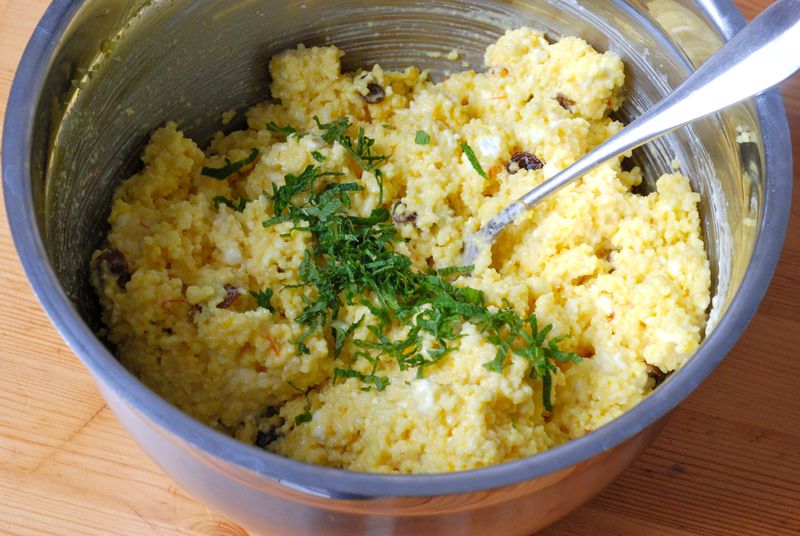
    Couscous saffron mixture

    It's silly how easy these cakelets are. All you do is pour boiling water over some saffron and couscous and while the water is plumping the couscous, you gather everything else: feta, some eggs, some sliced chives or mint (I used mint), yogurt. And then, if you're lucky enough to have barberries, you soak them in a sugar syrup to soften their sour bite. If you don't have barberries, you can use currants soaked in lemon juice – I used raisins and they were just fine. You mix all of these lovely little things into the saffron couscous until it's a thick and creamy homogenous mass. Then you portion out little rounds and fry them up – I used olive oil in a nonstick pan, the original recipe calls for butter.

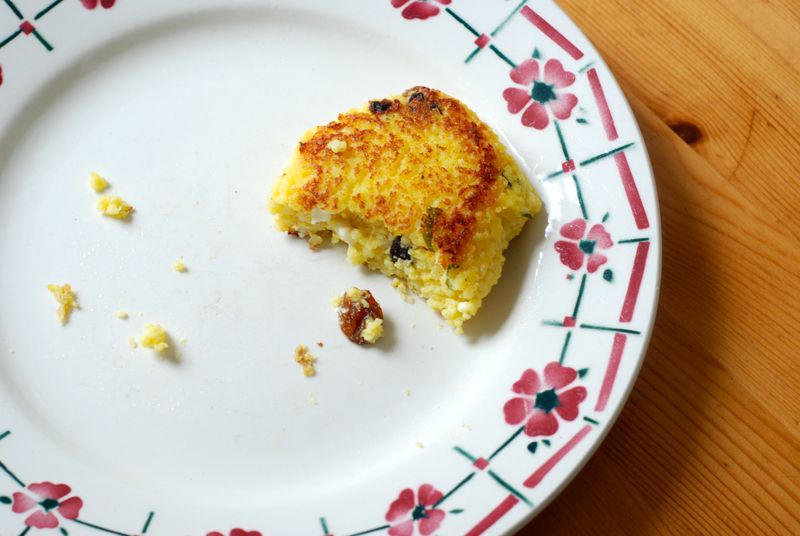
    I slid each batch of cakes onto a plate as they finished and we ate them piping hot and then fried more and ate more and fried more and so on. They were so good, so crisp and soft at once, with little sweet-salty pockets of cheese and raisins and the haunting flavor of mint and saffron giving them a sophisticated edge. Afterwards, Max asked me very solemnly to make them again. Each week. He never, ever does that.

    By the way, I experimented in flattening some of the cakes with the spatula, but I would advise you to leave the cakes plump – flattening them takes away some of their deliciousness, if you can believe it, and the ratio of crisp to soft gets thrown off balance.
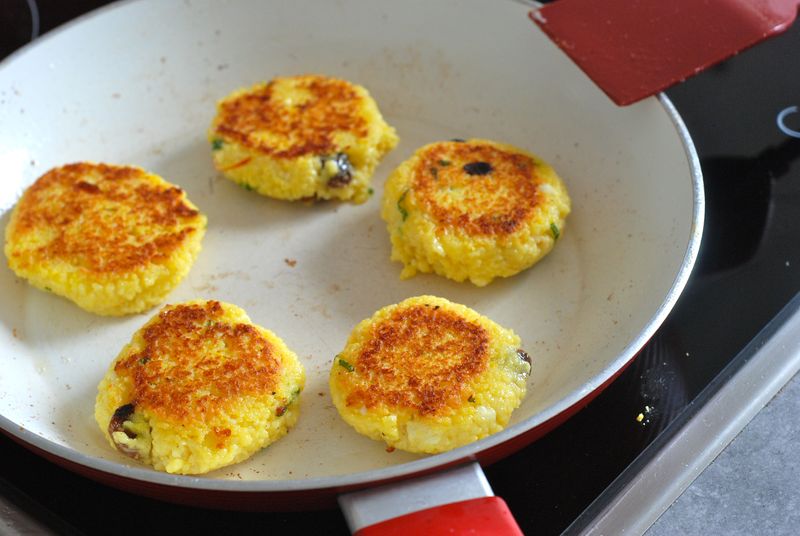
    Frying couscous cakes

    Yotam Ottolenghi tells you to eat these with a tomato chutney, which sounds like it'd be lovely. We were too hungry to do anything but pop them in our mouths just as they were, but Max ate the leftovers later with some incendiary Mexican hot sauce and declared them delicious. So, do as you like: sauce them or don't, just make sure you make these. They'll be a staple at your table in no time, too, I'm sure.

    (Warning: the recipe below is in metric. It was originally published in an English newspaper. If you don't already own a kitchen scale (Salter is a great brand, for example), please consider adding one to your arsenal.)

    Yotam Ottolenghi's Crisp Couscous and Saffron Cakes
    Makes about 20 patties
    Note: If you can't find barberries, substitute currants or raisins and soak them in lemon juice instead of the sugar syrup.

    ½ teaspoon saffron threads
    275 grams couscous
    30 grams barberries
    4 tablespoons sugar
    1 lemon (only if using currants or raisins instead of barberries)
    140 grams plain whole milk yogurt
    2 large eggs, lightly beaten
    A handful fresh chives or fresh mint, chopped
    100 grams feta, crumbled into small pieces
    Salt and black pepper
    About 4 tablespoons clarified butter or olive oil

    1. Put the saffron in a large bowl and pour over 500 milliliters of boiling water. Leave to infuse for a few minutes, then add the couscous. Stir with a fork, cover the bowl with a dishtowel and let stand for 15 minutes.

    2. Meanwhile, if using the barberries, put them and the sugar in a small saucepan. Add 120 milliliters of water, bring to a light simmer, stir to dissolve the sugar and remove from the heat. Once cool, drain the barberries and dry on kitchen paper. If using currants or raisins (see Note), put them in a bowl and cover them with the juice of one lemon.

    3. Fluff up the couscous with a fork, then add the yogurt, eggs, chives or mint, feta, barberries or currants, and salt and pepper to taste. Mix well and then shape into approximately 20 firm round patties about 1.5 centimeters (1 inch) thick.

    4. Heat two tablespoons of clarified butter or oil in a large frying pan on medium-high heat. Lower the heat to medium and fry the patties in batches, adding more butter or oil as needed. Cook each batch for five minutes, turning once, until crisp and golden-brown. Transfer to a plate lined with paper towel. Serve at once, while they're still warm.

  • Picstitch(1)
    Today is a holiday here and the city is quiet, quiet, quiet and feels totally empty. We have a visitor from Puglia in town, so there were sweet olives and fresh braids of mozzarella for lunch and ciambelline di Pasqua coated in thick sugar icing for dessert. It's certainly the coldest Easter I can remember, but I think I've stopped caring about all the snow. Or maybe I'm just sick of complaining about it! Ha.

    In other news, Hugo continues his nap strike and we are starting to come to our wit's end. Thank goodness for grandparents who will drop everything to babysit so that we can go out and have dinner and at least two whole drinks tonight (at this place, which, Berliners, is delicious).

    Photos above from my Instagram account – a sunset that hints of good weather to come, roasted chicken breast for dinners to come, a teeny, tiny, pale green egg from Hugo's great-grandparents in Bavaria, and the little man himself, moments after feasting on my computer cable. (Best mom ever!)

    Elsewhere,

    I've never been big on sweet potato fries, but these (cornmeal-crusted!) look like they will change my mind.

    The shortest documentary to be nominated for an Oscar is about…making guacamole? Sort of. (Via My Little Expat Kitchen)

    You should know about this salad I made twice this past week. It's perfect.

    This book sounds right up our collective alleys, no?

    Soup inspiration (the third-to-last particularly).

    Such beautiful photography on Happyolks.

    I was just sent a copy of this stunning cookbook and have not closed the covers since.

    Malted. Buttermilk. Biscuits. (Tim, you complete me.)

    And updated to add: Rifka tells us how to make homemade masala dosas! I am so excited.

    Have a great weekend, folks!

  • Lazy spanakopita slice

    Here's what I do when I see phyllo dough at the grocery store: I buy it. Then I go home and put it in the freezer and sigh contentedly. I'm weird like that.

    It's kind of like having an ace card in your back pocket, though. If you've got frozen phyllo dough then you just need to remember to pick up two boxes of frozen spinach and a block of feta the next time you're out. The spinach can go languish in the freezer alongside the phyllo dough for a while and the feta is usually, if the package isn't opened, good for quite some time in the fridge, too.

    Then one day! In the relatively distant future! (I'm talking weeks or months here, though, not years.) You will wake up and decide that you want spanakopita, or spinach pie, for lunch and you don't have to go out and buy a single thing to do so. Instant gratification is so, so good. So is having a stocked pantry. I take a perverse amount of pleasure in having a stocked pantry, in fact. You'd think I survived some sort of horrifying state of want in my formative years by the amount of glee I take in having everything on hand for any number of meals I might want to make. I'm not sure what that says about me.

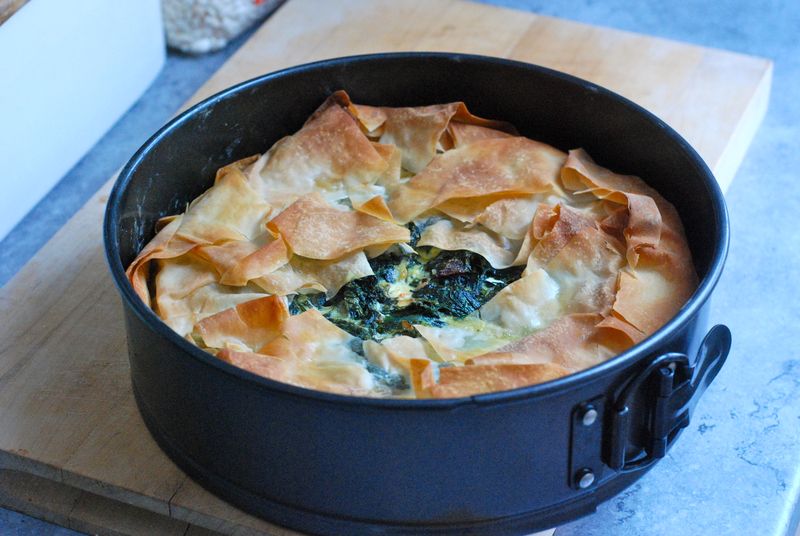
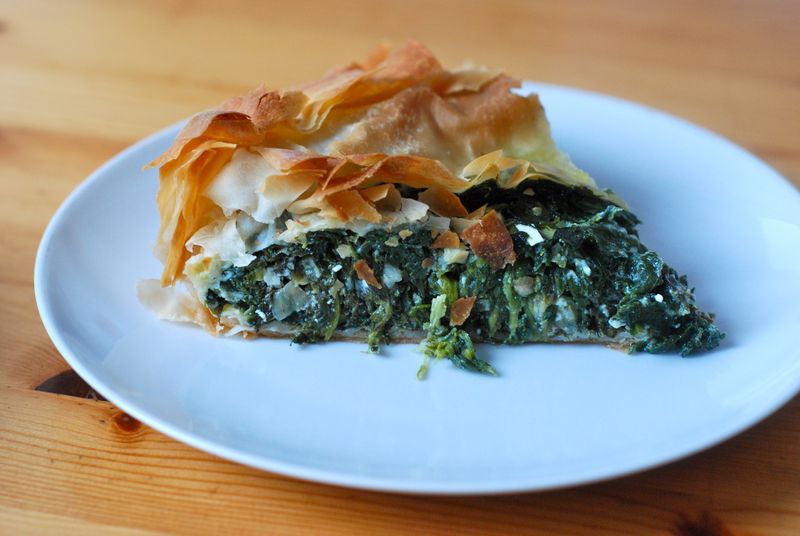
    Lazy spanakopita

    But enough about that. What I like about my lazy spanakopita, besides the fact that it tastes very good, is that it's very healthy and will feed me for several days, or will feed me and my husband for a couple. I also like that it's quick and easy to make. Why, just the other day I managed to entertain and feed my child while also making this pie and both the child and the pie survived! If that is not ease, I don't know what is. And furthermore? Leftover slices can be eaten out of hand. You don't need a fork or a plate, which is, for those of you wrangling small children or feral animals, sort of brilliant. (Leftover spanakopita doesn't have any of the crispness of a freshly made spanakopita, but this also means less mess when you eat it the next day. Silver linings, folks. They're everywhere.)

    I will not vouch for my spanakopita's authenticity. In fact, if you are Greek, please forgive me if I have committed some unspeakable act against your national dish. I love your country, I love your food, I love your beer. We honeymooned on some of your lovely islands! I was just very hungry. That's an acceptable defense, isn't it?

    My Lazy Spanakopita
    Makes one 9-inch pie

    1 kilo (approximately 2 pounds) frozen spinach, defrosted
    2 tablespoons olive oil
    1 medium yellow onion, minced
    200 grams  (7 ounces) Greek feta
    3 large eggs
    1 teaspoon dried oregano
    Salt and pepper to taste (I use about 3/4 teaspoon of salt)
    8 sheets phyllo dough (I like this brand or whatever yufka I can find at the Turkish grocer)
    4 to 5 tablespoons neutral-tasting vegetable oil

    1. Heat the oven to 180 C (350 F). Put the defrosted spinach in a colander and squeeze out as much water as you can, wringing the spinach out in handfuls like rags. Finely chop the wrung-out spinach. Put in a large bowl and set aside.

    2. Heat the olive oil in a pan and add the minced onion. Sauté for around 8 minutes, until the onion is fragrant and golden. Scrape the onion into the bowl of spinach.

    3. Crumble the feta into the bowl of spinach. Add the three eggs, the oregano and salt and pepper to taste. Then mix until all the ingredients are well-combined and the mass is relatively uniform. (You will have little pockets of feta cheese here and there.)

    4. Lightly oil a 9-inch springform pan. Open the package of phyllo dough and lay a damp towel over the phyllo sheets. Working quickly, line the pan with one sheet of phyllo dough, then brush it lightly with some vegetable oil. Layer another sheet on top and oil that. Repeat with all the sheets of phyllo until the springform pan is fully lined. Scrape the spinach mixture into the phyllo-lined pan and smooth the top. Fold the phyllo dough over the top of the pie (see photo above). Brush a little oil on the tops of the phyllo dough sheets.

    5. Put the pan in the oven and bake for 30 to 40 minutes, rotating halfway through. The filling will be set and the phyllo golden-brown and crackling when the pie is done. Remove from the oven and let cool for 10 minutes before removing the ring of the pan. Cut into slices and serve immediately. If cooled completely and then wrapped carefully in plastic wrap and aluminum foil, the spanakopita can be frozen for a few months.

  • French chocolate cake
    Let's start this week off with dessert first, shall we? I don't think you should live a day longer without knowing about this chocolate cake.

    On Saturday afternoon, we had friends over for lunch and after we'd finished a big pot of Moroccan stew and couscous I'd made, I brought out a cake, a chocolate cake that was almost flourless. Now, I'd set the heat too high when I'd first put the cake to bake in the oven and the top of the cake had burned ever-so-slightly before I'd realized my mistake and turned the temperature down. Also, I'd overwhipped the eggs by a second or two while preparing the batter and an ominous sentence in the headnote of the recipe gave me the sense that the cake was probably ruined already.

    So I was feeling a little blue about the cake, if I'm honest. I had Max whip some cream and I told myself just to be cool as I put it down on the table. People were probably too full from lunch to have much dessert anyway.

    But a few minutes later, as forks scraped through the first round of slices, the table went silent. The thing was, the cake was sort of incredible. It was rich but not heavy, powerful but not overwhelming. The texture was fabulous – velvety-soft, tasting much like the fudgiest brownie, but light and fluffy as a cake. (Incidentally, I don't think we could have eaten the cake without little dollops of unsweetened whipped cream, which provided a much-needed cooling effect. Proceed without at your own risk.)

    My friend Philippe said that he thought it might be the best chocolate cake he had ever eaten. Philippe is half-French, so he knows from chocolate cakes. His wife Yvonne said it was definitely the best chocolate cake she'd ever eaten. Yvonne is a chocoholic, so she knows from chocolate cakes. Their son, Leo, 2 years old, had two whole slices and then practically licked his plate. (I would not have thought this cake would go over well with children, but there you have it, in addition to being French-friendly and chocoholic-friendly, this cake is also child-friendly.)

    I found Evelyn Sharpe's French Chocolate Cake hiding out in the pages of The Essential New York Times Cookbook (from this article). It was apparently the first "flourless" chocolate cake the New York Times ever published. It's not really flourless, since it has a tablespoon of flour, but I can imagine you could substitute ground nuts without a problem. I chose it because it took hardly any time or effort (here's the whole process: melt chocolate and butter in a water bath, add egg yolks, plus a spoon of sugar and flour, then beat egg whites, fold into chocolate mixture, put in pan and bake, done).

    Amanda Hesser stipulated using high-quality chocolate like Scharffen Berger, with somewhere between 65% and 70% cacao. But I ended up using the totally bog-standard dark chocolate bars you find in the baking aisles of German grocery stores that don't even have a brand-name – here's what they look like. They have only 55% cacao and the cake was inky-rich and dark and wonderful. I actually can't imagine using a higher-percentage cacao. (If you do go the higher-cacao route, then put some sugar in the accompanying whipped cream.)

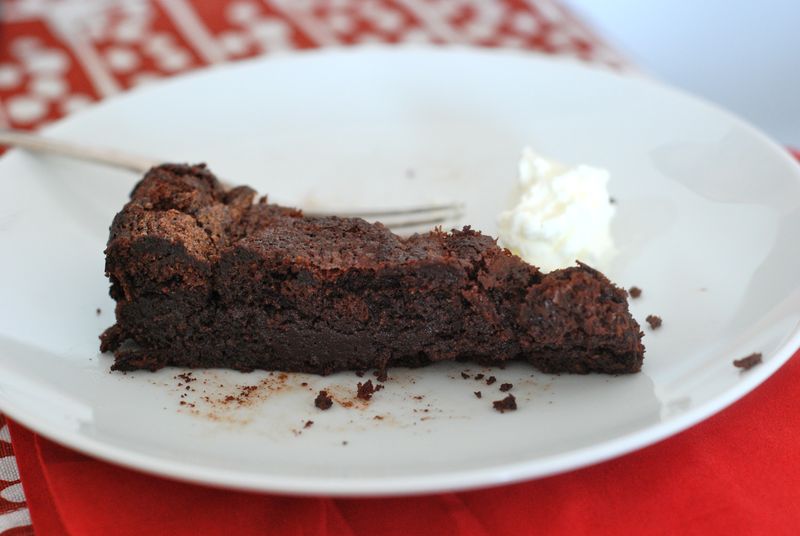
    French chocolate cake slice

    Everyone followed Leo's lead and had another slice and before I knew it, all that was left was this one little sliver. I took a quick snap of it for you all before it disappeared, too.

    And now I'm trying to figure out how to make up for lost time. French Chocolate Cake for Easter? For Hugo's first birthday? For our wedding anniversary? For, just because?

    Evelyn Sharpe's French Chocolate Cake
    Makes one 9-inch round cake

    1 pound bittersweet chocolate (ca. 55% cacao)
    10 tablespoons unsalted butter, softened
    Pinch of salt
    1 tablespoon unbleached all-purpose flour
    1 tablespoon sugar
    4 eggs, separated
    Unsweetened whipped cream

    1. Heat oven to 425 degrees. Line the base of an 9-inch springform pan with parchment paper.

    2. Melt the chocolate gently in the top of a double boiler over hot, not boiling, water, or more speedily in the microwave.

    3. Remove the melted chocolate from the heat and stir in the butter, flour and sugar. Beat the yolks lightly and whisk into the chocolate mixture gradually.

    4. Beat the egg whites until they hold a definite shape but are not dry and fold into the chocolate mixture. The beaten egg whites should be folded smoothly, quickly and easily into the chocolate mixture. Pour into the prepared pan and bake for 15 minutes. Turn off the heat; open the oven door, leaving it ajar, and allow the cake to cool in the oven.

    5. The cake is best served a little warm with unsweetened whipped cream.

  • Picstitch

    Spring! Wherefore art thou, spring?! Sigh. Inch-thick ice and snow is all that we've got here and a leaden gray sky that hangs there for what seems like time immemorial. But! It is Friday and my husband returns tonight! So there is much rejoicing here nevertheless. Tonight there will be Game of Thrones and homemade schnitzel and a daddy giving his little boy a bath and I just can't wait.

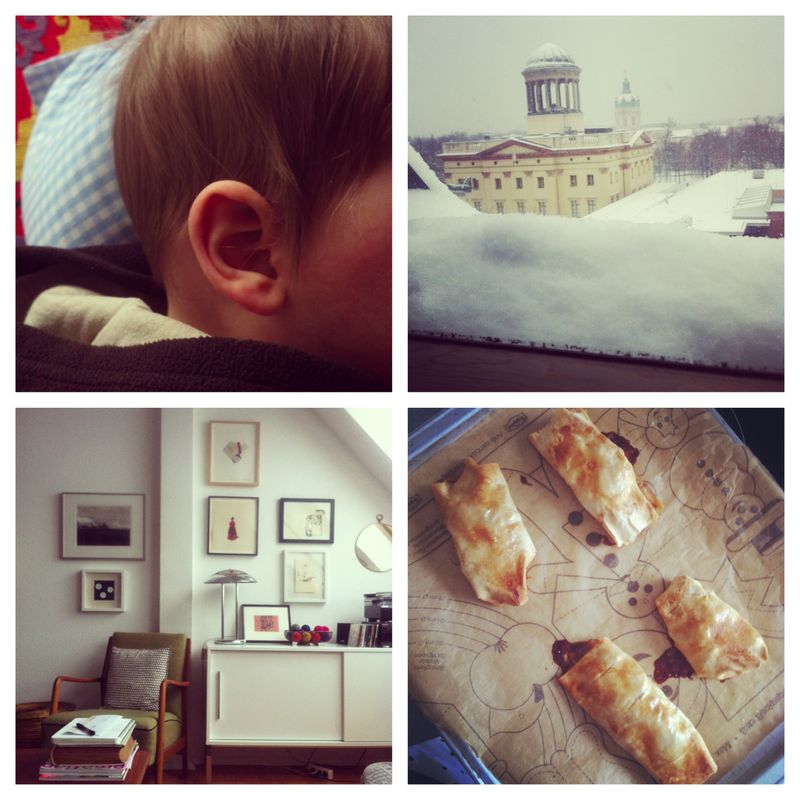
    Here are some photos from Instagram this past week: Hugo's sweet little ears, the snow-covered view, a corner of my living room that makes me feel good, and lazy-(wo)man's apple strudel (apple chunks sauteed in butter, cinnamon and sugar, then rolled up in three sheets of leftover phyllo dough and baked at 350 until brown and crisp).

    Elsewhere,

    The New York Times has a new recipe column! I love it already.

    I found the German edition of this cookbook at the thrift store yesterday for €0.99 and almost shouted out loud. (It's amazing.)

    Chocolate pudding made for and by children.

    A woman in the audience of my Berlin book reading was bemoaning the lack of pupusas in Berlin. Meanwhile, I'd never eaten one in my life. Now that I've seen this, though, that's going to be rectified right quick.

    We're having friends over for a long, cozy Saturday lunch and I'm thinking of making a big pot of chili tonight so I don't have to cook tomorrow morning. This looks incredible, though I'm missing many of the chiles required. This one looks slightly easier and comes from Robb Walsh himself.

    Pourable caramel icing? What?

    Loving a new-to-me food blog called butter tree. Want to make everything she writes about, starting with the crullers and the rillettes.

    Self magazine just published a sneak peek into Gwyneth Paltrow's new elimination diet cookbook, which sounds like it'd be deprivation station, but the recipes don't actually look all that different from the way many of us cook these days. I plan on trying this soon.

    Homemade English muffins: intimidating or challenging?

    And finally, always and forever, I heart NY. (Via Nat the Fat Rat)

    Have a lovely weekend, folks!

  • Fusilli with veg for baby

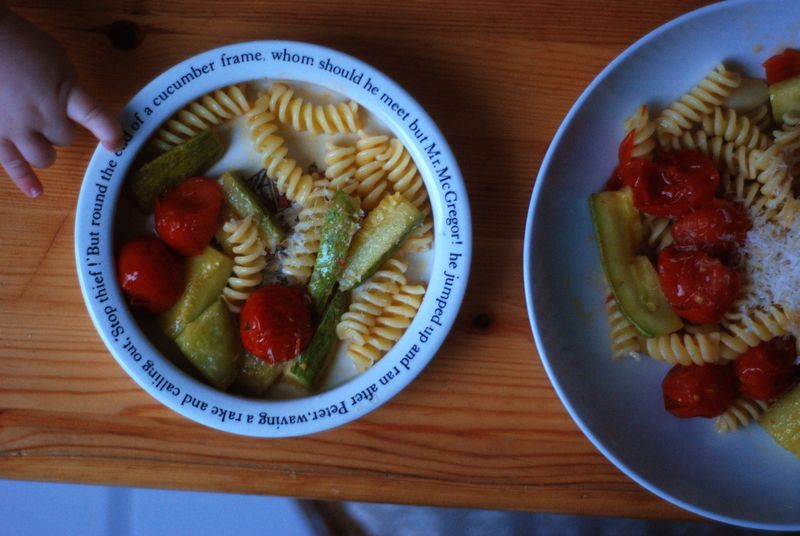
    There are thrilling developments here in the solid foods department, folks. Hugo can now eat entire fusilli all by himself (I was cutting them into little bite-size pieces until one day he reached out and grabbed a whole one, cramming it in his mouth before I could stop him) and I can slowly start making more and more meals for both the big and little people in this household instead of separate ones.

    (more…)

  • April Bloomfield's  Porridge

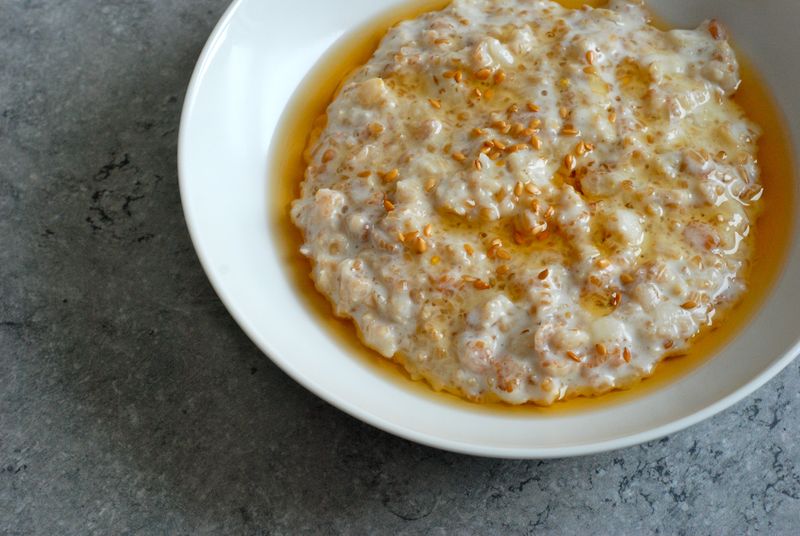
    Oatmeal. No big deal, right? No big thing? Just slap some oats and water in a pan, let 'em come to a boil, maybe salt them, then you're done? Well, yes. And no. Let's start with the yes.

    Oatmeal at its plainest is just fine. We eat a lot of oatmeal prepared like that in this house. Max stirs mashed banana and maple syrup into his, Hugo gets puréed fruit on top of his, I like to top mine with a little pat of butter and maple syrup. We'll cook up a big pot for the three of us (always using three times as much water as oats, plus a healthy pinch of salt), then each bowl is customized to the eater's liking. I never gave the preparation much thought, though I did notice that depending on the brand of rolled oats used, our oatmeal turned out slightly creamier or more watery. Those were never happy mornings. I mean, watery oats. No bueno. On to the no, then.

    After I schlepped home my tin of McCann's, I was noodling around online doing something else entirely (if you must know, checking out who won Food52's Piglet Award) when I came across this post by Rifka about April Bloomfield's porridge. You know April Bloomfield, yes? The chef behind everything delicious at The Spotted Pig and The Breslin and The John Dory Oyster Bar, which I have not yet had the pleasure of visiting?

    Well, Rifka had just made the porridge from April's first cookbook (the winner of the Piglet!) and was bandying words like "luxurious" and "perfect" and "brilliant" about. Plus, she said, April's porridge was so good you could serve it to company, at which point I practically levitated off my chair with glee. Oatmeal for company? Sign me up, right now. The next morning, I made April's porridge for breakfast and I'm afraid I'll never look at regular oatmeal the same way again.

    There are several things about this porridge that set it apart. First, it uses both rolled oats and steel-cut oats. The rolled oats sort of melt into the mixture, lending a certain gelatinous heft. The steel-cut oats retain a faint bite after cooking, giving the porridge wonderful texture. Second, it uses both milk and water, which results in a porridge that is silky and creamy and almost pudding-like. Third of all, it uses an enormous amount of salt. So enormous that I couldn't bring myself to do it. (I do salt the food that Hugo eats within reason, since I'm eating it too, but this felt like too much for him.) So take it from Rifka that all that salt in the porridge really is delicious and take it from me that even without the hefty dose, this porridge is delicious. I mean, it's beyond. It is super-duper special. Each bite was a delight.

    I mean, can you believe I've just written five paragraphs about porridge? It's that good.

    Next time (tomorrow?), I'm going to play with the ratio of milk to water, trying a little less milk and a little more water. I'll keep you posted…

    April Bloomfield's Porridge
    From A Girl and Her Pig

    Serves 2

    1 1/2 cups whole milk
    1 1/2 cups water
    1 1/2 teaspoons Maldon or other flaky sea salt; if using fine salt, use less – start at 3/4 teaspoon and adjust as needed
    1/2 cup steel-cut oats
    1/2 cup rolled (not quick-cooking) oats
    Toppings (additional milk, brown sugar, maple syrup, flax seed or fresh fruit)

    1. Bring milk, water and salt to a simmer in a medium pot over high heat, keeping an eye on it so that it doesn't boil over. When the mixture starts to simmer, add both oats, stir to combine and reduce the heat to medium. Cook the oats at a steady simmer, adjusting the heat as necessary and stirring occasionally. At 20 minutes, the steel-cut oats will be just cooked and the rolled oats will have melted into the porridge.

    2. Taste for salt, add more if needed, then divide into two bowls and add the toppings to taste. Eat immediately.

  • American grocery souvenirs

    Hugo and I flew to Boston last week to visit my father and stepmother. Hugo got spoiled with limitless attention and eager playmates and I got to leave the house without him, driving around suburban Boston, seeing a few friends, getting to eat a delightful tuna sandwich undisturbed in the car in a drugstore parking lot for lunch, browsing said drugstore afterwards for as long as I wanted all by my blissful self, and feeling like I could hear myself think again. Oh, it was a good vacation, alright.

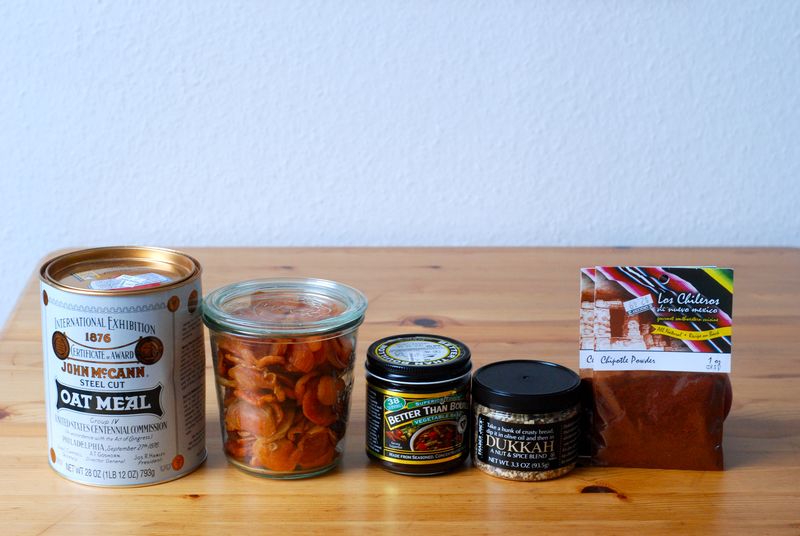
    On the way back to Berlin, I stuffed the suitcase with board books for the baby, a few new shirts for me for spring (elusive spring) and, of course, precious treasures from the grocery store. This time around, I had enough baking powder, vanilla extract and brown sugar waiting back in Berlin, so I got to focus on some new acquisitions.

    Namely, steel-cut oats, dried Blenheim apricots, Better Than Bouillon vegetable base (Max is so addicted he sometimes threatens to eat it straight from the jar with a spoon), dukkah, because it looked interesting and because I think Heidi once said it tasted delicious, and two kinds of chile powder (ancho and chipotle).

    How about you, fellow ex-pats? What do you buy when you're home for a visit? I don't just mean Americans far away from home – but ex-pats in general. What foodstuffs do you miss the most, whether you're Italian or German or Indonesian? What's the weirdest thing you've ever toted home again? What is the one thing everyone in your life knows to bring you when they come to visit?

    If I had had more room in the suitcase, I would have also crammed in a bag of pecans, one of those big jugs of Grade B maple syrup, a package or two of Zip-Loc bags (yes, really), a box of Triscuits and one huge super-sized carton of Cheerios. Sigh.

  • Oma and Bella

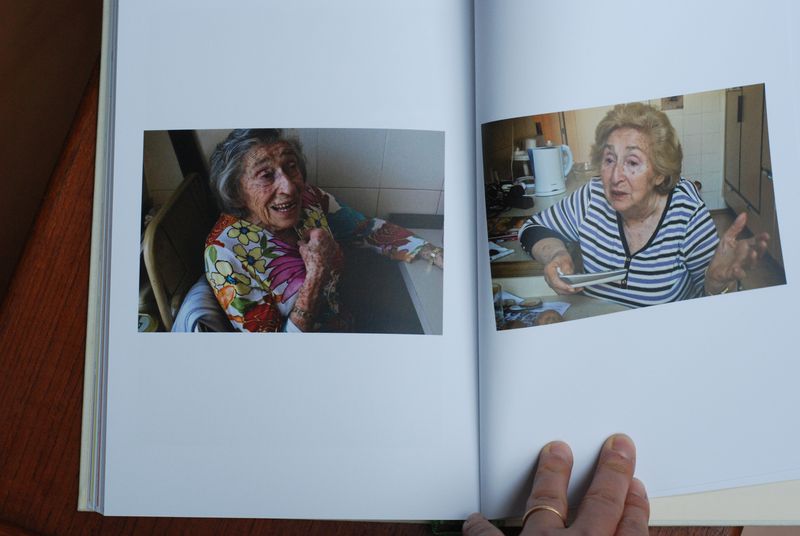
    Have you heard about a documentary called Oma & Bella? It's about two best friends, Regina and Bella, who live together in an apartment in Berlin and cook all the livelong day. Kreplach and borscht, cream cheese cookies and chicken soup. They shop at the same places I do. They don patterned cotton house dresses when they putter in the kitchen. The filmmaker is Regina's granddaughter. (Oma means grandmother in German).

    The granddaughter films Regina and Bella as they cook together, as they tell her about their childhood, their German tinged with melodious Yiddish accents. Regina and Bella are Holocaust survivors. They were young girls during the war, when they went into the camps. Regina came from Poland, Bella from Lithuania. Their families were murdered. They were the only survivors.

    I watched the film the other night perched at my desk, the apartment dark around me as Oma and Bella's kitchen glowed warmly from my computer screen. I watched and listened to the banal, everyday details of their life interspersed with the incomprehensible. It broke my heart.

    After it was over, I sat near the radiator in the living room warming my feet and looking out into the night, little lights in the city twinkling on the horizon. I tried to imagine, as I have so often before, what it must have been like once upon a time in this city, this country, this whole region. For people to have been not just turned out of jobs or stripped of licenses, refused service or denied entrance somewhere, anywhere, but to have been hunted down like animals, eliminated, exterminated like pests. To have been turned out of their homes, stripped of their things and their identities, their names forcibly changed. Murdered in the street, in a gas chamber, on a train car, in a camp bed. Anywere. Everywhere.

    And then I tried to imagine the gaping horror of being the only one of a family to survive such a thing. To have witnessed how, one by one, every person was picked off but you. To have the burden, the privilege – yes – but also the burden, of growing old without them. Suddenly I thought of Hugo sleeping in his little warm bedroom in the back of the apartment, all wrapped up and safe and quiet. It felt almost obscene to have those two thoughts in my head at once.

    Oma&Bella cookbook

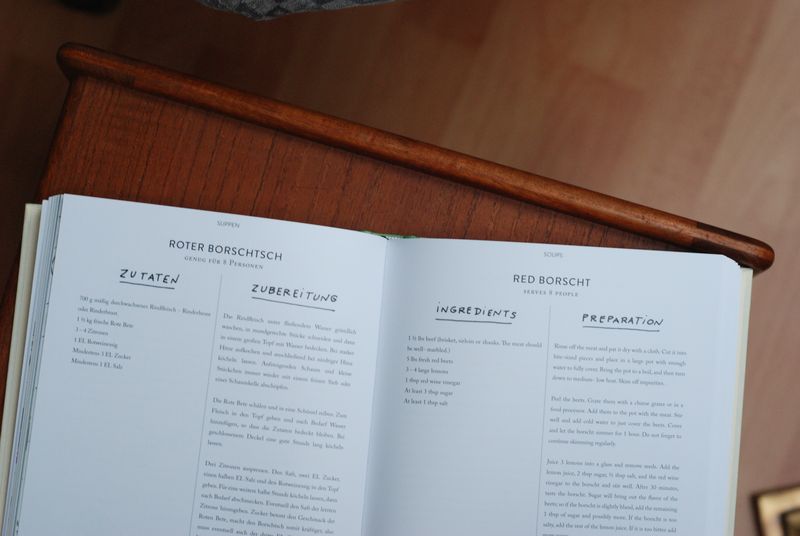
    Due to high demand for Oma and Bella's recipes after the film was first released, Alexa Karolinski, the filmmaker, published a gorgeous little cookbook as a companion to the film. I'm so glad she did. When I watched Regina roll up blintzes or Bella nudge the browning onions in a pan, my stomach growled. In one scene, Bella made borscht and I thought, that's what I want for lunch tomorrow.

    The next day, I went out to the bookstore and bought the book. It's a slim little thing, clothbound, with sweet illustrations and 36 meticulously written recipes in English and in German. Alexa got Oma and Bella to share their recipes with her and then spent years transforming the vague instructions they gave her into recipes that work, with ingredients that are available both here and in the US. Having had a little experience into the difficulty of this kind of work with my own book, I tip my hat to Alexa – she did a wonderful job.

    I especially loved that reading the recipes made me think of my own grandmother, who's been gone for almost 14 years now. She would have loved this book, I think. The movie, too. My grandmother loved kreplach and borscht and she also thought that food was the best way to show how much you cared for someone. She would have adored the idea of a granddaughter filming her doting grandmother as she cooked in the kitchen.

    Red borscht

    Somewhere towards the end of the movie, we see a Sabbath dinner with Oma and Bella's children and grandchildren. The table is long, there are so many guests. Candles are lit, vodka is thrown back, there is happiness in the air. You, as the viewer, long to be there at that table, too. You wish you could sit next to Bella and ask her questions about her glamorous post-war life when she danced in Berlin's discos and owned a nice clothing shop, or what her secrets are to creating such a happy family. But a few scenes later, when she and Oma are at an outdoor café, sitting across from each other, you realize just how fleeting their happiness can ever be. You see how close to the surface the trauma lingers for them both. It is always there, their grief, inescapable.

    To rent or purchase the film online, click here.

    To purchase the cookbook online or to find a list of bookstores that stock it in Berlin, New York, Toronto, Vancouver or San Francisco, click here.

  • Broccoli pasta soup

    I'm sorry about dropping off the face of the earth last week. I really had no intention of going silent, but Hugo stopped napping – just stopped, yes, the horror – from one day to the next and the days went by in a blur. I was trying to keep things together while Hugo was flying on what must have been fumes and one evening, after he'd finally gone to bed, I sort of sat and whimpered in defeat in the kitchen for a bit. There might have been some cheese.

    Anyway! Luckily for us all, but, let's face it, mostly me, Hugo has started napping again (praisegodthealmightyforeverandeveramen). And better yet, I have found the best soup of the year. I know it's only February 25, but I'm going to wager that this is it for the rest of 2013.

    People, it is fabulous.

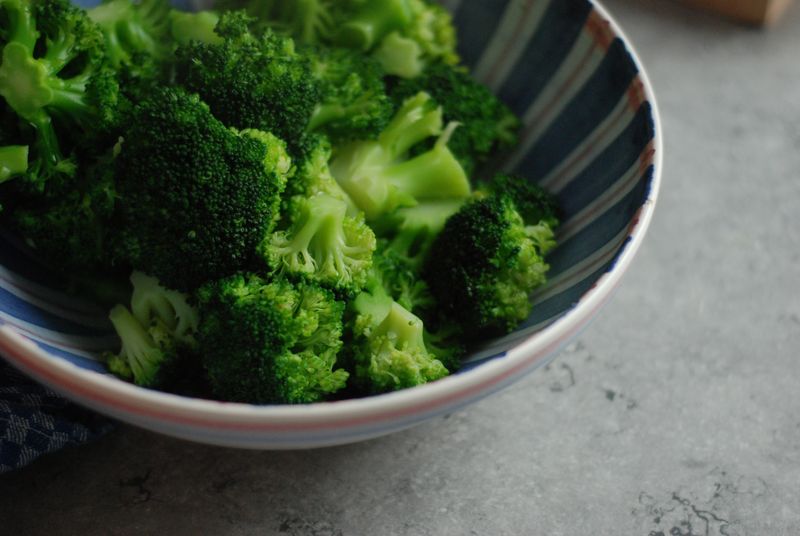
    Blanched broccoli

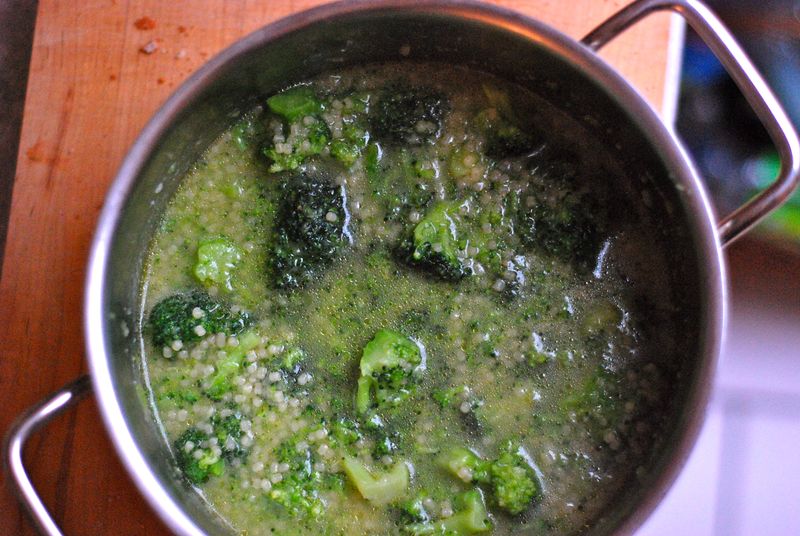
    Okay, now you're going to think it seems a little fussy to start. And you would be right, technically. There's the dissection of the broccoli, the blanching in two steps, the pan-frying, the pureeing. Yes. But that's really it for the work – the soup itself is a silly little throw-together. Put broth and broccoli stalk purée in a pan, then add some pasta to cook, then add the remaining sautéed broccoli. Parmesan on top of each serving and that's it! See? Not so bad, after all.

    Because you cook the broccoli so briefly (you must follow Marcella Hazan's cooking directions to the minute, lest you want pallid results), it retains vibrant color, a fresh flavor and its wonderful just-tender quality – you know, almost rubbery, but in a good way? The pasta adds pleasing nubbiness to each spoonful and the Parmesan and garlic and broth all come together in the way they should, reliably producing the taste of Italy in your soup spoon. Magic.

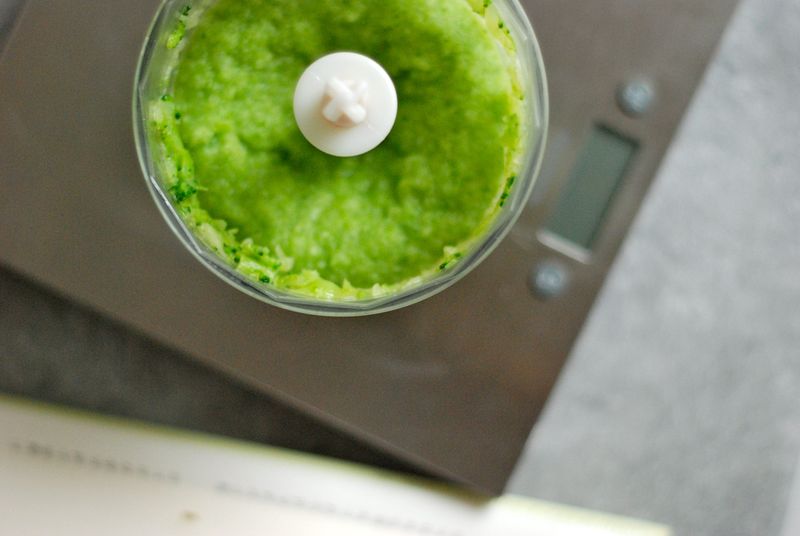
    Pureed broccoli

    I imagine this is not news to most of you, but just in case there's someone out there who has yet to figure it out, Marcella Hazan's cookbook, The Essentials of Classic Italian Cooking, is sort of a non-negotiable acquisition if you want to know what Italian food really tastes like. It has no photos and Marcella's tone is severe – she doesn't want to pal around with you, she wants you to do what she says, just like any bossy Italian lady worth her salt – but it is such a valuable resource.

    (Since I can pretty much guarantee that Marcella doesn't read this blog and I therefore won't incur her wrath, I shall confess the following: the original soup calls for homemade meat broth and homemade pasta. I, er, used my trusty Better Than Bouillon (scraping the bottom of the jar! thank goodness we fly to the States on Friday) and Barilla soup pasta. The soup was divine, life is short, do what your conscience tells you.)

    (Oh! And one more thing: a certain 8-month old ate more of this soup than he did of his dinner. So it's baby-approved, too.)

    Marcella Hazan's Broccoli and Pasta Soup
    From The Essentials of Classic Italian Cooking

    Serves 6

    1 medium bunch of broccoli
    Salt
    1/3 cup olive oil
    1 teaspoon chopped garlic (or two whole cloves)
    2 cups beef or chicken broth
    1/2 cup small, coarse soup pasta (I used these)
    Freshly grated Parmesan cheese

    1. Detach the broccoli florets from the stalks. Trim away about 1/2 inch from the tough end of the stalks. With a sharp paring knife, peel away the dark green skin on the stalks. Split very thick stems in two lengthwise. Wash and set aside.

    2. Bring 3 quarts of water to a boil. Add 2 tablespoons of salt, which will keep the broccoli green, and put in the stalks. When the water returns to a boil, wait 2 minutes, then add the florets. If they float to the surface, dunk them from time to time to keep them from losing color. When the water returns to a boil again, wait 1 minute, then retrieve all the broccoli with a slotted spoon. Do not discard the water in the pot.

    3. Choose a sauté pan that can accommodate all the stalks and florets without overlapping. Put in the oil and garlic, and turn the heat to medium. Sauté the garlic until it turns pale gold. Add all the broccoli, some salt, and turn the heat up to high. Cook for 2 to 3 minutes, stirring frequently.

    4. Using a slotted spoon, transfer the broccoli florets to a plate and set aside. Do not discard the oil from the pan.

    5. Put the broccoli stalks into a food processor, pulse for a moment, then add all the oil from the pan plus 1 tablespoon of the broccoli water. Finish processing to a smooth purée.

    6. Put the purée into a soup pot, add the broth, and bring to a moderate boil. Add the pasta. Cook at a steady, gentle boil until the pasta is tender, but firm. Depending on the thickness and freshness of the pasta, it should take about 10 minutes. You will probably need to dilute the soup as it cooks, because it tends to become too dense. To thin it out, use some of the reserved broccoli water. Take care not to make the soup too runny.

    7. While the pasta is cooking, separate the broccoli florets into bite-size pieces. As soon as the pasta is done, put the florets in the soup and continue cooking for 1 more minute. Taste and correct for salt, and serve the soup promptly with the grated Parmesan on top.