• DSC_2312

    Thank you so much for all your cheers, congratulations and excitement! Sometime in the last few weeks, the little guy in my belly went from being a very abstract sort of thing to a real person who likes to wiggle around like clockwork at midnight (oh dear) and whose face I cannot wait to see. I was waiting for this to happen, for the pregnancy to morph from something I couldn't really wrap my head around to something that makes my heart leap. Now that that feeling is here, it's even better than I imagined. I'm so lucky that I get to share our happy news with all of you fantastic people. I'm so lucky, period.

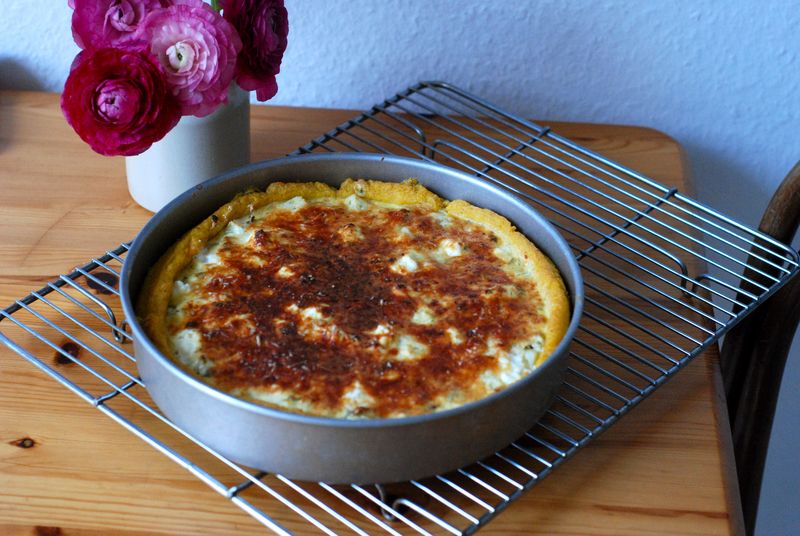
    A few months back, actually, more like last summer, when Max turned 35, we had a bunch of friends over for brunch before retiring to our local beer garden down the block and sitting outside under the leafy canopy while drinking beers until dinnertime. (If you are planning a trip to Berlin, ever, make it in summer. It's magic.) While we were still at home, Max made a big pitcher of Pimm's and I put out a coffee cake of some kind and frittata, too, if I remember correctly, but neither one was really more than picked at because I'd also made this artichoke tart with a polenta crust and it was inhaled in record speed. Gone in a flash. Zip, boom, bang.
    DSC_2303

    I got the recipe from Maria Speck's fantastic book, Ancient Grains for Modern Meals, a pretty incredible collection of recipes featuring whole grains such as rye berries and cornmeal and rolled oats and wheat berries and spelt flour, not to mention amaranth, millet and quinoa. Just as with Kim Boyce's Good to the Grain, Maria's book is less focused on the health aspects of whole grains and more focused on the delicious flavor that these ingredients bring to the table (har). She uses cream and butter with aplomb and has a beautiful way with words – each of her headnotes makes me hungry all over again.

    (Full disclosure: I learned about the book after meeting Maria at a conference a few years ago and later blurbed the book after I'd read the proofs, stomach a-growling.)

    Raised in Germany with a Greek mother and a German father, Maria has fused the whole grains of her German childhood with the gutsy flavors of her Greek heritage into every recipe she put into the book (along with a wealth of knowledge on each whole grain she uses). This means you get things like farro cooked with cream and served with grapes roasted in honey for breakfast or bulgur cooked in Aleppo-pepper-spiced tomato sauce for dinner. There's Greek-style cornbread (layered with feta and thyme, served with salad for lunch, perhaps) and a brandy-soaked fruit bread made with rye flour, spices and nuts.
    DSC_2296

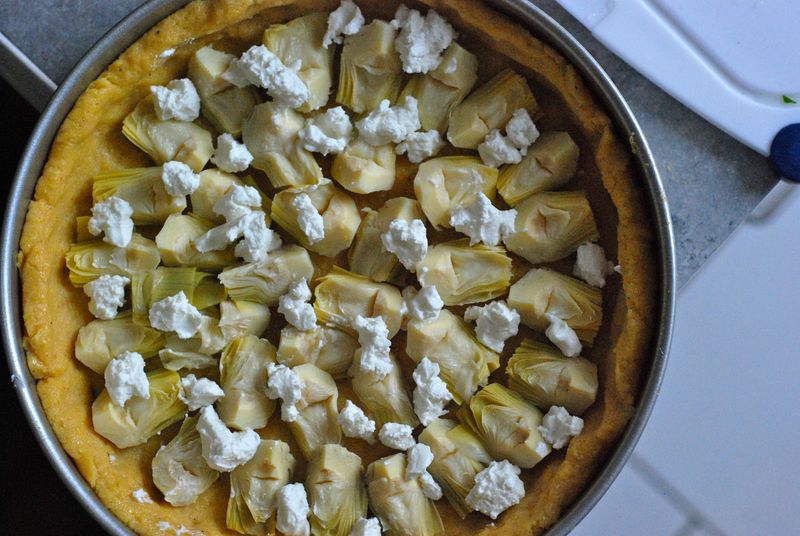
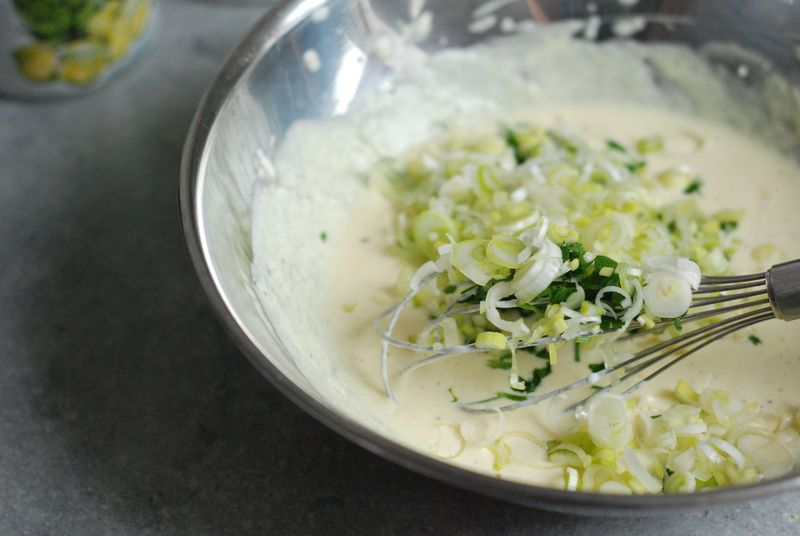
    The artichoke tart is brilliant for the pastry-averse or just those looking for a more wholesome version of a quiche or vegetable tart. You make a pot of polenta, flavoring it with broth and cheese (an egg adds body) and then pat it out into a cake or tart pan. Then you defrost artichoke hearts (or open a can, which is what I did because I've yet to find frozen artichokes in Germany) and cut them into quarters, laying them down on the polenta base. On top goes crumbled goat cheese and then a scalliony-herby mixture of eggs and Greek yogurt and a generous sprinkling of Parmesan cheese. And that's it.

    After 45 minutes in the oven, what emerges is bound to make everything else on your brunch table pale in comparison. It did on mine. What I like especially about it is that it's hearty and savory, full of wonderful flavors (the artichokes really do shine through, as does the rosemary and creamy-sourness of the yogurt and goat cheese), yet it still feels relatively light. A big wedge of this won't weigh you down the way a piece of quiche, full of cream and sporting a butter crust, would. Also, I like the fact that the polenta crust makes people first do a double-take and then ask for a second helping.

    I would have given you a photo of a slice of the tart, too, just for some cross-section action, but, uh, it happened again this weekend – the tart was gone too fast for me to react (or eat a piece!). Next time, I thought, I'm making one all for myself.

    Maria Speck's Artichoke Tart with Polenta Crust
    Make one 10-inch tart
    Recipe from Ancient Grains for Modern Meals

    Crust:
    1 1/2 cups low-sodium vegetable broth
    1 1/4 cups water
    1/2 teaspoon sea salt
    1 1/4 cups polenta
    1/2 cup (about 2.5 ounces) grated Parmesan cheese
    1 large egg, room temperature
    1/4 teaspoon freshly ground black pepper

    1. Bring the broth and water to a boil in a heavy-bottomed saucepan over medium-high heat. Add the salt. Slowly add the polenta in a thin stream, whisking constantly, and continue whisking for 30 seconds. Decrease the heat to low and cover. Cook for 10 minutes, stirring with a wooden spoon every few minutes to keep the polenta from sticking to the bottom of the pot. Remove the saucepan from the heat and let sit, covered, for 10 minutes, stirring a few times. Stir in the cheese, egg and pepper.

    2. Grease a 10-inch tart pan or cake pan with olive oil. Have a glass of cold water ready. Spoon the polenta into the pan and press it out, pushing it up the sides. Dip a wooden spoon or your hands in the cold water to help the polenta along. Set aside for 15 minutes and then form an even rim about 3/4 of an inch thick with moist fingers, pressing firmly. Don't worry if the crust looks rustic.

    3. Put a rack in the center of the oven and heat to 375 F.

    Artichoke filling:
    1 cup plain Greek yogurt
    2 large eggs
    1/2 cup finely chopped scallions
    2 tablespoons chopped flat-leaf parsley
    1 tablespoon minced fresh rosemary
    1/4 teaspoon sea salt
    1/4 teaspoon freshly ground black pepper
    12 ounces artichoke hearts, canned or frozen
    1/2 cup (2 ounces) crumbled goat cheese
    1/2 cup shredded Parmesan cheese

    1. Whisk the yogurt, eggs, scallions, parsley, rosemary, salt and pepper together until well-combined. Cut the artichoke hearts into quarters and distribute them evenly over the polenta crust. Sprinkle the goat cheese on top of the artichokes and pour the yogurt filling evenly over the artichokes. Sprinkle with the Parmesan cheese.

    2. Bake the tart until the top turns golden brown and the filling is set, about 45 minutes. Transfer the pan to a wire rack and let cool for at least 20 minutes, though 40 is better. The tart can be prepared up to one day ahead.
  • DSC_2197

    I know what you're thinking. You're thinking, girl, of course you're posting about cabbage soup. It's January 6th, for Pete's sake, and we're all supposed to be on the New Year, New You! plan. You know, the one in which, just two weeks after Christmas, you swear to get up early each morning to sweat at the gym, eat whole-grain hot cereal for breakfast and drink nothing but green tea and think soothing thoughts about everything and everyone for at least, shall we say, two weeks before collapsing in a heap and eating an entire bag of Cape Cod potato chips for dinner in front of the television.

    But no! You're wrong! That's not at all why I'm posting about cabbage soup. Sure, cabbage is good for you, all packed with vitamin C and flavonoids (or maybe it was antioxidants? Whatever it was, it's not goose fat or almond paste, thank Jeebus, because I can't look at either right now without wincing.). But take a closer look: There's ketchup in this soup, people. Ketchup. KETCH-UP. And brown sugar. And you're supposed to dollop sour cream on top. Okay? No diet soup here, no sirree, I don't think so.

    It's not that I'm not into New Year's resolutions. Last year I made a bang-up list (uh, yes, drinking more green tea was on there, but so was stuff like "get a pedicure"and "buy a standmixer" (got the former, not the latter)). By February, though, it devolved into a to-do list of wedding-related errands and things like "open a German credit card" and "go to the cemetery in Kassel" and before too long, I hied that list of resolutions to the curb.

    This year, I was too busy to make a list. I wanted to enjoy every blessed minute that Max was here over the holidays (two whole weeks!) and we had our very first Christmas at home (which has been one of my life goals since I was a small child – check!), replete with a candle-lit tree that the poor man lugged home the day before Christmas Eve and that is still perfuming our living room almost two weeks later. (Before you throw out your Christmas tree, have you seen this?)

    Plus, I was sort of consumed with thoughts about the book, you know, and this other thing that has been occupying whatever spare part of my mind I've still got left (it's not much) (good grief, the parentheses in this post are multiplying like bacteria) (more on that, the other thing, not the parenthesiitis, in a minute)).

    So there's no official list of virtuous resolutions this year. In fact, a few days ago I even canceled my gym membership (if you must know, it's because my gym stinks – well, figuratively, not literally). I was pretty sure the gods of January were going to smite me for doing such a profane thing, but miraculously I made it home in one piece. Being virtuous for a few weeks feels like a waste of time when I've got so much more in my lap right now. Instead I've decided to do things like "use up the vegetables languishing in the fridge instead of letting them calcify" or "embrace self-indulgence every once in a while, you mean old hag, you" and I've also decided I don't need a pretty list doodled on good paper to do that, either.

    DSC_2211

    Which leads me back to the ketchup soup. The other night, I had nothing but three moldy carrots, half a green cabbage and several lemons so dried out you could have cracked them like eggs skulking around my fridge. The carrots especially were starting to seriously irritate me. Carrot frittata? I wondered as I stared at this motley crew. Lemon sandwiches? Cabbage spaghetti? No, no and no.

    Instead I vaguely remembered reading something about a cabbage soup, but who knows when, my mind is a sieve these days. A few clicks later and there was Bess Feigenbaum's Cabbage Soup staring back at me from the computer screen. As I scrolled through the ingredient list, I felt more and more triumphant. I had everything I needed, everything except for the raisins which I didn't want in my soup anyway, no way, no how. How perfect was this?

    Also, as I might have already mentioned, there was ketchup in this soup. KETCHUP. In the soup. People. When I saw that, I scrambled to the kitchen so fast that dust clouds kicked up under my feet.

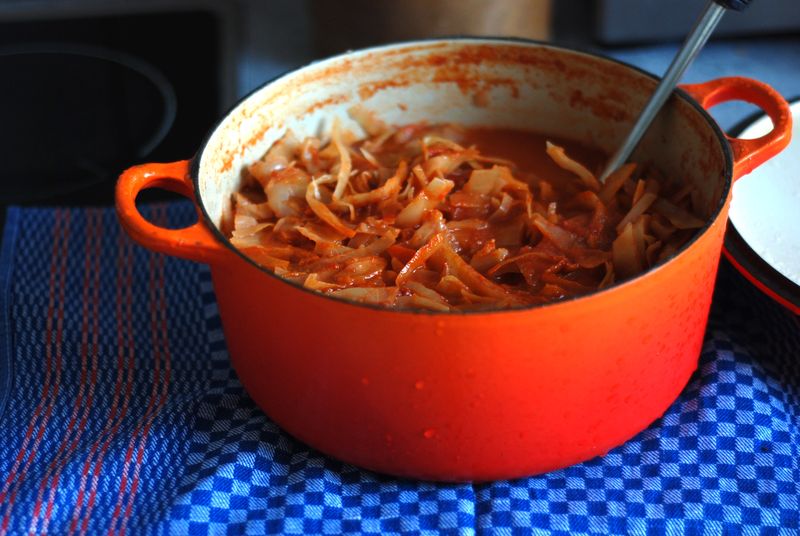
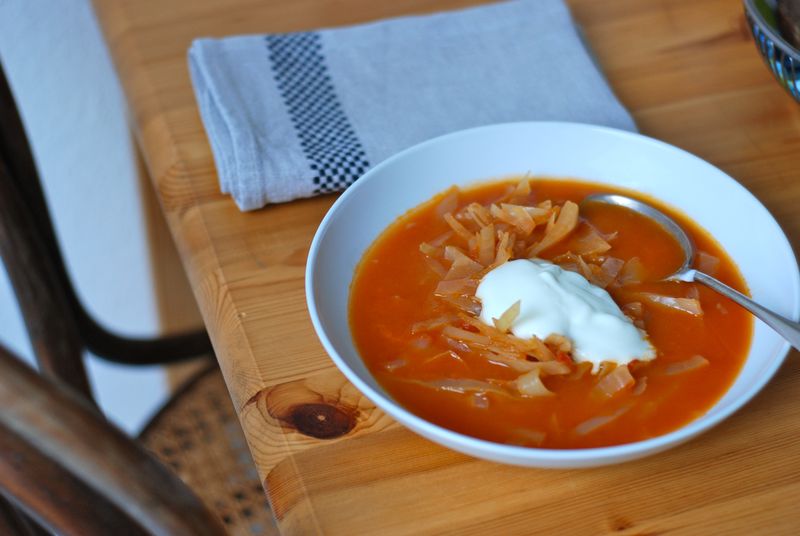
    To start, you make a simple tomato sauce base, really – sautéeing onions and garlic in olive oil, adding sliced carrots and canned tomatoes and tomato paste. But then you throw in a bay leaf and ketchup and brown sugar (and not a small amount either, though I confess to halving the sugar, because I just couldn't bring myself to use the full amount, not with a whole half-cup of ketchup in the soup to boot) and when this has cooked for about twenty minutes you render it coarsely mashed or puréed, depending on your taste, and then you add an enormous amount of sliced cabbage and water and what seems like far too much lemon juice, but do not skimp, please, because the lemon juice is crucial.

    This whole messy concoction, cabbage strips sticking every which way, then gets cooked until it's good and silky. Two hours at least. I had a bowl after an hour and I don't advise you do the same. You want the cabbage to go limp and soft, really soft. Practically melting. And you want all those crazy flavors to meld into something a little less nuts (don't worry, the ketchup does blend into the background). (Also, it feeds a blessed multitude, so invite your whole block over for dinner or else be prepared to eat this for days.)

    A dollop of something cool and creamy on top is sort of crucial when you serve the soup. Otherwise it could err a little on the sweet-and-strange side. You could go for sour cream or plain yogurt, if you were feeling virtuous (or if that's all you had in the house, ahem). But don't skip this bit either. You want that final hit of bracing acidity and smoothing lactic power, brightening the coldest and darkest of winter days.

    My father arrived this morning for a two-week visit and I served this to him for lunch, along with a slice of dark bread. (He always eats a slice of buttered dark bread when he gets off the airplane in Berlin and then, with a deep sigh, tells me how good it tastes.) (Also, he is a cabbage man, if you know what I mean. Never met a cabbage he didn't like.) He said it tasted like the stuffed cabbage his mother used to make, which is exactly the point, according to Zoe Feigenbaum (Bess was Zoe's grandmother and Bess's stuffed cabbage was the inspiration for the soup.)

    But wait! We're not done yet! There's still that thing I have to tell you about, the thing I mentioned just above. I have been wracking my mind for days (weeks! months!), trying to figure out a good way to tell you all, my darling readers, my friends who I've never met, and I keep on coming up empty. It's just too big, I guess, too good.

    So. You know how I said I was hiding from you because I was so wrapped up in the book and all the craziness that goes along with the final weeks of revisions and writing? Well. Um. I might not have been telling you the whole, entire truth. Technically.

    You see, that other something I mentioned above, well, it's not just a little thing, though, actually, it is pretty little. With wee legs and arms and delicious cheeks to nibble on soon and a thumpy, steady heartbeat and the cutest little profile I ever did see, already turning 2012 into the best year of my life, hands down, without a doubt, book or no book.

    What I'm trying to say is, that thing occupying whatever space I've got left in my mind and taking up all the space in my belly is our baby. Our baby! A boy, our son, due in June. This June! Our baby! Our son!

    DSC_2172

    Bess Feigenbaum's Cabbage Soup
    Original recipe here
    Serves 8

    2 tablespoons olive oil
    2 tablespoons chopped garlic
    1 cup chopped onion
    1 cup peeled and sliced carrots
    1 28-ounce can plum tomatoes
    1 cup tomato paste
    1/2 cup tomato ketchup
    1/4 cup dark brown sugar
    1 bay leaf
    1/2 cup lemon juice
    3 pounds green cabbage, approximately half of one large head (tough outer leaves, core and ribs removed), sliced into 1/4-inch-wide strips
    1/2 cup golden raisins (optional)
    Fresh ground black pepper
    Sour cream or plain yogurt

    1. In a large pot over medium-low heat, heat olive oil and add garlic. Cook, stirring, until garlic is tender but not browned, about 2 minutes. Add onion and sauté until translucent. Add 3 cups water, carrots, tomatoes and purée, tomato paste, ketchup, brown sugar and bay leaf. Simmer for 10 minutes, then crush the tomatoes with a fork or wooden spoon. Continue to simmer until carrots are tender, about 10 minutes. Discard bay leaf. 

     2. Using an immersion blender, process mixture until it is coarse, not puréed. Add lemon juice, cabbage strips and 3 additional cups water. Place over medium-high heat and cook at a lively simmer until cabbage is meltingly soft, about 2 hours. Add water to thin to desired consistency. Ten minutes before serving, stir in raisins and a few twists of black pepper. Garnish each serving with a dollop of sour cream or yogurt.

  • DSC_2154

    Hellooo! I'm still here, folks, just on the other side of the screen, in fact. But the thing is, I've been hiding. Shhhh.

    You see, I'm in the home stretch, delivering my book in February (which apparently is four weeks from now? Stupid, silly, good-for-nothing calendar) and as a result I've been gripped with the craziest case of panic and terror and when that happens, I don't know what in the sam hell to write about besides feeling crazy and panicked. And that does not make for particularly gripping reading. So I've hiding from my clipped recipes and – gulp – from you, too. I'm sorry. It's true. It's been for the best, really, but still. I'm sorry.

    But it's December 31st and tomorrow it will be 2012 and I couldn't let the year change without a little wave and a hello!, even if my hair is matted and my eyebrows are unkempt and none of my clothes fit and I have a slightly wild-eyed look about me. (Newsflash to aspiring writers everywhere: Writing is bad for your appearance. And your general well-being!)

    2011 has been such a good year, what with our wedding and our honeymoon and all manner of other wonderful things. Also, we ate so well:

    This pink salad.

    A kamut pound cake.

    Homemade bagels.

    Roasted-carrot and lentil soup.

    I learned to love mayonnaise.

    And the best banana cake.

    But what dawned on me the other day is that even with all that wonderfulness making 2011 a year I'll never forget, 2012 is going to be even better. I mean, holy cats, people. It's going to be nuts. And that makes me feel pretty darn lucky.

    I hope you all have a fantastic New Year's celebration, with plenty of dry, fizzy, cold Champagne. Here's to a wonderful 2012 for all of us.

  • DSC_2125

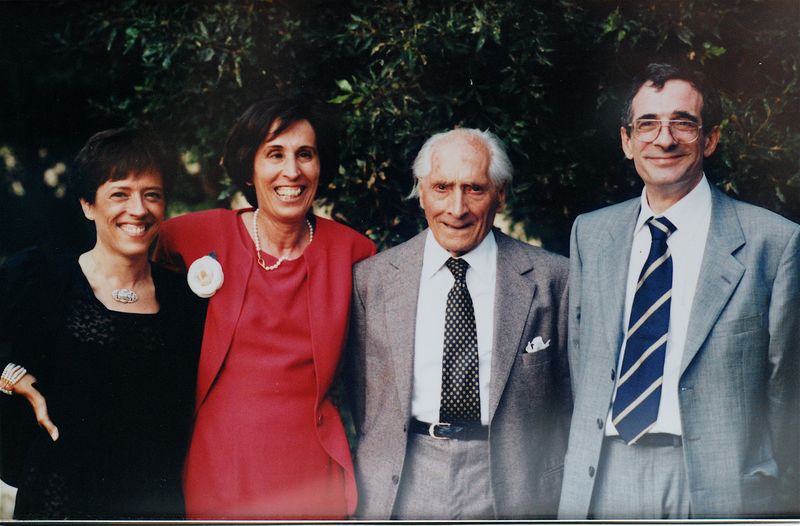
    My mother is the youngest of three children. That's her on the far left. My aunt Laura is next to her, my grandfather is the white-haired dude in the middle and on the right is my uncle Oreste. This photo was taken 14 years ago, at my cousin's wedding. I love how happy everyone looks.

    They say that birth order really does determine your character and in the case of my mother's family, it's hard not to believe it. Laura, the oldest, was the family peacemaker, protective and a little bossy. Oreste, the middle child, was the quiet one who was always more content watching from the sidelines than being in the middle of the action. And Letizia, the youngest, was the feisty one who often clashed with my strong-willed, stubborn grandfather even if, or because, she resembled him the most.

    Oreste1

    I think, in a way, that Laura and Letizia have always seen themselves as being my uncle Oreste's buffers against my grandfather. Oreste was by nature a far gentler spirit than my grandfather, who could be so hard on his children. As hard on them as he was sweet on us, the grandchildren. Which is why it is all the more devastating that Oreste has passed, after a short, intense illness that took us all by surprise. His death was mercifully quick, but his illness itself was a shock to our family, in which so many people lived very long lives, some of them nearing or passing 100. Oreste still had so many years ahead of him.

    Oreste3

    We're not a religious family. We don't go to church and many of us don't believe in God. So imagining my uncle's path now is a difficult, slightly nebulous thing. I wonder, is he in Verona, hanging out behind his wife's dining room chair, wrapped up in the slightly smoky air he left behind? Or is he in Torre San Tommaso, walking back and forth on the country road that joins the cemeteries where my grandfather and grandmother are buried, past the house that we all love so much even if it holds some memories we'd like to forget? Is he in Toronto, whispering in his son Riccardo's ear that he's with him every step of the way, on Riccardo's trip to India later this month to meet his future wife's family, at City Hall when they marry, at everything that still lies ahead?

    Oreste

    I like to think he is in all those places at once. And in Berlin and Brussels, too, flashing his infectious grin at his sisters and telling them not to be sad, that he had a good life even if he had to leave it too soon, a good marriage, a son to be proud of. And that, anyway, he'll be with them always – as the knock-kneed little boy who once fell out of a moving car on a family trip, as the proud father of a baby boy who grew up to have his same smile, as the brother who always knew how much his sisters loved him and love him still.

    He's all around us, everywhere.

  • DSC_1978

    I always have to read a little before I go to bed. I get all ready – brush my teeth, wash my face, put on my cashmere bed socks (the best birthday present a girlfriend ever gave me) – and then I get in bed, adjust my pillow, fluff the blanket and open a book. If I don't read before turning off the lights, I'm guaranteed to toss and turn for a long while before falling asleep, if I'm able to do that at all.

    For the past few nights, I've been re-reading Farmer Boy. I can't tell you how many times I've read it, but we can all be sure it's a fairly high number. The Little House series was my reason for living when I was a child (until Narnia came long and then Anne of Green Gables and Diana Wynne Jones and, oh, let's stop this right now, otherwise we'll be here all day) and when I was at my friend Joan's last year, gripped with writer's block and worry, she pulled Farmer Boy off her shelf and handed it over to me. "Remember this?"

    The pleasure I get from going back into Almanzo's world is hard to put into words. Every other sentence plunges me back in time to when I was first reading about how the Wilder men cut and stored ice, packed in straw, until summertime, how Almanzo and his siblings made candy while their parents were out of town, using up all the good sugar their mother warned them not to finish, how Almanzo longed to be given the responsibilities of caring for the family's horses while his father continued to command him to stay away. And, of course, how little, 9-year old Almanzo put away in one regular weeknight dinner what most of us could barely manage on a holiday like Thanksgiving.

    None of us (well, as far as I can imagine) are doing anywhere near the amount of physical labor that he was at nine years old. But still. Here's what Almanzo ate on one winter's evening:

    1. Sweet, mellow baked beans
    2. Mealy boiled potatoes, with brown ham-gravy
    3. Ham
    4. Velvety bread spread with sleek butter
    5. A tall heap of pale mashed turnips
    6. A hill of stewed yellow pumpkin
    7. Plum preserves, strawberry jam and grape jelly
    8. Spiced watermelon pickles
    9. A large piece of pumpkin pie

    And then (oh, you didn't think he was done, did you?), the family retired to the fireplace and Almanzo ate popcorn and apples and drank apple cider, and he took such pleasure in this and his family and his life that when I read that bit I always fairly burst with the longing to reach out through time and space and dimension to touch his sweet little self or give him a hug. And also eat a handful of popcorn with a glass of cider in the other hand.

    Books, man. They kill me.

    DSC_2094

    We think Thanksgiving is such a busy time and we overwhelm ourselves with grocery lists and cooking strategies and forums on whether to brine or not to brine (actually, this lady doesn't), so reading about how the women in Almanzo's family did that kind of work every day, in addition to churning the butter and curing the ham and dying their own wool and cloth so they could sew their clothes and their own rag carpets, among a hundred other daily chores and duties, well, it's humbling.

    The resourcefulness and thrift and sheer doggedness is particularly inspiring, as well as mortifying, of course, because I think nothing of throwing out a stale heel of bread or letting those two stray carrots in the fridge whither into sponginess. While I'm far away from ever wanting to move to a house in upstate New York and become a self-subsistent farmer, what I'm trying to say, I guess, is that Farmer Boy is as enchanting to the adult me now as it was to the little me then.

    DSC_2107

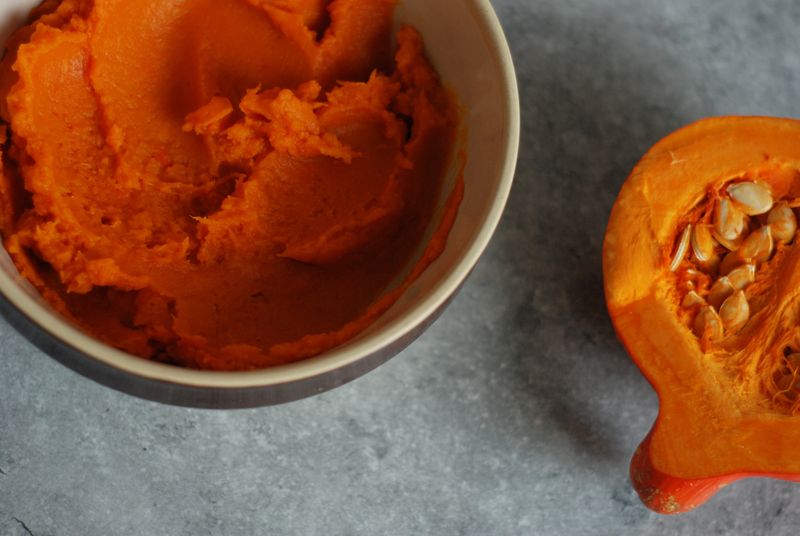
    I made pumpkin pie for our Thanksgiving feast (we celebrated on Saturday instead of Thursday), but due to a little, er, mathematical error, I roasted about six times too much squash in preparation for the pie (this one, in case you're wondering, which was once again demolished in one fell swoop, but with this crust recipe, the second half of which I used for this tart, which was eaten even faster than the pumpkin pie).

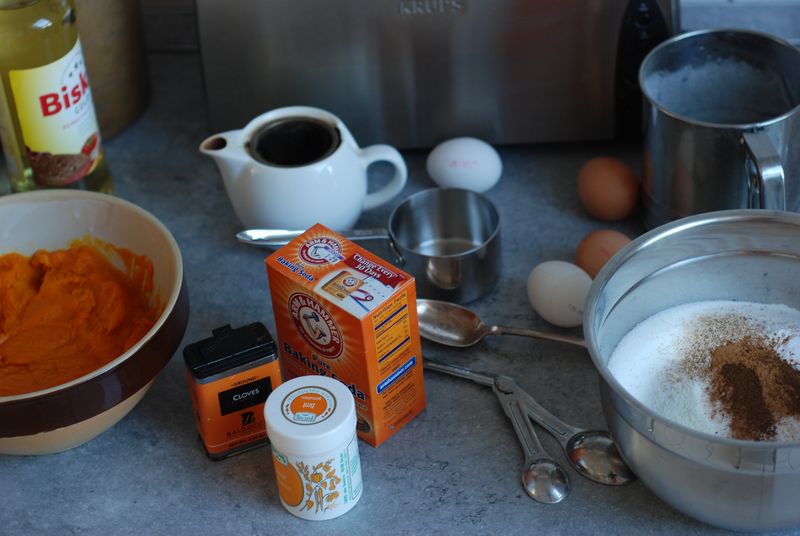
    I froze some of the squash, but with all the Advent tea times ahead of us in the next month (the Germans are big on Advent Sunday tea time), I decided to get resourceful and bake something to have on hand during the next few weekends. Pumpkin bread from a monastery in Los Angeles that sells loaves for $9 a pop seemed like a good place to start.

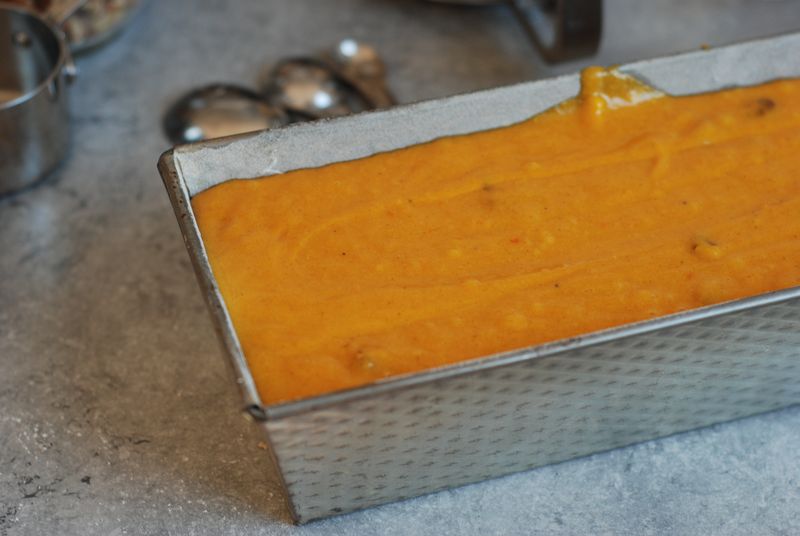
    The recipe hasn't changed since the early 1970's, which is a pretty good pedigree, if you ask me. It's a basic sweet bread or tea cake or whatever you'd like to call it, spiced with cinnamon and nutmeg (I also added some cloves) and is quiveringly tender and moist. If you, like me, use Hokkaido (or red kuri) squash, your batter will seem practically fluorescent.

    DSC_2095

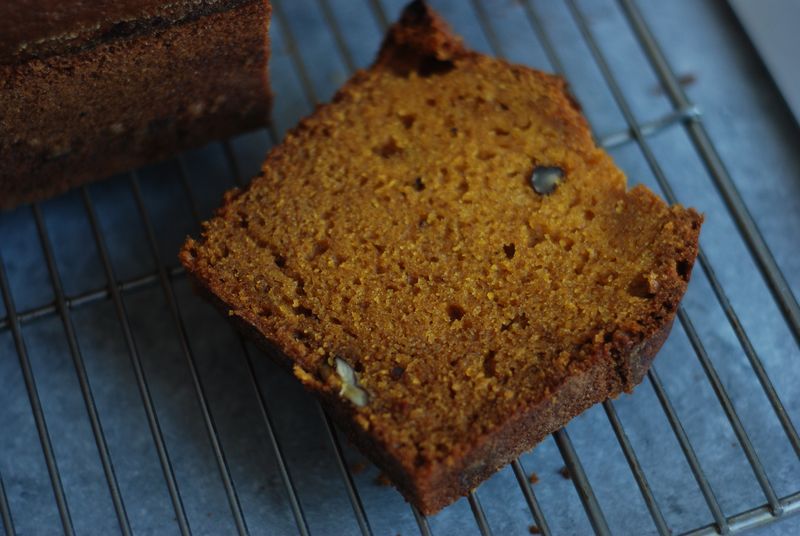
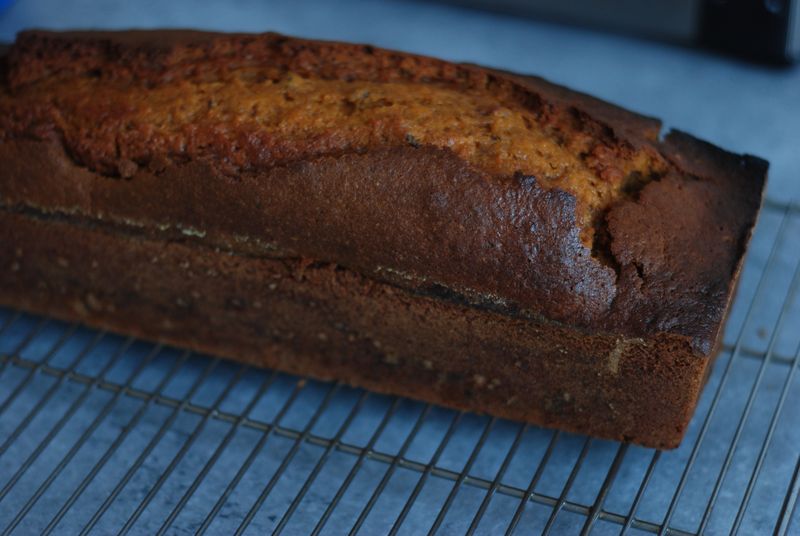
    I promise, though, that it will mellow in the oven, turning an agreeable, gingerbread-y brown. The crumb is velvety-soft and fragrant with sweet squash and the spices, while the crust gets all caramelized and toothsome. Some bits of it even crunch. It's a lovely thing to eat. I wanted to add walnuts to the batter, but mine were all rancid, so I threw in chopped pecans, the last of a precious stash from the States, instead. Their earthy crunch is a nice thing to happen upon as you work your way through each soft slice of bread.

    My only advice would be to try and make as many loaves out of this one batch of batter as you can. I crammed all of the batter into one 13-inch long loaf pan and ended up having to bake the loaf for an hour and a half, nearly burning the edges. If you bake it in smaller loaf pans, the baking time reduces to one hour.

    DSC_2106

    I let it cool completely, then I wrapped it carefully in plastic wrap and foil and put in the freezer where it'll rest until this Sunday when we have friends over for tea in the candlelight.

    But next Sunday, I've already decided, there will be popcorn and apples and cider. And in addition to being grateful for my family's good health and my good fortune in life, I'll be saying a little gratitude prayer for books, my constant companions in this life.

    Tell me, readers, what were the childhood books that you loved the most?

    Monastery of Angels' Pumpkin Bread
    Makes 1 13-inch long loaf or 2 smaller loaves
    Original recipe here

    3.5 cups of all-purpose flour
    3 cups sugar
    2 teaspoons baking soda
    2 teaspoons cinnamon
    1/2 teaspoon nutmeg
    1/2 teaspoon ground cloves
    1.5 teaspoons salt
    4 large eggs
    1 cup vegetable oil
    2/3 cup water
    2 cups puréed pumpkin or squash
    1/2 cup chopped pecans tossed with a spoonful or two of flour

    1. Heat the oven to 350 degrees F. Butter and flour loaf pan(s). Sift together flour, sugar, baking soda, cinnamon, nutmeg and salt in a large bowl.

    2. In a separate bowl, combine eggs, oil, water and pumpkin and mix well. Mix the wet ingredients into the dry ingredients until the batter is smooth and there are no streaks of flour left. Fold in the pecans.

    3. Scrape the batter into the buttered and floured loaf pan(s). Bake for 1.5 hours or until a cake tester inserted into the center of the bread comes out clean. Cool the pan(s) on a rack for half an hour before turning the loaves out to cool completely. Wrapped tightly, the bread keeps for at least three days.

  • DSC_1802

    I wish this was my excuse for disappearing on you with nary a peep for the past three weeks, but alas, it's not. I'll just say the following words:

    My
    Editor
    Finally
    Got
    Back
    To
    Me
    With
    Revisions
    And
    A
    Publication
    Date
    Comma
    Holy
    Hell
    Comma
    Which
    Is
    Next
    September
    Hyphen
    SEPTEMBER
    Hyphen
    Which
    Means
    The
    Final
    Manuscript
    Is
    Due
    In
    January
    Period
    THIS
    JANUARY
    PERIOD
    Even
    Though
    I
    Think
    It
    Will
    Probably
    Take
    A
    Lifetime
    Before
    I
    Am
    Ready
    For
    The
    Publication.
    Period.

    And then my head exploded! It's taken me a little while to gather myself.

    DSC_1763

    So now that you're up-to-date on the state of the manuscript and my nerves, I would like to take a moment to pay tribute to and take leave from several food combinations.

    Beets and goat cheese.

    Carrot and ginger.

    Butternut squash and apples.

    These are all lovely combinations, it's true! And once upon a time, they were fresh and novel and we gobbled them up with gusto. But, folks, I am sick and tired of them. They make my soul weary. When I see them on a menu or in a cookbook, my eyelids droop.

    And it's part of the reason why I've had a butternut squash sitting in the fruit bowl for over a month. Every time I've looked at it, it has bored me to tears.

    DSC_1788

    But last night, I gave myself a stern talking-to (I think you would have approved) – it simply would not do to let that squash slowly rot into oblivion nor would it do to leave the blog silent for yet another day. So I pulled down the brilliant Essential New York Times Cookbook (which holds almost every recipe I've ever clipped from the New York Times and is, quite possibly, the desert island cookbook you've spent your whole life looking for, or at least mine) and went a-recipe-hunting.

    It was a rather quick hunt. Right there on page 147 was a recipe from Molly O'Neill (from this article, which I've now read twice but still haven't understood how the recipes fit in with the piece – is it just me?) that has you roast butternut squash and turn it into soup with ground cumin, vinegar (hallelujah!) and cayenne. No apples in sight! (Though there's sugar in the soup, which gave me the heebie-jeebies, just a little bit.)

    DSC_1781

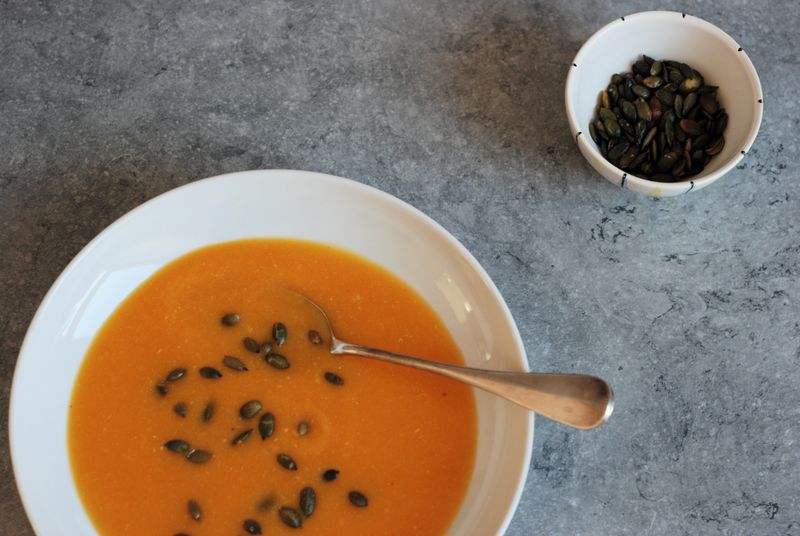
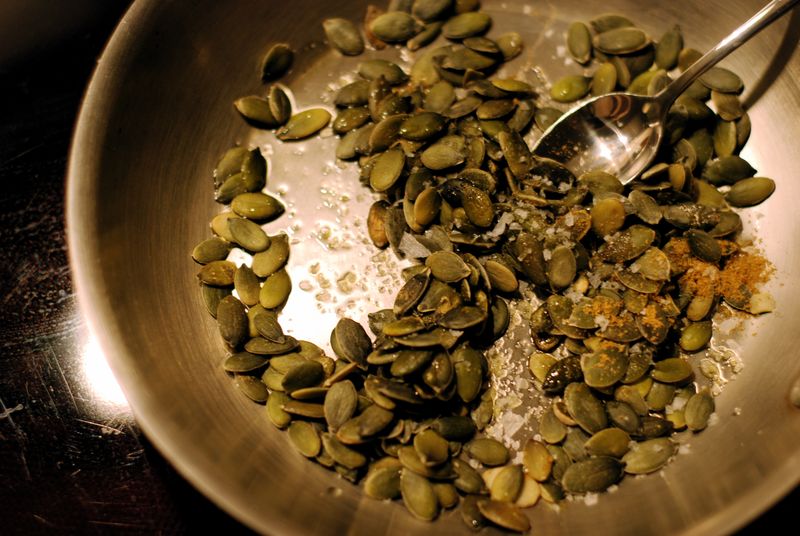
    The soup is punchy and hot and sour (instead of the cream swirled in at the end, I added buttermilk), and a sprinkling of squash seeds (I actually used pumpkin seeds) toasted in oil and cumin provides a welcome crunch and additional top note of flavor. It's a fine little soup, just enough to get me out of my rut, just enough to fortify me as I start to revise the manuscript.

    We're almost there, folks! I can hardly believe it.

    Molly O'Neill's Roasted Squash Soup With Cumin
    Original recipe here
    Serves 4

    1 large (about 3 pounds) butternut squash
    3 teaspoons vegetable or olive oil
    Kosher salt and freshly ground pepper
    1/4 cup pumpkin seeds (or simply use the squash seeds from the butternut)
    1 teaspoon ground cumin
    4 1/2 cups chicken stock
    1 clove garlic, minced
    1/2 teaspoon cider vinegar
    Small pinch of sugar
    Generous pinch of cayenne pepper
    1/2 cup buttermilk

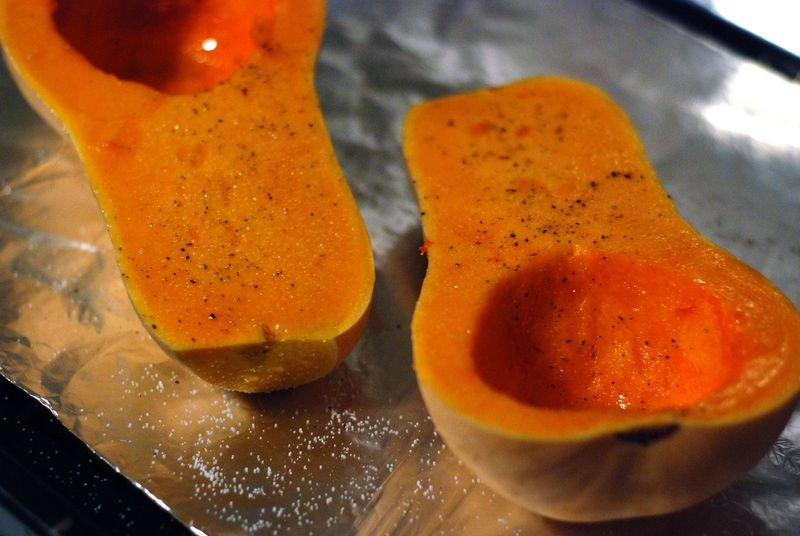
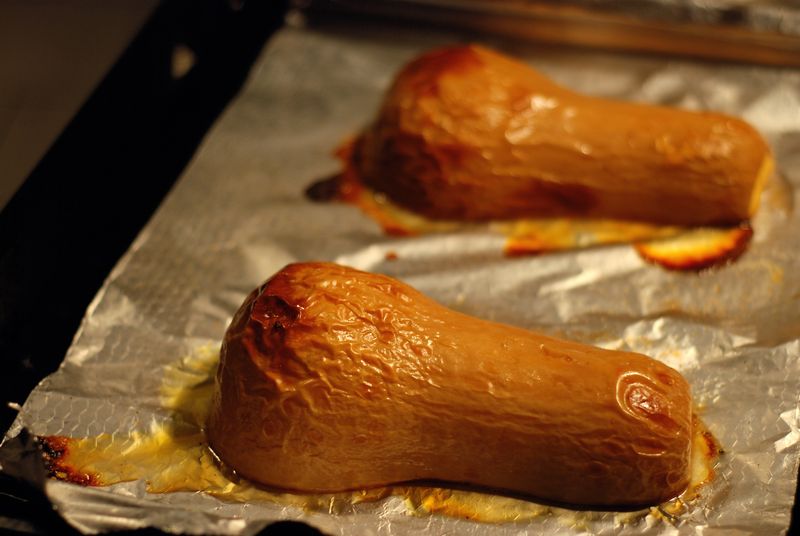
    1. Preheat the oven to 400 degrees and line a large baking sheet with aluminum foil. With a large knife, split the squash in half (scoop out and reserve the seeds, if you plan on using them). Brush the cut side of the squash with 2 teaspoons of oil and sprinkle with salt and pepper. Place cut side down on the large baking sheet and roast until very tender, about 35 minutes.

    2. If using the squash seeds, remove any orange fibers from seeds and rinse them under running water. Drain and place on paper towels to dry. Toss the squash or pumpkin seeds with the remaining teaspoon of oil and 1/2 teaspoon of the cumin, and season with salt. Place in a small but heavy pan and toast over medium-high heat for about 10 minutes, stirring constantly, until fragrant and golden-brown. Remove from the heat and set aside.

    3. Scoop the flesh from the squash shells or peel off the blistered skin, using a sharp-edged spoon to help it along, and place the flesh in a pot. Add the chicken stock, garlic, vinegar, sugar, cayenne and remaining cumin. Bring to a boil, lower and simmer, uncovered, for 10 minutes. Remove from heat.

    4. Using an immersion blender, purée the soup until smooth and creamy with no lumps. Stir in the buttermilk and heat through. Season with salt and pepper to taste and serve garnished with the squash or pumpkin seeds.

  • DSC_1653

    So, er, this is awkward, since I already told you about a tomato jam in August. And, er, yes, you're right, tomato season is all but over. (Not entirely, but almost.) But I kind of need you to forget all about that other tomato jam and the fact that the tomatoes at the market are dwindling fast. Forget about all that right away. Today. Now.

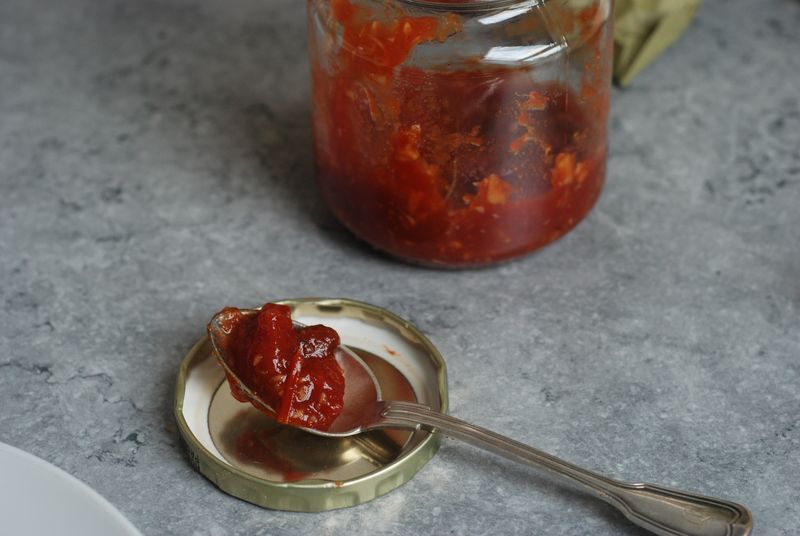
    Because a few weeks ago I made a tomato chutney from this book by way of The Traveler's Lunchbox and, it's the most curious thing, I haven't been able to stop spooning it out of the jar since. It is quite something. I mean, who eats chutney from a spoon? This is not the kind of thing I am usually in the habit of doing. Just so we're clear. But this is no ordinary chutney, no.

    DSC_1657

    This tomato chutney makes my mouth glow on the inside, which is a most wondrous feeling. And it tastes incredible, like a tomato come to life in the middle of an Indian jungle, though I am biased, it's true: you could coat a tomato in tar and I'd probably still want to eat it.

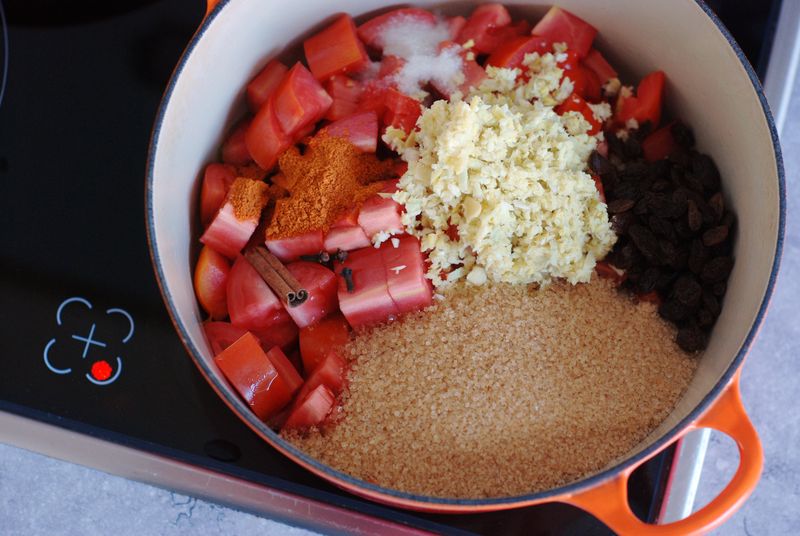
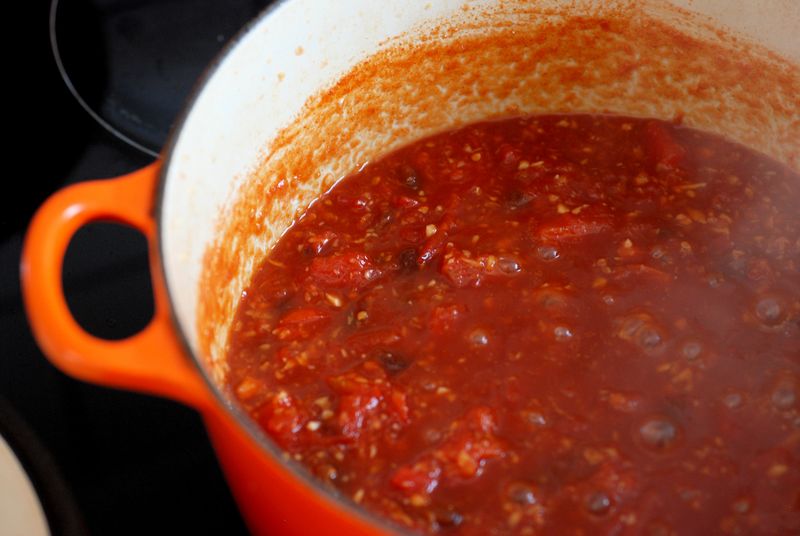
    Let me try to describe it at least. Imagine a tomato, all fresh and succulent, cooked down into jamminess with fiery bits of ginger and garlic and rust-colored cayenne. There are raisins, for a little extra sweetness, and cloves and cinnamon, too. But then there's a big glug of vinegar that straightens everyone's collars out and makes your mouth pucker with pleasure. Between the vinegar and the cayenne and all that fresh ginger and garlic, the chutney is incendiary, in the best possible way. 

    I could almost guarantee that you will find yourself hoarding it, instead of giving it away as you might think you would after lining up all your neatly-filled crimson jars just after filling them. It's the one thing in my pantry that I can't part with. Not yet.

    DSC_1663

    I like putting it on a cold chicken sandwich, for example. Or dolloping it next to a piece of plain, sautéed fish to goose it up a little. I've eaten it with sharp cheddar on nice bread for a lunch that lingered in my mouth long after I finished. And it's brilliant with eggs, scrambled or fried. Best of all is chopped into homemade egg salad. Good night!

    But like I said, I've also eaten it straight from the jar, which I'm a little embarrassed to admit, but you know, sometimes it's just best to be honest about this kind of thing.

    DSC_1701

    Whatever you decide to do with it, the point is: make it. Today. Now. Before the very last plum tomatoes have gone.

    And if they already are gone, forgive me, kind reader, for winding you up. It was cruel of me, I know. To make it up to you, maybe I could even send you one of my jars? Maybe. Let me think about it. I'll get back to you.

    Niloufer Ichaporia King's Parsi Tomato Chutney
    Source: The Traveler's Lunchbox
    Makes about four 8- to 10-ounce jars; recipe can easily be doubled

    3 pounds (1.5 kilos) ripe tomatoes, coarsely chopped
    1/2 cup finely-julienned peeled ginger (about one 2.5-inch/6-cm-long piece)
    1/2 cup thinly-sliced garlic (about one large head)
    1 1/2 cups (375 ml) cider vinegar
    1/2 to 1 cup (75 to 150 grams) raisins (optional)
    2 cups (400 grams) turbinado sugar
    1 to 1 1/2 tablespoons cayenne pepper
    1 small cinnamon stick
    4 whole cloves
    1 1/2 to 2 teaspoons salt

    1. Open a window or two in your kitchen. Place all the ingredients in a heavy nonreactive pot and, over medium-high heat, bring to a boil, stirring well. Continue to cook, stirring every five to seven minutes (more frequently towards the end of the cooking time), until the chutney has the consistency of a soft jam, about an hour. Be careful not to scorch the chutney.

    2. While the chutney is cooking, sterilize four or five glass jars and lids in boiling water or a hot oven. When the chutney has finished cooking, ladle it carefully into the clean jars and quickly screw on the lids. Turn the jars upside-down to cool. If you plan to eat the chutney within a few weeks of making it, there's no need to can it; simply keep it in the fridge.

  • DSC_1747

    Friends, I have had the flu. Or something like it. For the past week, I have felt little better than death warmed over. I have been tired and cold and my throat has hurt and sitting upright for more than twenty minutes has made me want to weep quietly into my mug of hot water and lemon. Forgive my absence, is what I'm trying to say.

    My appetite was on the fritz as well, so even though I baked a cake for a friend's birthday just before the germs engulfed me entirely (this cake and, lo, it was good), and made myself a few invalid lunches (Better Than Bouillon, you complete me), I couldn't muster the enthusiasm to tell you about any of it. Woe!

    But enough bellyaching. You don't want to hear about how a little flu can crush one woman's spirit to live or at least shower, do you? Instead let's talk about what other people have been up to. Why, some of them even make me want to get out of bed again:

    Intellectualizing the salad: Nancy Silverton writes a manifesto on salad-making, most of which makes me want to cheer out loud (except the part about eating with your fingers). Now to track down some Little Gems.

    Speaking of salad, Amanda Hesser likes hers "bruising" and "feisty". A woman, and a salad, after my own heart.

    Have you ever heard of a chutney sandwich?

    Desperately seeking heartburn: Brandi and Brandon make homemade hot sauce that sounds pretty fierce. Now what are the chances I'll find Fresno chiles anywhere in the Federal Republic of Germany?

    Jenny and Andy's brilliant blog is about the cooking life when you have small people living in your house and eating at your dinner table, but their recipes (and wit) work for the childless, too. Case in point: this post on Truly Truly Divine Peanut Butter Sauce which turns out to be the only thing I'd like to eat right this very moment.

    Canned creamed corn in a stir-fry – really? I admit, I am totally intrigued.

    Oh, to live in Los Angeles with a yard and a farmer's market around the corner and a husband to make you an after-work snack consisting of homemade tortilla chips, quacamole and margaritas… Warning: Heather Taylor's webisodes might possibly make you green with envy.

    It's Friday, which means Max comes home tonight for the weekend. Ever wonder what our Friday nights look like? The lovely Sarah Copeland of Edible Living dug a little deeper, here and here (bonus wedding photo!).

    And with that, lovely folks, I hope you have a great weekend. Here's to Friday nights, showering and good health!

  • DSC_1698

    A few years ago, I spent a day with my colleagues brainstorming new book ideas. We were hunkered down in the Soho apartment of the parents of our editorial director (they were generous, it was big) and, armed with pens and pads of paper, we went around the table and talked about the kinds of books we wanted to publish. I had made a list of four book ideas that I really wanted to pursue, but today, sitting here, I can only remember one.

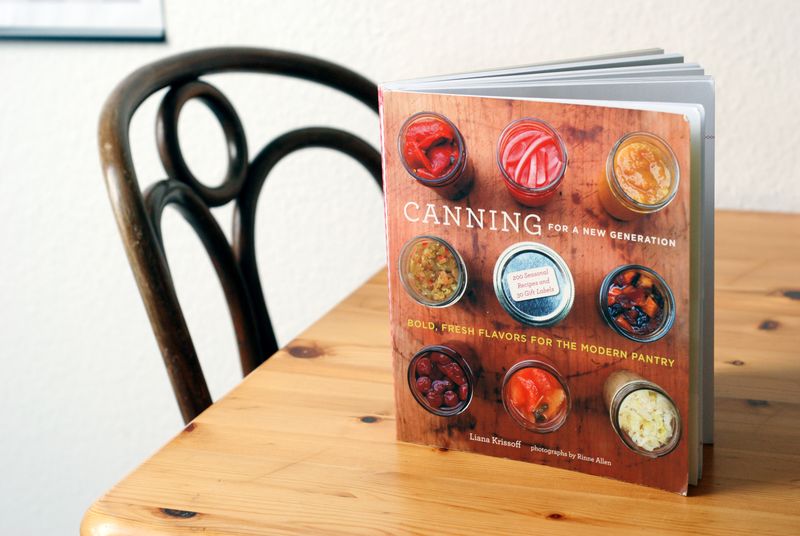
    Because after that brainstorming session, I went back to the office to check my email one last time before leaving for vacation the next day and there, sitting in my inbox, sent at about the exact moment that I was telling my boss and my colleagues that I desperately wanted to publish a modern, updated book on canning and jam-making, pickling and preserving, was an email from one of the company's authors, laying out her vision for that exact book.

    Kismet! Fate! It was hard not to run to the CEO of the company right then and there, begging him for approval and, oh, some money, too.

    A few weeks later, we had a deal. Liana would write a comprehensive book on canning and preserving, chockful of recipes that were new and interesting. She would leave behind the fuddy-duddy and slightly snoozy tone of all the older canning books. She would mine the preserving techniques of other cultures and she would include recipes for what to do with those fermented long beans you spent precious time finding in Chinatown and then putting up, all the while making sure that readers' hands would be held as they went from making their first batch of strawberry jam to their very own Indian lime pickle.

    DSC_1687

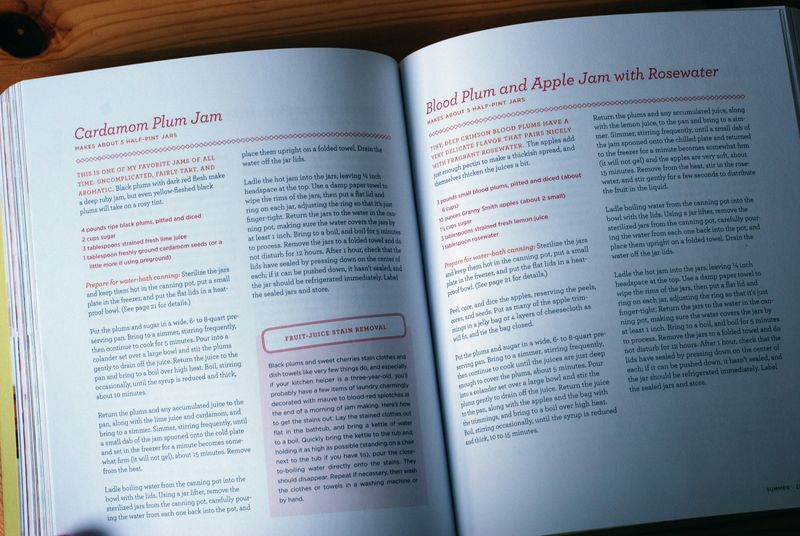
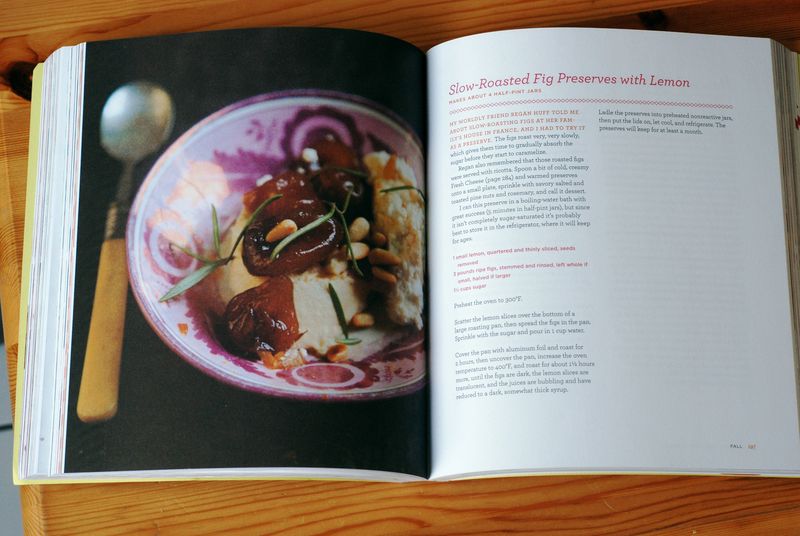
    In Liana's own words, "The recipes are for people a little bit like me…who upon hearing 'pickle' remember Mom's sweet watermelon-rind pickles ice-cold out of the fridge, but also think of the dollop of goodness that goes on top of a bowl of curried lentils, or the dainty dish of tsukemono pickles that might come with the sashimi at a good sushi bar. Those people for whom 'ferment' means not just full-sour dills bobbing about in a crock of cloudy brine on the Lower East Side but also spicy red kimchi. And those of us who, while thoroughly enjoying a sweet, thick slather of classic peach preserves on toast every now and then (or, okay, often) might prefer a tart-sweet black plum jam spiked with fragrant cardamom, or a small spoonful of fig preserves with port and rosemary alongside a wedge of veiny blue cheese and a thick slice of dark bread."

    That was exactly the book I wanted to publish.

    DSC_1689

    As Liana worked on her book, she'd periodically send me photos of her pantry shelves that were filling at an alarming rate. Jar after jar of jams and pickles lined the room. It was like a settler's dream. Sometimes, if I was lucky, Liana would even send me a few things to try: a delicately-set grapefruit jam, tea jelly or, my very favorite, that plum jam flavored with cardamom.

    In the end, Liana's manuscript turned out to be even better than I could have imagined on that hot day in August when her email first hit my inbox. It was big. It was comprehensive. It was interesting. And it was funny.

    Take, for example, Liana's headnote on making her own sauerkraut:

    "Although it may seem as if you're having – as my husband said when he walked in on me with my arms elbow-deep in a mass of pale-green shreds – 'a difficult immigrant experience', squeezing cabbage and salt together to make sauerkraut is fun."

    DSC_1691

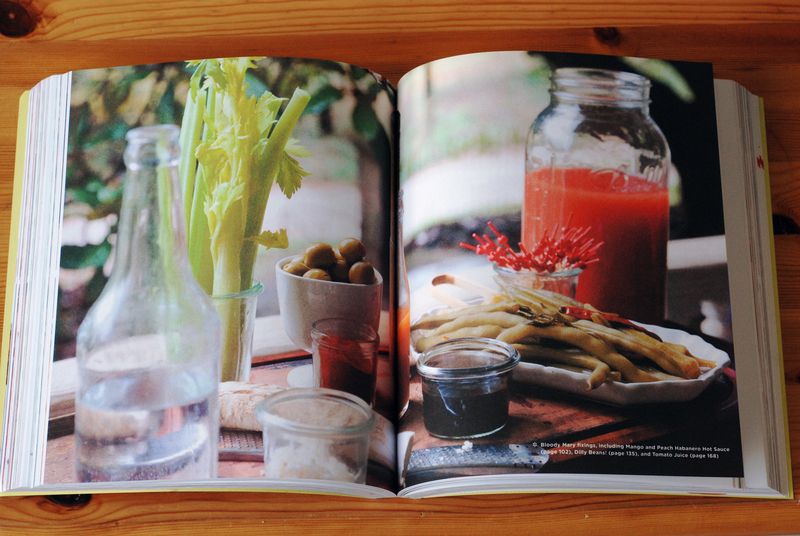
    But best of all, the manuscript was smart. Liana teaches you how to make kimchi and then gives you a recipe for pork and kimchi dumplings. She tells you how to make Chinese plum sauce and then gives you a recipe for Mu Shu pork using the plum sauce. She tells you how to make a Sidecar using the Brandied Cherries from the previous page. Liana comes up with all these great new staples that you just have to have in your pantry and then gets your mouth watering with dinner recipes that actually use them.

    We got Rinne Allen, a talented photographer, to do the photography for the book and her lush, thoughtful images paired beautifully with Liana's recipes and pithy prose. The two would meet, week after week, at Liana's house in Georgia and Rinne would shoot what Liana was working on that day.

    DSC_1690

    The book is divided into seasons, so there are four main chapters and then, within those chapters, Liana splits the recipes between fruits and vegetables. For those of you intimidated by preserving and canning (hot water baths! botulism! equipment!), Liana demystifies everything in soothing, sensible terms. She makes you feel capable and safe. And, really, her recipes will have you chafing at the bit to get started, whether you're a novice or not.

    Liana's philosophy, when it comes to jams, is that the less commercial pectin you use, the more delicious your jams will be. And so, with a few exceptions, her recipes for jams, jellies, preserves and conserves are made without commercial pectin and the amount of sugar she uses lets the bright, beautiful flavor of the fruit shine through. Always.

    DSC_1694

    Shall we look at a quick sampling of some of Liana's recipes? Let's. I'm hungry.

    Tomato and Cashew Chutney, Simple Pickled Jalapeño Slices (that you use, then, to make a Sliced, Braised Beef Sandwich, yowrrr), Candied-Pickled Apples with Star Anise, Minted Cranberry Relish with Walnuts, North Indian Carrot Pickle, Honeyed Fig Jam with Sesame Seeds, Achar Segar (what, you didn't know how to say "Indonesian Pickles" in Indonesian?), Pineapple Jam with Chinese Five-Spice, Quince Slices in Cinnamon Syrup (that you later use in a Persian lamb stew), Nuka, also known as Japanese Fermented Bran Pickles, and Hibiscus Jelly.

    (Who else is hungry now?)

    (But don't worry, the classics are here as well: Strawberry Jam, Apple Butter, Raspberry Preserves, Cherry Jam, among many others.)

    DSC_1700

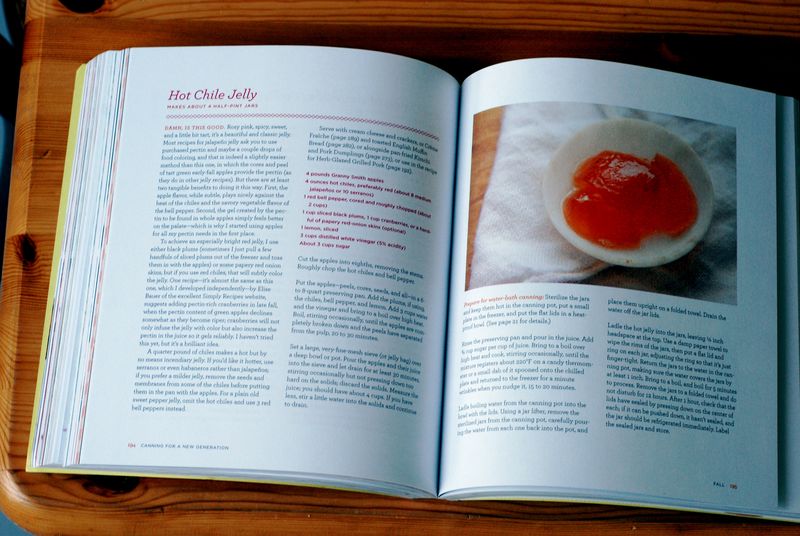
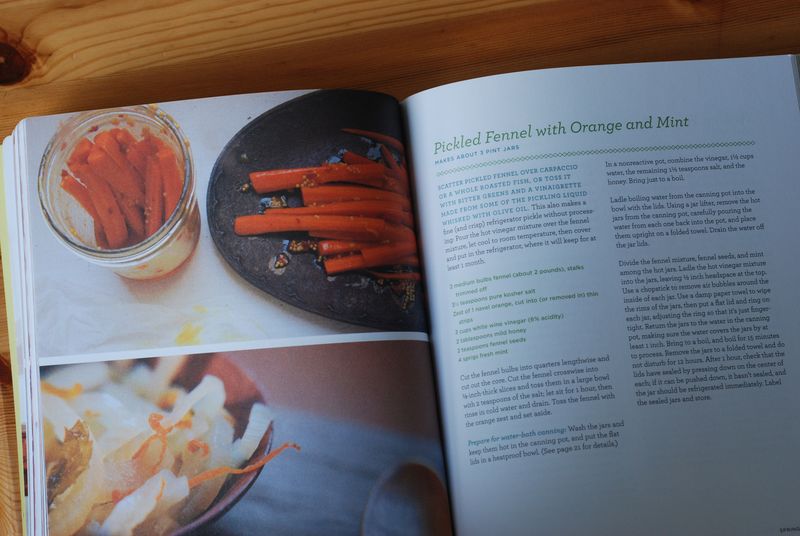
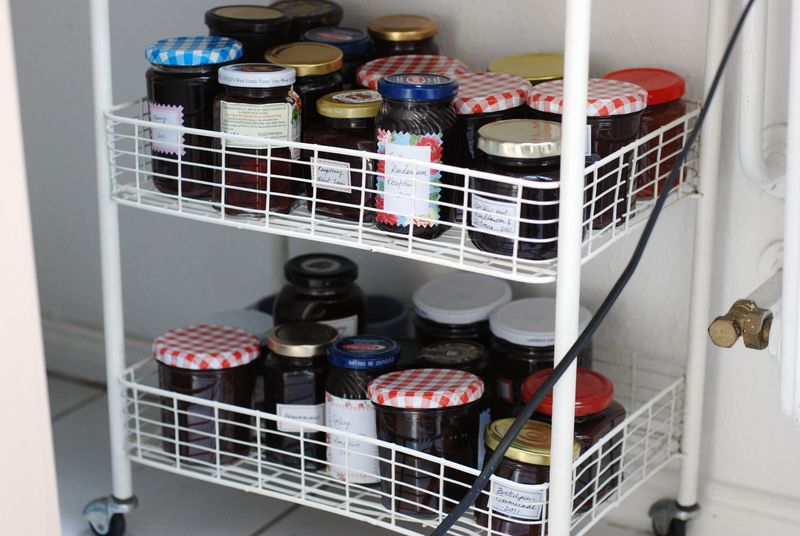
    Canning for a New Generation, much to my utter delight, turned out to be even better than I could have ever hoped for on that hot day in August when it was just a twinkle in both of our eyes. Liana put an enormous amount of work into the book and her passion fairly jumps off the page. It's a delight to read and is an inspiration in the kitchen. It's beautiful to look at and it's an incredible resource. Take a look at that cart up there: It holds all the jams I've made in the last three months, most of them done with Liana's book open on the counter. Raspberry Mint Jam, Plum Cardamom Jam and Holiday Cherries are just a few of my favorites. And one day, I like to dream that I will have an actual pantry like Liana's to line with identical jars filled with all the season's bounty. It will be grand.

    Are you scared of jam-making and preserving? Liana will hold your hand. Are you bored with the plain pickles and jams you already know how to make in your sleep? Liana will lead you down the path of international pickling and preserving. Of all the many cookbooks on my bookshelf (and there are many, so many), this is the one that most consistently gets "borrowed" and not returned. Quite literally. I've had to ask my very kind former employers for a replacement copy of the book more times than I care to admit.

    So, maybe, when you buy a copy, if you buy a copy, think about getting two. Then chain one to your kitchen counter so that no one can ever take it from you, or deface it with a big black marker ("Property of Geraldine! Keep Out!") so that no one will want it, and give the other one away. You'll thank me for this tip later.

  • DSC_1589

    We came back from Greece, where the heat nearly felled us as we attempted to see the Acropolis, to a Berlin that had a chill in the air, not unlike the one that usually hits New York in early October. You know, when the sky is blue, but you find yourself needing not only a wool jacket, but a scarf, too, while brittle leaves crunch and scatter on the sidewalks. Okay, I thought, time to haul out the winter suitcase from the basement, time to put the warmer comforter on the bed, time to pick apples for apple butter and pull out the heavy pots for stew.

    I couldn't stop thinking about my grandmother's pot roast, you see. Or about shredded pork. Lamb stew. Pot au feu served with hot mustard and grated horseradish. In other words, meat, meat and more meat. From one day to the next, salads and light dinners made up of flatbread and meze were out the window, gone the way of the mosquito and the drippy peach. Now was the time of thickened gravies and spoon-tender meats.

    Well, at least until the next heatwave hit. Today, sitting in my office with hot sun streaming through the window, it feels a little silly to tell you about this lamb stew that requires cold temperatures and at least one article of wool clothing to be worn by the cook at the time of preparation. But I swear that last weekend it was just the thing to spoon over deep plates of couscous and eat, gathered at the table with friends who tried to guess every single ingredient in the pot.

    DSC_1568

    Since that's a rather dull exercise anyway, I'm going to come straight out with it for you guys. It's a crazy mix. There's lamb shoulder and butter and onion. There is a trio of warm spices (cumin, coriander, cinnamon) and apricot jam and red wine vinegar and garlic. There are chickpeas and red pepper flakes, prunes and parsley. In short, this stew holds everything but the kitchen sink.

    The recipe comes from John Willoughby's article in the New York Times on how to make savory stews without that tedious first step of browning meat (which, beyond the tedium, also spreads oily filth around my kitchen, irritating me to no end). (In fact, I'd say the step of browning meat is probably at the top of the list of reasons why I hardly ever, ever, ever buy meat to cook at home.) (Do you guys now think I'm insane for calling the gentle spatter of browning meat "oily filth"?) (Oh, parentheses, I like it in here.)

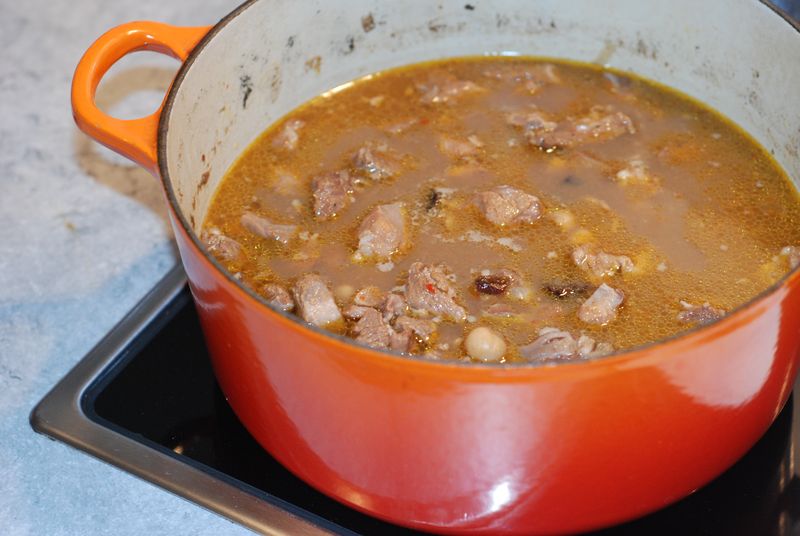
    His lamb tagine has you basically simply dump all the ingredients into a pot at once before stewing everything together until the meat falls apart with a gentle nudge. Now here's the funny thing: I wanted to cook the stew for a dinner party on Saturday night, but because I didn't want to waste any time on Saturday cooking (my Saturday hours are preshus), I decided to make the stew the day before, figuring that all stews benefit from a little ripening. Wouldn't you say? But on Friday, as my stew-cooking drew to a close, I was rather taken back as I stared into a pot of lamb soup that looked absolutely nothing like the lush, moody photograph of the stew in the paper.

    My stew was wan and gray, even a little thin. Vaguely gruel-like. Instead of looking like the kind of lusty fare you'd imagine gorgeous women in a harem feeding each other, my stew looked like boarding-school stew. (I've never attended boarding school, but I'm pretty sure I read every English book ever published on the subject before I turned 16 years old and have also been blessed with an active imagination. Therefore I am an authority. Also on Moroccan harems. Thank you, good night.)

    DSC_1584

    Huh, I thought. That is peculiar.

    Was my German lamb shoulder to blame? Or the low lighting in the photographer's studio? I stared at my tagine-style stew for quite a while on Friday afternoon, completely stumped. Food coloring? I thought. Molasses? Did I miss the red wine? Finally, at a loss, I resigned myself to serving our guests a grayish dinner. This hardly qualified as a kitchen disaster, but all the same, I told myself that worse things had happened. I'd survive the humiliation. It might even taste good. I put the stew in the fridge and went on my way.

    The next evening, I pulled the pot out of the fridge and carefully scooped off the top layer of bright orange fat that had risen and solidified overnight. I don't think you have to do this step, but lamb fat can sometimes taste a little…barnyardy and I didn't want that adding to the already unfortunate visual. Then I started to warm the stew, adding chopped prunes instead of the apricots that the original recipe called for. They swelled and plumped in the fragrant gravy, adding sweetness to the air. Just before serving, I added lemon juice and some chopped parsley. Somewhere in a Moroccan harem, someone's stomach growled.

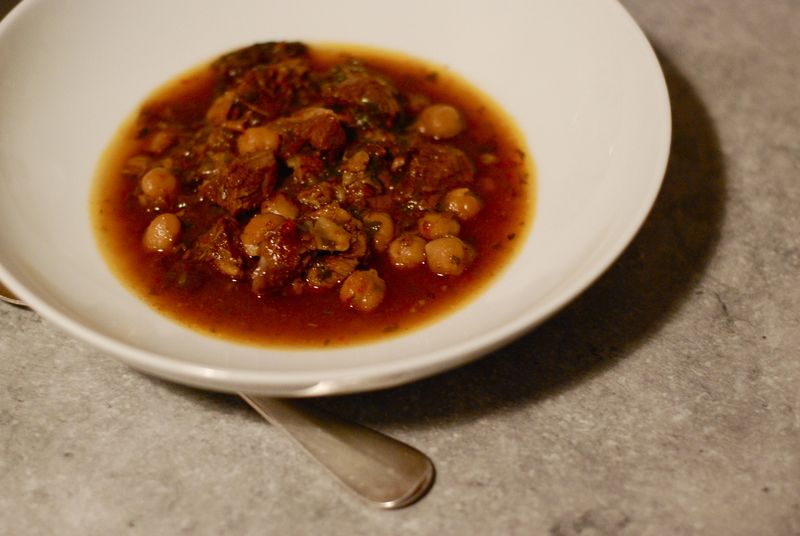
    And wouldn't you know. In that last half hour, the stew changed color entirely, going all mahogany-colored with little shimmering dots of oil, bobbing chickpeas and nuggets of prunes and lamb in varying shades of rich, warm brown. Just like the photo. Just in time.

    A few minutes later, doled out to a table of hungry guests who seemed especially charmed by the prunes, that whole pot of stew was gone. The chickpeas and prunes all velvety-soft, the lamb swollen with flavor. I even had to bring out spoons for some of our eaters who had been staring rather forlornly at the sweet-savory gravy, brightened by the lemon and parsley, pooled at the bottom of their plates after the couscous and bulk of the stew was eaten.

    Just like a bunch of English boarding-school students, really, heading for warmer climes.

    John Willoughby's Tagine-Style Lamb Stew
    For the original recipe, click here.
    Serves 6 to 8

    2 pounds lamb shoulder
    2 tablespoons unsalted butter
    1 small onion, grated (about 1/3 cup)
    4 cloves garlic, minced
    1 teaspoon black pepper
    1 teaspoon salt
    1 teaspoon ground cinnamon
    1 teaspoon ground coriander
    1 teaspoon ground cumin
    1/2 teaspoon red pepper flakes
    1/4 cup apricot preserves
    1/3 cup red wine vinegar
    1 20-ounce can chickpeas, drained and rinsed
    2 cups chicken stock
    1/4 cup chopped prunes
    1/4 cup chopped fresh parsley
    2 tablespoons lemon juice
    Cooked couscous, for serving

    1. Trim excess fat from the lamb and cut into 1-inch cubes. If your shoulder was sold to you with the bone and joint still in it, add it to the pot while you stew the meat for additional flavor (discard before serving).

    2. In a Dutch oven, melt the butter over medium-low heat. Add the lamb, onion, garlic, pepper, salt, cinnamon, coriander, cumin, red pepper flakes, apricot preserves and vinegar and cook, stirring frequently, until the aroma of the spices is strong, about 5 to 7 minutes. (Do not allow the meat to brown.)

    3. Add chickpeas and stock, bring just to a simmer, then reduce the heat to low, cover and simmer gently until the lamb is very tender, about 1 hour 15 minutes. Let cool to room temperature, then refrigerate overnight.

    4. Twenty to thirty minutes before you're ready to serve, pull the pot from the fridge and gently scoop off the orange layer of fat that will have risen to the top. Put the pot over medium-low heat, adding the chopped prunes, and bring the stew to a very low simmer. Continue to cook, uncovered, until the pieces are nicely plumped, about 10 minutes more. Remove from heat, stir in the parsley and lemon juice, and serve with couscous.